Your next car is a computer on wheels
Cars used to be finished the day they left the factory. Now they get updates, new features and subscriptions. As a car person and a software person, I have mixed feelings.
Cars used to be finished the day they left the factory. Now they get updates, new features and subscriptions. As a car person and a software person, I have mixed feelings.
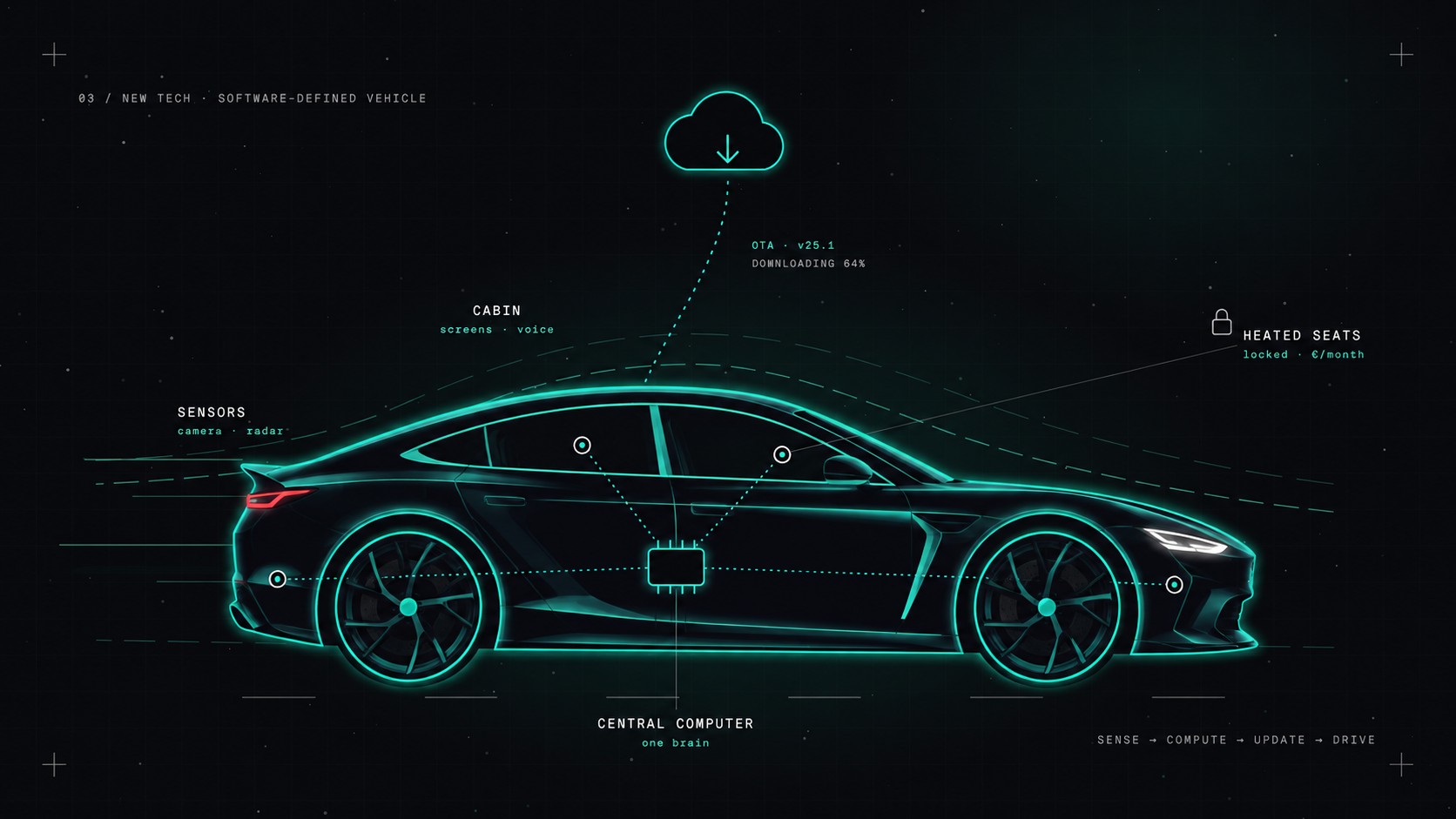
For as long as I can remember, I've been a car person. The sound, the design, the feeling of a good road. I grew up thinking a car was a machine: engine, gearbox, suspension, and a bit of electronics to keep it all running.
That idea is quietly going out of date. The car you buy next is very likely to be, at its heart, a computer. One that happens to have wheels, seats and a very large battery or fuel tank attached.
The industry calls it the software-defined vehicle. Behind the buzzword is a real change in how cars are built.
For decades, every function in a car had its own little computer. One for the windows, one for the airbags, one for the engine, one for the radio. A modern car can have more than a hundred of them, from different suppliers, all talking to each other. It works, but it's messy, and it's very hard to update.
The new approach is more like how your phone works: a few powerful central computers, with the car split into zones that handle the hardware nearby. The behaviour of the car, from how the screen looks to how the brakes feel, is controlled more and more by software. And that software can change after you buy the car.
A car used to be at its best on the day you bought it. Now it can get better on your driveway.
Tesla made over-the-air updates normal. Your car downloads an update overnight, like a phone, and in the morning it has a new feature or a fix. The famous example is from 2018, when a well-known consumer magazine criticised the Model 3's braking distance. Tesla pushed an update within days, and the braking distance improved. No workshop visit, no recall letter.
Today almost every manufacturer does some version of this. Maps, the infotainment system, driver assistance, battery management, even the way the car charges can all be improved remotely. Some recalls that once meant a trip to the dealer can now be fixed overnight. As someone who works in DevOps, I love this. It's exactly how good software should be delivered: small, frequent, safe updates.
Here's where the car person in me gets angry.
A few years ago, BMW offered heated seats as a monthly subscription in some countries. The heating elements were already built into the seat. You had paid for the hardware. You just had to keep paying to switch it on. The backlash was so strong that BMW dropped the idea for heated seats in 2023.
Mercedes offered extra acceleration on some of its electric cars in the US as a yearly subscription. Same motor, same battery. The car simply goes faster once you pay.
I get why manufacturers do it. Building one version of a car and unlocking features with software is cheaper. But if the hardware is in my car and I paid for my car, it feels wrong to rent it back. Optional services like live traffic or streaming are one thing. Locking the seat heater in a German winter is another.
Software makes cars better, but it also brings software problems.
Volkswagen's early ID.3 electric cars had missing features that were promised later through updates. Reviews focused more on bugs and slow screens than on driving. VW fixed much of it over time, but it showed that building good software is a very different skill from building good cars.
Then there's security. In 2015, two security researchers showed they could take control of a Jeep Cherokee remotely, over the internet, while a journalist was driving it on a highway. Chrysler recalled 1.4 million vehicles to fix it. A car that's always connected is a car that has to be defended like any other computer on the internet.
This is the part people think about least. A connected car knows where you go, when, how fast, how hard you brake, and often which phone is connected and who you call. Some cars have cameras inside watching the driver.
When the Mozilla Foundation reviewed car brands for privacy in 2023, it called cars the worst product category it had ever looked at. Phones and smart speakers did better. Most of us read the privacy settings on our phones. Almost nobody reads them in their car.
After reading way too much about this, here's my personal checklist:
I don't think we're going back. Cars will keep becoming more like computers, and in many ways that's great: safer, smarter, and better for longer. The manufacturers that get the software right will win. The ones that treat software as a way to charge us again for the same metal will, I hope, lose.
The engine sound may be fading. But the car person in me is still excited. It's just that now, I also care about the release notes.
My take: buy the car for how it drives, but check how it updates.
— Desly