What if my phone is slowing down on purpose?
Every phone gets slower after a new model comes out. Coincidence, or a plan to make you upgrade? The answer is more interesting, and partly true.
Every phone gets slower after a new model comes out. Coincidence, or a plan to make you upgrade? The answer is more interesting, and partly true.
Jedes Handy wird langsamer, sobald ein neues Modell erscheint. Zufall oder ein Plan, damit du upgradest? Die Antwort ist interessanter und zum Teil wahr.
ഒരു പുതിയ മോഡൽ ഇറങ്ങിയാൽ എല്ലാ ഫോണും പതുക്കെയാകും. യാദൃശ്ചികതയോ, അതോ നിങ്ങളെക്കൊണ്ട് പുതിയത് വാങ്ങിപ്പിക്കാനുള്ള ഒരു പദ്ധതിയോ? ഉത്തരം കൂടുതൽ രസകരമാണ്, ഭാഗികമായി സത്യവും.
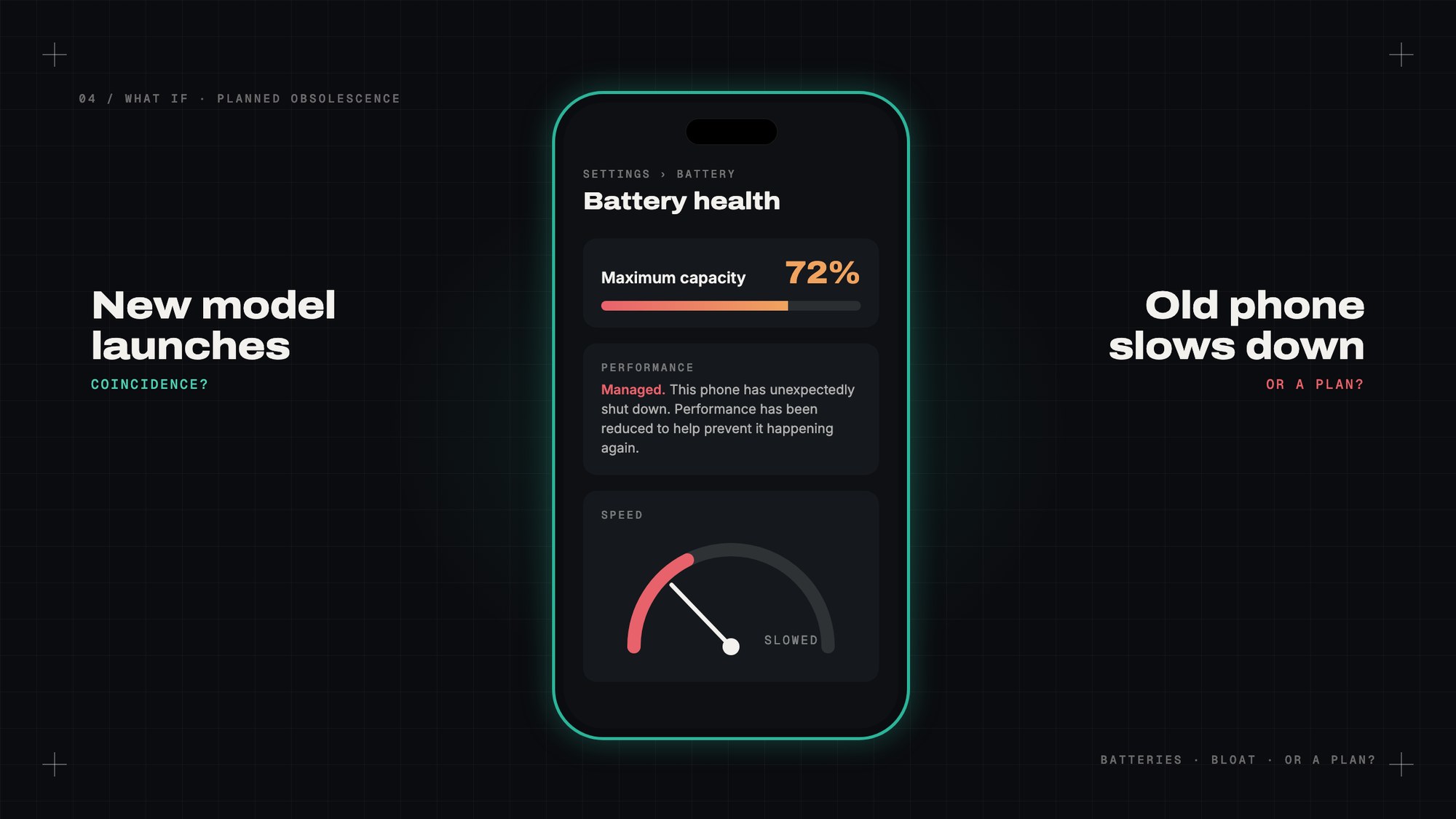
You know the feeling. Your phone was fast. Then, around the time the shiny new model launches, apps start taking a second longer to open. The keyboard lags. The battery gives up before dinner. And a small voice says: they're doing this on purpose.
The theory is called planned obsolescence, the idea that companies design products to fail or slow down so you'll buy new ones. And unlike most theories in this section, this one has some real history behind it.
In the 1920s, the world's biggest light bulb makers formed a group known as the Phoebus cartel. They agreed to limit bulb life to about 1,000 hours, and fined members whose bulbs lasted too long. It's one of the clearest documented cases of a whole industry making products worse on purpose.
So the idea isn't crazy. The question is whether it's happening in your pocket.
In 2017, users noticed that some older iPhones got dramatically faster after a battery replacement. A developer at Geekbench, a popular performance-testing app, looked at the data and found a clear pattern: iPhones with worn batteries were running slower.
Apple confirmed it. An iOS update had added a feature that slowed down iPhones with ageing batteries. Apple's explanation was that old batteries can't always deliver enough power at peak demand, which was causing some phones to shut down unexpectedly. Slowing the processor prevented the shutdowns.
The slowdown was real. Not telling anyone was the real mistake.
That explanation is technically reasonable. The problem was that Apple didn't tell anyone. People thought their phones were simply getting old and bought new ones, when a cheaper battery would have fixed it.
The fallout was huge. Apple apologised and cut the price of battery replacements. It added a Battery Health screen to iOS so you can see your battery's condition and whether the phone is being slowed down. It paid hundreds of millions of dollars to settle lawsuits in the US, and France fined it 25 million euros. In Italy, regulators fined both Apple and Samsung over software updates that hurt older phones' performance.
Probably not in the way the theory says. There's no good evidence that phones secretly get a "slow down now" signal when a new model launches. But several real things make phones feel slower over time, and they tend to happen together:
The batterygate scandal helped push governments to act. In the EU, new rules now require phones to have batteries that keep most of their capacity for hundreds of charge cycles, make spare parts available for years, and keep getting software updates for years after a model stops being sold. Right-to-repair is slowly becoming the law, not just a slogan.
When a phone starts feeling slow, before I think about upgrading, I check the battery health first. If it's worn, a new battery is far cheaper than a new phone and often feels like getting a new phone. Then I clear out storage and delete apps I don't use. Most of the time, that's enough to buy another year or two.
And when I do upgrade, I try to make it because the new phone does something I actually want, not because the old one has been made to feel tired.
Verdict: partly true. It has happened, it got caught, and it got fined. But most slowdowns are batteries, bloat and time, not a secret plan.
— Desly
Du kennst das Gefühl. Dein Handy war schnell. Dann, ungefähr wenn das glänzende neue Modell herauskommt, brauchen Apps eine Sekunde länger zum Öffnen. Die Tastatur hakt. Der Akku gibt vor dem Abendessen auf. Und eine kleine Stimme sagt: Die machen das absichtlich.
Die Theorie heißt geplante Obsoleszenz, die Idee, dass Firmen Produkte so bauen, dass sie kaputtgehen oder langsamer werden, damit du neue kaufst. Und anders als die meisten Theorien in diesem Bereich hat diese eine echte Vorgeschichte.
In den 1920er-Jahren schlossen sich die größten Glühbirnenhersteller der Welt zum sogenannten Phoebus-Kartell zusammen. Sie einigten sich darauf, die Lebensdauer von Glühbirnen auf etwa 1.000 Stunden zu begrenzen, und bestraften Mitglieder, deren Birnen zu lange hielten. Es ist einer der am besten dokumentierten Fälle, in denen eine ganze Branche Produkte absichtlich schlechter gemacht hat.
Die Idee ist also nicht verrückt. Die Frage ist, ob es in deiner Hosentasche passiert.
2017 bemerkten Nutzer, dass manche älteren iPhones nach einem Akkutausch deutlich schneller wurden. Ein Entwickler bei Geekbench, einer beliebten Benchmark-App, sah sich die Daten an und fand ein klares Muster: iPhones mit abgenutzten Akkus liefen langsamer.
Apple bestätigte es. Ein iOS-Update hatte eine Funktion eingeführt, die iPhones mit gealterten Akkus drosselte. Apples Erklärung: Alte Akkus können bei Spitzenlast nicht immer genug Strom liefern, wodurch sich manche Handys unerwartet abschalteten. Die Drosselung des Prozessors verhinderte diese Abschaltungen.
Die Drosselung war echt. Niemandem davon zu erzählen war der eigentliche Fehler.
Technisch ist diese Erklärung nachvollziehbar. Das Problem war, dass Apple es niemandem gesagt hat. Die Leute dachten, ihre Handys seien einfach alt, und kauften neue, obwohl ein günstiger Akku gereicht hätte.
Die Folgen waren riesig. Apple entschuldigte sich und senkte den Preis für den Akkutausch. Es fügte in iOS einen Bildschirm zum Batteriezustand hinzu, auf dem man den Zustand des Akkus sieht und ob das Handy gedrosselt wird. In den USA zahlte Apple Hunderte Millionen Dollar, um Klagen beizulegen, und Frankreich verhängte eine Strafe von 25 Millionen Euro. In Italien bestraften die Behörden Apple und Samsung wegen Software-Updates, die die Leistung älterer Handys verschlechterten.
Wahrscheinlich nicht so, wie die Theorie es sagt. Es gibt keine guten Belege dafür, dass Handys heimlich ein „Jetzt langsamer werden“-Signal bekommen, wenn ein neues Modell erscheint. Aber mehrere echte Dinge lassen Handys mit der Zeit langsamer wirken, und sie passieren oft gleichzeitig:
Der Batterygate-Skandal hat Regierungen zum Handeln bewegt. In der EU verlangen neue Regeln inzwischen, dass Handy-Akkus auch nach Hunderten Ladezyklen den Großteil ihrer Kapazität behalten, dass Ersatzteile jahrelang verfügbar sind und dass Modelle noch Jahre nach Verkaufsende Software-Updates erhalten. Das Recht auf Reparatur wird langsam zum Gesetz, nicht nur zum Slogan.
Wenn sich ein Handy langsam anfühlt, schaue ich, bevor ich an ein Upgrade denke, zuerst nach dem Akkuzustand. Ist er abgenutzt, ist ein neuer Akku viel günstiger als ein neues Handy und fühlt sich oft an wie ein neues Handy. Dann räume ich den Speicher auf und lösche Apps, die ich nicht nutze. Meistens reicht das für ein, zwei weitere Jahre.
Und wenn ich upgrade, versuche ich, es zu tun, weil das neue Handy etwas kann, das ich wirklich will, und nicht, weil das alte müde gemacht wurde.
Urteil: teilweise wahr. Es ist passiert, es wurde erwischt, und es wurde bestraft. Aber die meisten Verlangsamungen sind Akkus, Ballast und Zeit, kein geheimer Plan.
— Desly
ആ തോന്നൽ നിങ്ങൾക്കറിയാം. നിങ്ങളുടെ ഫോൺ വേഗതയുള്ളതായിരുന്നു. പിന്നെ, തിളങ്ങുന്ന പുതിയ മോഡൽ ഇറങ്ങുന്ന സമയത്ത്, ആപ്പുകൾ തുറക്കാൻ ഒരു സെക്കൻഡ് കൂടുതൽ എടുക്കാൻ തുടങ്ങും. കീബോർഡ് ലാഗ് ചെയ്യും. അത്താഴത്തിന് മുമ്പേ ബാറ്ററി കീഴടങ്ങും. ഒരു ചെറിയ ശബ്ദം പറയും: അവർ ഇത് മനഃപൂർവം ചെയ്യുകയാണ്.
ഈ സിദ്ധാന്തത്തെ പ്ലാൻഡ് ഒബ്സൊലസെൻസ് (ആസൂത്രിത കാലഹരണം) എന്ന് വിളിക്കുന്നു, നിങ്ങൾ പുതിയത് വാങ്ങാൻ വേണ്ടി കമ്പനികൾ ഉൽപ്പന്നങ്ങൾ കേടാകുന്ന രീതിയിലോ പതുക്കെയാകുന്ന രീതിയിലോ രൂപകൽപ്പന ചെയ്യുന്നു എന്ന ആശയം. ഈ വിഭാഗത്തിലെ മിക്ക സിദ്ധാന്തങ്ങളിൽ നിന്നും വ്യത്യസ്തമായി, ഇതിന് പിന്നിൽ ചില യഥാർത്ഥ ചരിത്രമുണ്ട്.
1920-കളിൽ, ലോകത്തിലെ ഏറ്റവും വലിയ ബൾബ് നിർമ്മാതാക്കൾ ഫീബസ് കാർട്ടൽ എന്നറിയപ്പെടുന്ന ഒരു കൂട്ടായ്മ രൂപീകരിച്ചു. ബൾബിന്റെ ആയുസ്സ് ഏകദേശം 1,000 മണിക്കൂറായി പരിമിതപ്പെടുത്താൻ അവർ സമ്മതിച്ചു, ബൾബുകൾ കൂടുതൽ കാലം നിൽക്കുന്ന അംഗങ്ങൾക്ക് പിഴ ചുമത്തി. ഒരു വ്യവസായം മുഴുവൻ മനഃപൂർവം ഉൽപ്പന്നങ്ങൾ മോശമാക്കിയതിന്റെ ഏറ്റവും വ്യക്തമായി രേഖപ്പെടുത്തിയ ഉദാഹരണങ്ങളിൽ ഒന്നാണിത്.
അപ്പോൾ ആശയം ഭ്രാന്തല്ല. ചോദ്യം, അത് നിങ്ങളുടെ പോക്കറ്റിൽ സംഭവിക്കുന്നുണ്ടോ എന്നതാണ്.
2017-ൽ, ചില പഴയ ഐഫോണുകൾ ബാറ്ററി മാറ്റിയതിനുശേഷം ഗണ്യമായി വേഗത കൂടുന്നത് ഉപയോക്താക്കൾ ശ്രദ്ധിച്ചു. പ്രശസ്തമായ പെർഫോമൻസ് ടെസ്റ്റിംഗ് ആപ്പായ ഗീക്ക്ബെഞ്ചിലെ ഒരു ഡെവലപ്പർ ഡാറ്റ പരിശോധിച്ചു, വ്യക്തമായ ഒരു പാറ്റേൺ കണ്ടെത്തി: തേഞ്ഞ ബാറ്ററികളുള്ള ഐഫോണുകൾ പതുക്കെയാണ് പ്രവർത്തിച്ചിരുന്നത്.
ആപ്പിൾ അത് സ്ഥിരീകരിച്ചു. പഴകിയ ബാറ്ററികളുള്ള ഐഫോണുകളുടെ വേഗത കുറയ്ക്കുന്ന ഒരു ഫീച്ചർ ഒരു iOS അപ്ഡേറ്റിൽ ചേർത്തിരുന്നു. പഴയ ബാറ്ററികൾക്ക് ഏറ്റവും കൂടുതൽ ആവശ്യമുള്ള സമയത്ത് എപ്പോഴും വേണ്ടത്ര പവർ നൽകാൻ കഴിയില്ലെന്നും, അത് ചില ഫോണുകൾ അപ്രതീക്ഷിതമായി ഓഫാകാൻ കാരണമാകുന്നുവെന്നുമായിരുന്നു ആപ്പിളിന്റെ വിശദീകരണം. പ്രോസസറിന്റെ വേഗത കുറച്ചത് ആ ഷട്ട്ഡൗണുകൾ തടഞ്ഞു.
വേഗത കുറയ്ക്കൽ യഥാർത്ഥമായിരുന്നു. ആരോടും പറയാതിരുന്നതായിരുന്നു യഥാർത്ഥ തെറ്റ്.
സാങ്കേതികമായി ആ വിശദീകരണം ന്യായമാണ്. പ്രശ്നം, ആപ്പിൾ ആരോടും പറഞ്ഞില്ല എന്നതാണ്. തങ്ങളുടെ ഫോണുകൾ വെറുതെ പഴകിയതാണെന്ന് കരുതി ആളുകൾ പുതിയവ വാങ്ങി, വിലകുറഞ്ഞ ഒരു ബാറ്ററി മാത്രം മതിയായിരുന്നിട്ടും.
അതിന്റെ പ്രത്യാഘാതം വലുതായിരുന്നു. ആപ്പിൾ ക്ഷമാപണം നടത്തി, ബാറ്ററി മാറ്റാനുള്ള വില കുറച്ചു. ബാറ്ററിയുടെ അവസ്ഥയും ഫോണിന്റെ വേഗത കുറയ്ക്കുന്നുണ്ടോ എന്നും കാണാൻ iOS-ൽ ഒരു ബാറ്ററി ഹെൽത്ത് സ്ക്രീൻ ചേർത്തു. യു.എസിൽ കേസുകൾ ഒത്തുതീർപ്പാക്കാൻ നൂറുകണക്കിന് ദശലക്ഷം ഡോളർ നൽകി, ഫ്രാൻസ് 2.5 കോടി യൂറോ പിഴ ചുമത്തി. ഇറ്റലിയിൽ, പഴയ ഫോണുകളുടെ പ്രകടനത്തെ ബാധിച്ച സോഫ്റ്റ്വെയർ അപ്ഡേറ്റുകളുടെ പേരിൽ ആപ്പിളിനും സാംസങ്ങിനും റെഗുലേറ്റർമാർ പിഴ ചുമത്തി.
സിദ്ധാന്തം പറയുന്ന രീതിയിൽ മിക്കവാറും ഇല്ല. ഒരു പുതിയ മോഡൽ ഇറങ്ങുമ്പോൾ ഫോണുകൾക്ക് രഹസ്യമായി ഒരു "ഇപ്പോൾ പതുക്കെയാകൂ" സിഗ്നൽ കിട്ടുന്നുവെന്നതിന് നല്ല തെളിവില്ല. പക്ഷേ കാലക്രമേണ ഫോണുകളെ പതുക്കെയാക്കി തോന്നിപ്പിക്കുന്ന പല യഥാർത്ഥ കാര്യങ്ങളുണ്ട്, അവ ഒരുമിച്ച് സംഭവിക്കാറുമുണ്ട്:
ബാറ്ററിഗേറ്റ് വിവാദം സർക്കാരുകളെ നടപടിയെടുക്കാൻ പ്രേരിപ്പിച്ചു. യൂറോപ്യൻ യൂണിയനിൽ, നൂറുകണക്കിന് ചാർജ് സൈക്കിളുകൾക്ക് ശേഷവും ശേഷിയുടെ ഭൂരിഭാഗവും നിലനിർത്തുന്ന ബാറ്ററികൾ ഫോണുകൾക്ക് ഉണ്ടായിരിക്കണമെന്നും, വർഷങ്ങളോളം സ്പെയർ പാർട്സ് ലഭ്യമാക്കണമെന്നും, ഒരു മോഡൽ വിൽപ്പന നിർത്തിയതിനുശേഷവും വർഷങ്ങളോളം സോഫ്റ്റ്വെയർ അപ്ഡേറ്റുകൾ നൽകണമെന്നും പുതിയ നിയമങ്ങൾ ഇപ്പോൾ ആവശ്യപ്പെടുന്നു. റൈറ്റ്-ടു-റിപ്പയർ പതുക്കെ ഒരു മുദ്രാവാക്യം മാത്രമല്ല, നിയമമായി മാറുകയാണ്.
ഒരു ഫോൺ പതുക്കെയായി തോന്നിത്തുടങ്ങുമ്പോൾ, അപ്ഗ്രേഡ് ചെയ്യുന്നതിനെക്കുറിച്ച് ചിന്തിക്കുന്നതിന് മുമ്പ്, ഞാൻ ആദ്യം ബാറ്ററി ഹെൽത്ത് നോക്കും. അത് തേഞ്ഞതാണെങ്കിൽ, ഒരു പുതിയ ഫോണിനേക്കാൾ വളരെ വിലകുറവാണ് ഒരു പുതിയ ബാറ്ററി, പലപ്പോഴും ഒരു പുതിയ ഫോൺ കിട്ടിയതുപോലെ തോന്നുകയും ചെയ്യും. പിന്നെ സ്റ്റോറേജ് വൃത്തിയാക്കും, ഉപയോഗിക്കാത്ത ആപ്പുകൾ ഡിലീറ്റ് ചെയ്യും. മിക്കപ്പോഴും, ഒന്നോ രണ്ടോ വർഷം കൂടി കിട്ടാൻ അത് മതി.
ഇനി അപ്ഗ്രേഡ് ചെയ്യുമ്പോൾ, പഴയത് ക്ഷീണിതമായി തോന്നിപ്പിക്കപ്പെട്ടതുകൊണ്ടല്ല, പുതിയ ഫോൺ എനിക്ക് ശരിക്കും വേണ്ട എന്തെങ്കിലും ചെയ്യുന്നതുകൊണ്ടായിരിക്കാൻ ഞാൻ ശ്രമിക്കും.
വിധി: ഭാഗികമായി സത്യം. അത് സംഭവിച്ചിട്ടുണ്ട്, പിടിക്കപ്പെട്ടിട്ടുണ്ട്, പിഴയും കിട്ടിയിട്ടുണ്ട്. പക്ഷേ മിക്ക വേഗതക്കുറവും ബാറ്ററികളും, ഭാരവും, കാലവുമാണ്, ഒരു രഹസ്യ പദ്ധതിയല്ല.
— ഡെസ്ലി