What if the internet is already dead?
The theory says most of what you see online is bots talking to bots. A few years ago it sounded paranoid. Now it sounds a little too familiar.
The theory says most of what you see online is bots talking to bots. A few years ago it sounded paranoid. Now it sounds a little too familiar.
Die Theorie sagt, dass das meiste, was du online siehst, Bots sind, die mit Bots reden. Vor ein paar Jahren klang das paranoid. Heute klingt es ein bisschen zu vertraut.
ഓൺലൈനിൽ നിങ്ങൾ കാണുന്നതിൽ ഭൂരിഭാഗവും ബോട്ടുകൾ ബോട്ടുകളോട് സംസാരിക്കുന്നതാണെന്ന് ഈ സിദ്ധാന്തം പറയുന്നു. കുറച്ച് വർഷം മുമ്പ് അത് ഭ്രാന്തായി തോന്നി. ഇപ്പോൾ അൽപ്പം കൂടുതൽ പരിചിതമായി തോന്നുന്നു.
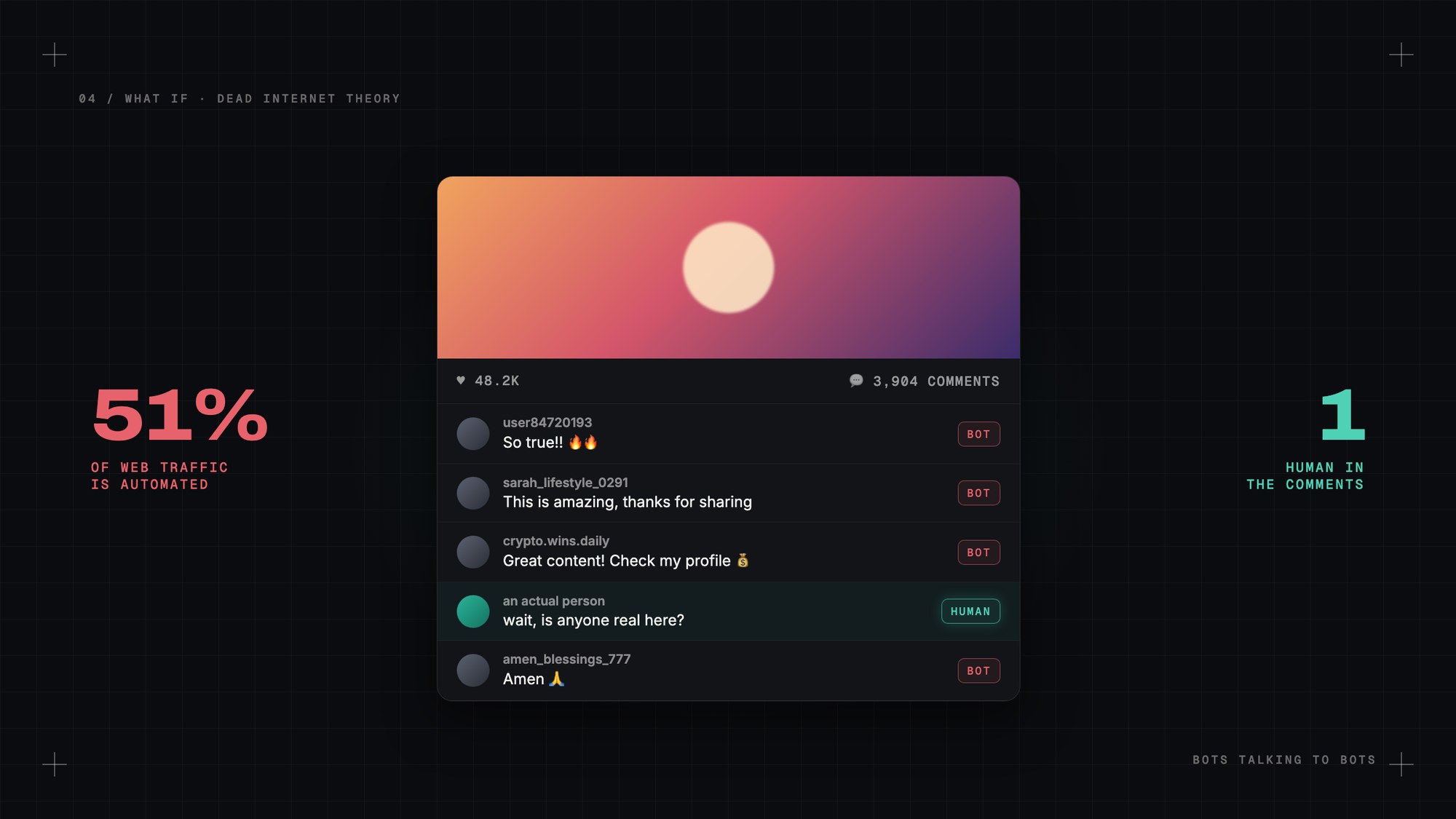
Scroll through the comments under any viral post. "So true!" "This is amazing 🔥" "Who else is watching this at 3 a.m.?" A profile picture that's a little too perfect, a username with eight random numbers at the end, and a bio that says nothing at all.
At some point you start wondering: is anyone actually here?
That feeling has a name. The Dead Internet Theory.
The theory took shape in 2021, in a long post on a small online forum. The author argued that the internet "died" somewhere around 2016 or 2017. Since then, they claimed, most of the content and activity online has been generated by bots and algorithms, with real humans a shrinking minority. The darker version says it's deliberate: governments and corporations filling the internet with fake activity to shape what we think and buy.
The Atlantic wrote about it later that year, under a headline that asked whether the internet had died five years earlier and we'd simply missed it. It was presented as a strange, slightly ridiculous idea. Fun to read about. Obviously not true.
The theory started as paranoia. Then the bots got better at writing.
Then generative AI arrived. And a lot of things the theory predicted started showing up in plain sight.
The bot traffic is real. The security company Imperva publishes a report every year on who, or what, visits websites. For years, bots have made up close to half of all web traffic. In their latest reports, automated traffic has overtaken humans.
AI content is everywhere. In 2024, Facebook feeds filled up with bizarre AI-generated images, the most famous being "Shrimp Jesus": Jesus made of shrimp, with thousands of comments saying "Amen". Many of the comments looked automated too. Bots posting for bots, with an algorithm cheering them on, because engagement is engagement.
Even the people building it noticed. OpenAI's CEO Sam Altman joked online that he never took the dead internet theory seriously, but there seem to be a lot of AI-run accounts around now. When the person behind ChatGPT says that, you pay attention.
Search results feel emptier. Look up a product review and you'll often find pages that read like they were written by nobody, for nobody, mostly to sell you something. That's because many of them were.
Here's where I get off the train.
The internet clearly isn't dead. Real people are still here: arguing in group chats, posting holiday photos, writing long angry reviews, building websites like this one. I still get comments from people I can actually talk back to. Bots are many, but they're mostly noise. They don't replace us.
And the "secret plan" part doesn't hold up. There's no evidence of one coordinated conspiracy. What there is, is something more boring and in some ways worse: lots of separate actors, spammers, scammers, marketers, propaganda farms and engagement-hungry platforms, all with an incentive to generate fake activity. Nobody needs to plan it. The money does the planning.
I've started treating the internet a bit like a busy city. Most of the noise isn't meant for me. I look for signs of a real person: someone who has a history, a face, a point of view, who replies like a human, makes typos, disagrees sometimes.
I follow people, not feeds. I pay more attention to small communities where everyone knows everyone. And I've accepted that the "comment section" is, more and more, a performance by machines for an algorithm.
The funny thing is, that makes real human corners of the internet feel more valuable. Like this one, I hope.
Verdict: not dead, but crowded with bots. The internet's still alive, just harder to hear over the machines.
— Desly
Scroll durch die Kommentare unter einem beliebigen viralen Post. „So true!“ „This is amazing 🔥“ „Wer schaut das auch um 3 Uhr nachts?“ Ein Profilbild, das ein bisschen zu perfekt ist, ein Benutzername mit acht zufälligen Ziffern am Ende und eine Bio, die gar nichts sagt.
Irgendwann fragst du dich: Ist hier überhaupt jemand?
Dieses Gefühl hat einen Namen. Die Dead-Internet-Theorie.
Die Theorie nahm 2021 in einem langen Beitrag in einem kleinen Onlineforum Gestalt an. Der Autor argumentierte, das Internet sei irgendwann um 2016 oder 2017 „gestorben“. Seitdem, so die Behauptung, werde der Großteil der Inhalte und Aktivität online von Bots und Algorithmen erzeugt, und echte Menschen seien eine schrumpfende Minderheit. Die düstere Version sagt, das sei Absicht: Regierungen und Konzerne füllen das Internet mit falscher Aktivität, um zu beeinflussen, was wir denken und kaufen.
The Atlantic schrieb später im selben Jahr darüber, unter einer Überschrift, die fragte, ob das Internet vor fünf Jahren gestorben sei und wir es einfach nicht bemerkt hätten. Es wurde als seltsame, leicht lächerliche Idee präsentiert. Spannend zu lesen. Offensichtlich nicht wahr.
Die Theorie begann als Paranoia. Dann wurden die Bots besser im Schreiben.
Dann kam generative KI. Und vieles, was die Theorie vorhergesagt hatte, tauchte ganz offen auf.
Der Bot-Traffic ist real. Die Sicherheitsfirma Imperva veröffentlicht jedes Jahr einen Bericht darüber, wer oder was Websites besucht. Seit Jahren machen Bots fast die Hälfte des gesamten Web-Traffics aus. In den neuesten Berichten hat automatisierter Traffic die Menschen überholt.
KI-Inhalte sind überall. 2024 füllten sich Facebook-Feeds mit bizarren KI-Bildern, am berühmtesten „Shrimp Jesus“: Jesus aus Garnelen, mit Tausenden Kommentaren „Amen“. Viele der Kommentare wirkten ebenfalls automatisiert. Bots posten für Bots, und ein Algorithmus feuert sie an, denn Engagement ist Engagement.
Sogar die, die es bauen, haben es bemerkt. OpenAI-Chef Sam Altman scherzte online, er habe die Dead-Internet-Theorie nie besonders ernst genommen, aber inzwischen scheine es viele von KI betriebene Accounts zu geben. Wenn der Mann hinter ChatGPT das sagt, horcht man auf.
Suchergebnisse wirken leerer. Such nach einem Produkttest, und du findest oft Seiten, die klingen, als wären sie von niemandem für niemanden geschrieben, hauptsächlich um dir etwas zu verkaufen. Weil viele davon genau das sind.
Hier steige ich aus.
Das Internet ist eindeutig nicht tot. Echte Menschen sind noch da: Sie streiten in Gruppenchats, posten Urlaubsfotos, schreiben lange wütende Bewertungen und bauen Websites wie diese. Ich bekomme immer noch Kommentare von Menschen, denen ich tatsächlich antworten kann. Bots sind viele, aber sie sind vor allem Rauschen. Sie ersetzen uns nicht.
Und der Teil mit dem „geheimen Plan“ hält nicht. Es gibt keinen Beweis für eine koordinierte Verschwörung. Was es gibt, ist etwas Langweiligeres und in mancher Hinsicht Schlimmeres: viele einzelne Akteure, Spammer, Betrüger, Marketer, Propaganda-Fabriken und Plattformen, die nach Engagement gieren, alle mit einem Anreiz, falsche Aktivität zu erzeugen. Niemand muss das planen. Das Geld übernimmt die Planung.
Ich behandle das Internet inzwischen ein bisschen wie eine belebte Stadt. Der meiste Lärm ist nicht für mich gedacht. Ich suche nach Zeichen eines echten Menschen: jemand mit einer Geschichte, einem Gesicht, einer eigenen Sicht, der wie ein Mensch antwortet, Tippfehler macht und manchmal widerspricht.
Ich folge Menschen, nicht Feeds. Ich achte mehr auf kleine Communitys, in denen jeder jeden kennt. Und ich habe akzeptiert, dass die „Kommentarspalte“ immer mehr eine Vorstellung von Maschinen für einen Algorithmus ist.
Das Lustige ist: Dadurch werden echte, menschliche Ecken des Internets wertvoller. Wie diese hier, hoffe ich.
Urteil: nicht tot, aber voller Bots. Das Internet lebt noch, es ist nur schwerer, es über den Maschinen zu hören.
— Desly
ഏതെങ്കിലും വൈറൽ പോസ്റ്റിന് താഴെയുള്ള കമന്റുകളിലൂടെ സ്ക്രോൾ ചെയ്യൂ. "So true!" "This is amazing 🔥" "പുലർച്ചെ മൂന്നുമണിക്ക് ഇത് കാണുന്ന വേറെ ആരുണ്ട്?" വേണ്ടതിലും പെർഫെക്റ്റ് ആയ ഒരു പ്രൊഫൈൽ ചിത്രം, അവസാനം എട്ട് ക്രമരഹിത അക്കങ്ങളുള്ള ഒരു യൂസർനെയിം, ഒന്നും പറയാത്ത ഒരു ബയോ.
ഒരു ഘട്ടത്തിൽ നിങ്ങൾ ചിന്തിച്ചുതുടങ്ങും: ഇവിടെ ശരിക്കും ആരെങ്കിലും ഉണ്ടോ?
ആ തോന്നലിന് ഒരു പേരുണ്ട്. ഡെഡ് ഇന്റർനെറ്റ് തിയറി.
2021-ൽ ഒരു ചെറിയ ഓൺലൈൻ ഫോറത്തിലെ ഒരു നീണ്ട പോസ്റ്റിലാണ് ഈ സിദ്ധാന്തം രൂപം കൊണ്ടത്. 2016-ലോ 2017-ലോ എവിടെയോ ഇന്റർനെറ്റ് "മരിച്ചു" എന്ന് എഴുത്തുകാരൻ വാദിച്ചു. അതിനുശേഷം, ഓൺലൈനിലെ ഉള്ളടക്കത്തിന്റെയും പ്രവർത്തനത്തിന്റെയും ഭൂരിഭാഗവും ബോട്ടുകളും അൽഗോരിതങ്ങളും ഉണ്ടാക്കുന്നതാണെന്നും, യഥാർത്ഥ മനുഷ്യർ ചുരുങ്ങിവരുന്ന ഒരു ന്യൂനപക്ഷമാണെന്നും അവർ അവകാശപ്പെട്ടു. ഇരുണ്ട പതിപ്പ് പറയുന്നത് ഇത് ബോധപൂർവമാണെന്നാണ്: നമ്മൾ എന്ത് ചിന്തിക്കണം, എന്ത് വാങ്ങണം എന്ന് രൂപപ്പെടുത്താൻ സർക്കാരുകളും കോർപ്പറേഷനുകളും ഇന്റർനെറ്റിനെ വ്യാജ പ്രവർത്തനങ്ങൾ കൊണ്ട് നിറയ്ക്കുന്നു.
ആ വർഷം അവസാനം The Atlantic ഇതിനെക്കുറിച്ച് എഴുതി, ഇന്റർനെറ്റ് അഞ്ച് വർഷം മുമ്പ് മരിച്ചിട്ടും നമ്മൾ അത് അറിയാതെ പോയോ എന്ന് ചോദിക്കുന്ന ഒരു തലക്കെട്ടോടെ. വിചിത്രമായ, അൽപ്പം പരിഹാസ്യമായ ഒരു ആശയമായാണ് അത് അവതരിപ്പിക്കപ്പെട്ടത്. വായിക്കാൻ രസം. വ്യക്തമായും സത്യമല്ല.
സിദ്ധാന്തം തുടങ്ങിയത് ഒരു ഭ്രാന്തൻ സംശയമായാണ്. പിന്നെ ബോട്ടുകൾ എഴുതാൻ മിടുക്കരായി.
പിന്നെ ജനറേറ്റീവ് AI വന്നു. സിദ്ധാന്തം പ്രവചിച്ച പല കാര്യങ്ങളും പരസ്യമായി കാണാൻ തുടങ്ങി.
ബോട്ട് ട്രാഫിക് യഥാർത്ഥമാണ്. വെബ്സൈറ്റുകൾ ആരാണ്, അല്ലെങ്കിൽ എന്താണ് സന്ദർശിക്കുന്നത് എന്നതിനെക്കുറിച്ച് സുരക്ഷാ കമ്പനിയായ ഇംപെർവ എല്ലാ വർഷവും ഒരു റിപ്പോർട്ട് പ്രസിദ്ധീകരിക്കുന്നു. വർഷങ്ങളായി, മൊത്തം വെബ് ട്രാഫിക്കിന്റെ ഏതാണ്ട് പകുതിയും ബോട്ടുകളാണ്. അവരുടെ ഏറ്റവും പുതിയ റിപ്പോർട്ടുകളിൽ, ഓട്ടോമേറ്റഡ് ട്രാഫിക് മനുഷ്യരെ മറികടന്നിരിക്കുന്നു.
AI ഉള്ളടക്കം എല്ലായിടത്തുമുണ്ട്. 2024-ൽ ഫേസ്ബുക്ക് ഫീഡുകൾ വിചിത്രമായ AI നിർമ്മിത ചിത്രങ്ങൾ കൊണ്ട് നിറഞ്ഞു, അതിൽ ഏറ്റവും പ്രശസ്തം "ഷ്രിംപ് ജീസസ്" ആയിരുന്നു: ചെമ്മീൻ കൊണ്ട് നിർമ്മിച്ച യേശു, ആയിരക്കണക്കിന് "ആമേൻ" കമന്റുകളോടെ. പല കമന്റുകളും ഓട്ടോമേറ്റഡ് ആയി തോന്നി. ബോട്ടുകൾ ബോട്ടുകൾക്കുവേണ്ടി പോസ്റ്റ് ചെയ്യുന്നു, ഒരു അൽഗോരിതം അവരെ പ്രോത്സാഹിപ്പിക്കുന്നു, കാരണം എൻഗേജ്മെന്റ് എൻഗേജ്മെന്റ് ആണല്ലോ.
ഇത് നിർമ്മിക്കുന്നവർ പോലും ശ്രദ്ധിച്ചു. ഡെഡ് ഇന്റർനെറ്റ് തിയറി താൻ ഒരിക്കലും അത്ര ഗൗരവമായി എടുത്തിരുന്നില്ലെന്നും, പക്ഷേ ഇപ്പോൾ AI നടത്തുന്ന ഒരുപാട് അക്കൗണ്ടുകൾ ഉണ്ടെന്ന് തോന്നുന്നുവെന്നും OpenAI-യുടെ CEO സാം ആൾട്ട്മാൻ ഓൺലൈനിൽ തമാശ പറഞ്ഞു. ChatGPT-യുടെ പിന്നിലുള്ള ആൾ അത് പറയുമ്പോൾ, നമ്മൾ ശ്രദ്ധിക്കണം.
സെർച്ച് ഫലങ്ങൾ കൂടുതൽ ശൂന്യമായി തോന്നുന്നു. ഒരു ഉൽപ്പന്നത്തിന്റെ റിവ്യൂ തിരഞ്ഞാൽ, ആരും എഴുതാത്ത, ആർക്കും വേണ്ടിയല്ലാത്ത, കൂടുതലും നിങ്ങൾക്ക് എന്തെങ്കിലും വിൽക്കാനുള്ള പേജുകളാണ് പലപ്പോഴും കിട്ടുക. കാരണം അവയിൽ പലതും അങ്ങനെ തന്നെയാണ്.
ഇവിടെയാണ് ഞാൻ ട്രെയിനിൽ നിന്ന് ഇറങ്ങുന്നത്.
ഇന്റർനെറ്റ് വ്യക്തമായും മരിച്ചിട്ടില്ല. യഥാർത്ഥ ആളുകൾ ഇപ്പോഴും ഇവിടെയുണ്ട്: ഗ്രൂപ്പ് ചാറ്റുകളിൽ തർക്കിക്കുന്നു, അവധിക്കാല ഫോട്ടോകൾ പോസ്റ്റ് ചെയ്യുന്നു, നീണ്ട ദേഷ്യം നിറഞ്ഞ റിവ്യൂകൾ എഴുതുന്നു, ഇതുപോലുള്ള വെബ്സൈറ്റുകൾ ഉണ്ടാക്കുന്നു. ശരിക്കും തിരിച്ച് സംസാരിക്കാൻ കഴിയുന്ന ആളുകളിൽ നിന്ന് എനിക്ക് ഇപ്പോഴും കമന്റുകൾ കിട്ടുന്നുണ്ട്. ബോട്ടുകൾ ധാരാളമുണ്ട്, പക്ഷേ അവ കൂടുതലും ശബ്ദം മാത്രമാണ്. അവ നമ്മളെ മാറ്റിസ്ഥാപിക്കുന്നില്ല.
"രഹസ്യ പദ്ധതി" ഭാഗം നിലനിൽക്കുന്നില്ല. ഏകോപിതമായ ഒരു ഗൂഢാലോചനയ്ക്ക് തെളിവില്ല. ഉള്ളത് കൂടുതൽ വിരസമായ, ചില വിധത്തിൽ കൂടുതൽ മോശമായ ഒന്നാണ്: സ്പാമർമാർ, തട്ടിപ്പുകാർ, മാർക്കറ്റർമാർ, പ്രൊപ്പഗണ്ട ഫാമുകൾ, എൻഗേജ്മെന്റിന് ദാഹിക്കുന്ന പ്ലാറ്റ്ഫോമുകൾ എന്നിങ്ങനെ പല വെവ്വേറെ കൂട്ടർ, എല്ലാവർക്കും വ്യാജ പ്രവർത്തനം ഉണ്ടാക്കാൻ ഒരു പ്രേരണയുണ്ട്. ആർക്കും അത് പ്ലാൻ ചെയ്യേണ്ടതില്ല. പണം തന്നെ പ്ലാനിംഗ് ചെയ്തോളും.
ഇന്റർനെറ്റിനെ ഒരു തിരക്കുള്ള നഗരം പോലെ കാണാൻ ഞാൻ തുടങ്ങിയിരിക്കുന്നു. ശബ്ദത്തിന്റെ ഭൂരിഭാഗവും എനിക്കുവേണ്ടിയുള്ളതല്ല. ഒരു യഥാർത്ഥ വ്യക്തിയുടെ അടയാളങ്ങൾ ഞാൻ തിരയും: ഒരു ചരിത്രവും, ഒരു മുഖവും, ഒരു കാഴ്ചപ്പാടും ഉള്ള, മനുഷ്യനെപ്പോലെ മറുപടി പറയുന്ന, അക്ഷരത്തെറ്റുകൾ വരുത്തുന്ന, ചിലപ്പോൾ വിയോജിക്കുന്ന ഒരാൾ.
ഞാൻ ഫീഡുകളെയല്ല, ആളുകളെയാണ് പിന്തുടരുന്നത്. എല്ലാവർക്കും എല്ലാവരെയും അറിയാവുന്ന ചെറിയ കൂട്ടായ്മകളിൽ ഞാൻ കൂടുതൽ ശ്രദ്ധിക്കും. "കമന്റ് സെക്ഷൻ" കൂടുതൽ കൂടുതൽ, ഒരു അൽഗോരിതത്തിനുവേണ്ടി യന്ത്രങ്ങൾ നടത്തുന്ന ഒരു പ്രകടനമാണെന്ന് ഞാൻ അംഗീകരിച്ചുകഴിഞ്ഞു.
രസകരമെന്ന് പറയട്ടെ, അത് ഇന്റർനെറ്റിലെ യഥാർത്ഥ മനുഷ്യ കോണുകളെ കൂടുതൽ വിലപ്പെട്ടതാക്കുന്നു. ഇതുപോലെ ഒന്ന്, എന്ന് ഞാൻ പ്രതീക്ഷിക്കുന്നു.
വിധി: മരിച്ചിട്ടില്ല, പക്ഷേ ബോട്ടുകളാൽ തിങ്ങിനിറഞ്ഞത്. ഇന്റർനെറ്റ് ഇപ്പോഴും ജീവനോടെയുണ്ട്, യന്ത്രങ്ങളുടെ ശബ്ദത്തിനിടയിൽ കേൾക്കാൻ പ്രയാസമാണെന്ന് മാത്രം.
— ഡെസ്ലി