Building an internal developer platform without a big team
You don't need fifty engineers to build a platform. You need one good golden path.
You don't need fifty engineers to build a platform. You need one good golden path.
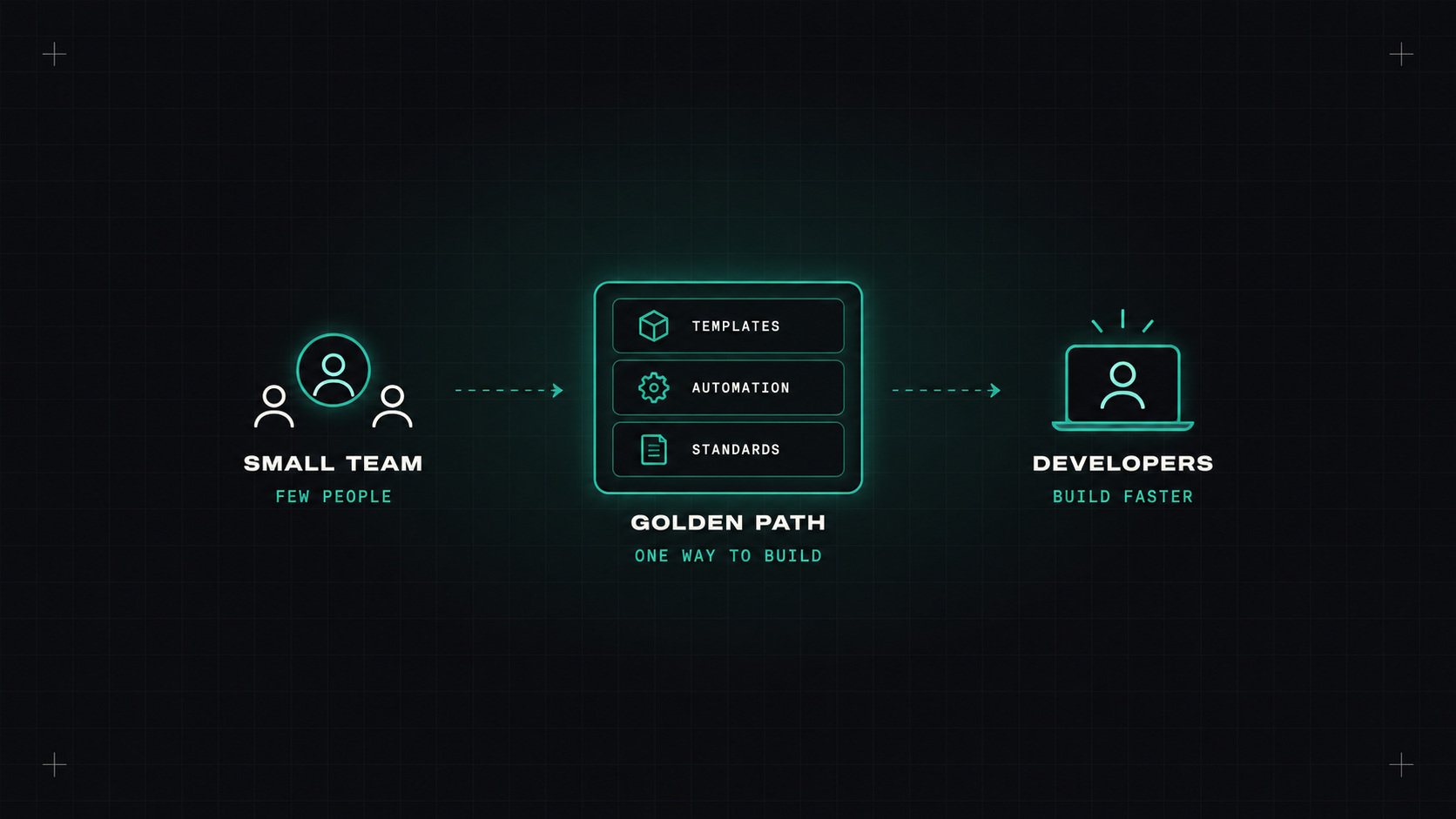
When people hear "internal developer platform", they picture something huge. A shiny portal, dozens of integrations, a team of twenty, a year-long roadmap. No wonder smaller companies think it isn't for them.
I think that picture is wrong. A platform isn't a portal. It's whatever makes it easy for developers to get their code into production safely, without opening a ticket. That can start very small.
An internal developer platform is a set of tools, templates and automation that lets developers serve themselves. Typical building blocks:
What a platform isn't: a tool you install. Buying Backstage or any other portal doesn't give you a platform, just like buying a gym membership doesn't make you fit.
If I had to start from zero with a small team, I'd begin with one thing: a golden path for the most common type of service in the company.
Say most of your services are small HTTP APIs in one language. The golden path could be:
That's it. No portal yet. A developer runs one command or clicks "use this template" on GitHub, and twenty minutes later their service is running in a test environment with monitoring.
A platform is successful when developers choose it because it's easier, not because they're forced to.
Once the golden path works and you have more than one, a portal starts to make sense. It gives the templates a home and adds a catalog.
My rule: don't introduce a portal until you have something worth putting in it.
A platform is a product, and products need feedback. A few numbers I'd track:
And talk to developers. Sit with someone while they create a new service. Every place they hesitate or ask a question is a bug in your platform.
Start with the most painful, most frequent task. Automate that properly. Make it so good that people ask for more. Then pick the next thing.
Don't try to cover every edge case. Keep an escape hatch so teams with unusual needs can still do their own thing. A platform that blocks people becomes the new wall DevOps was supposed to tear down.
Yes. A small team can't build everything, but it doesn't need to. One golden path that really works beats a portal full of half-finished features.
My take: start with one road, pave it well, and let people's footsteps tell you where to build the next one.
— Desly