Your next car is a computer on wheels
Cars used to be finished the day they left the factory. Now they get updates, new features and subscriptions. As a car person and a software person, I have mixed feelings.
Cars used to be finished the day they left the factory. Now they get updates, new features and subscriptions. As a car person and a software person, I have mixed feelings.
Früher war ein Auto fertig, wenn es die Fabrik verließ. Heute bekommt es Updates, neue Funktionen und Abos. Als Autofan und Software-Mensch habe ich gemischte Gefühle.
ഫാക്ടറി വിടുന്ന ദിവസം കാറുകൾ പൂർത്തിയായിരുന്നു. ഇപ്പോൾ അവയ്ക്ക് അപ്ഡേറ്റുകളും പുതിയ ഫീച്ചറുകളും സബ്സ്ക്രിപ്ഷനുകളും കിട്ടുന്നു. ഒരു കാർ പ്രേമിയും സോഫ്റ്റ്വെയർ ആളുമെന്ന നിലയിൽ എനിക്ക് സമ്മിശ്ര വികാരങ്ങളാണ്.
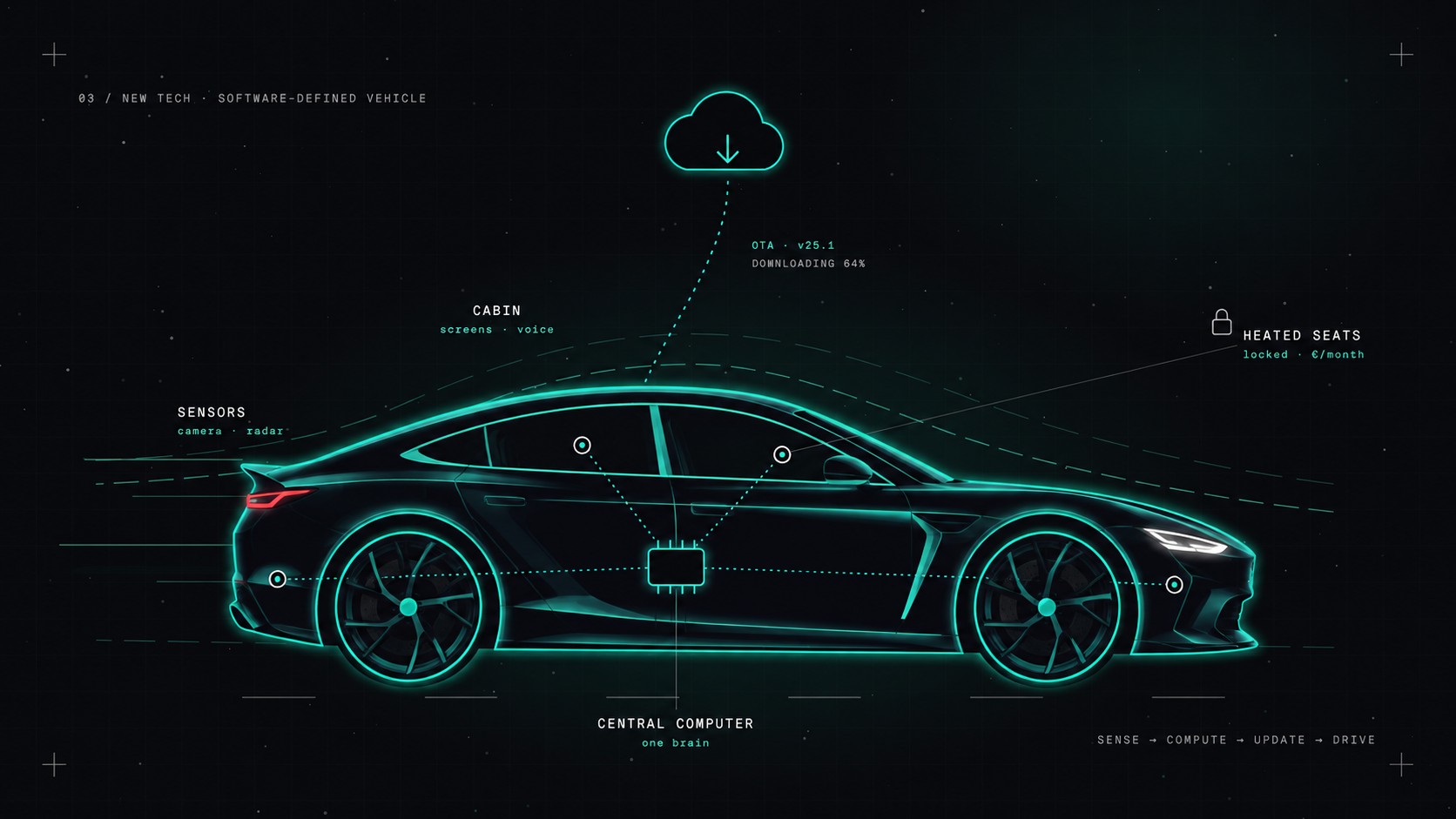
For as long as I can remember, I've been a car person. The sound, the design, the feeling of a good road. I grew up thinking a car was a machine: engine, gearbox, suspension, and a bit of electronics to keep it all running.
That idea is quietly going out of date. The car you buy next is very likely to be, at its heart, a computer. One that happens to have wheels, seats and a very large battery or fuel tank attached.
The industry calls it the software-defined vehicle. Behind the buzzword is a real change in how cars are built.
For decades, every function in a car had its own little computer. One for the windows, one for the airbags, one for the engine, one for the radio. A modern car can have more than a hundred of them, from different suppliers, all talking to each other. It works, but it's messy, and it's very hard to update.
The new approach is closer to how your phone works: a few powerful central computers, with the car split into zones that handle the hardware nearby. The behaviour of the car, from how the screen looks to how the brakes feel, lives more and more in software. And software can change after you buy it.
A car used to be at its best on the day you bought it. Now it can get better on your driveway.
Tesla made over-the-air updates normal. Your car downloads an update overnight, like a phone, and in the morning it has a new feature or a fix. The famous example is from 2018, when a well-known consumer magazine criticised the Model 3's braking distance. Tesla pushed an update within days, and the braking distance improved. No workshop visit, no recall letter.
Today almost every manufacturer does some version of this. Maps, the infotainment system, driver assistance, battery management, even the way the car charges can all be improved remotely. Some recalls that once meant a trip to the dealer can now be fixed overnight. As someone who works in DevOps, I love this. It's exactly how good software should be delivered: small, frequent, safe updates.
Here's where the car person in me gets angry.
A few years ago, BMW offered heated seats as a monthly subscription in some countries. The heating elements were already built into the seat. You had paid for the hardware. You just had to keep paying to switch it on. The backlash was so strong that BMW dropped the idea for heated seats in 2023.
Mercedes offered extra acceleration on some of its electric cars in the US as a yearly subscription. Same motor, same battery. The car simply goes faster once you pay.
I understand the business logic. Building one version of a car and unlocking features with software is cheaper for the manufacturer. But if the hardware is in my car, and I paid for my car, it feels wrong to rent it back to me. Optional services like live traffic or streaming are one thing. Locking the seat heater in a German winter is another.
Software makes cars better, but it also brings software problems.
When Volkswagen launched its first ID.3 electric cars, early buyers got cars with missing features that were promised later through updates. Reviews talked more about bugs and slow screens than about driving. VW sorted much of it out over time, but it showed that building good software is a very different skill from building good cars.
Then there's security. In 2015, two security researchers showed they could take control of a Jeep Cherokee remotely, over the internet, while a journalist was driving it on a highway. Chrysler recalled 1.4 million vehicles to fix it. A car that's always connected is a car that has to be defended like any other computer on the internet.
This is the part people think about least. A connected car knows where you go, when, how fast, how hard you brake, and often which phone is connected and who you call. Some cars have cameras inside watching the driver.
When the Mozilla Foundation reviewed car brands for privacy in 2023, it called cars the worst product category it had ever looked at. Phones and smart speakers did better. Most of us read the privacy settings on our phones. Almost nobody reads them in their car.
After reading way too much about this, here's my personal checklist:
I don't think we're going back. Cars will keep becoming more like computers, and in many ways that's great: safer, smarter, and better for longer. The manufacturers that get the software right will win. The ones that treat software as a way to charge us again for the same metal will, I hope, lose.
The engine sound may be fading. But the car person in me is still excited. It's just that now, I also care about the release notes.
My take: buy the car for how it drives, but check how it updates.
— Desly
Solange ich denken kann, bin ich ein Autofan. Der Klang, das Design, das Gefühl einer guten Straße. Ich bin mit der Vorstellung aufgewachsen, ein Auto sei eine Maschine: Motor, Getriebe, Fahrwerk und ein bisschen Elektronik, damit alles läuft.
Diese Vorstellung veraltet gerade leise. Das Auto, das du als Nächstes kaufst, ist sehr wahrscheinlich im Kern ein Computer. Einer, an dem zufällig Räder, Sitze und ein sehr großer Akku oder Tank hängen.
Die Branche nennt es das softwaredefinierte Fahrzeug. Hinter dem Schlagwort steckt eine echte Veränderung in der Art, wie Autos gebaut werden.
Jahrzehntelang hatte jede Funktion im Auto ihren eigenen kleinen Computer. Einen für die Fenster, einen für die Airbags, einen für den Motor, einen für das Radio. Ein modernes Auto kann über hundert davon haben, von verschiedenen Zulieferern, die alle miteinander reden. Es funktioniert, aber es ist unübersichtlich und sehr schwer zu aktualisieren.
Der neue Ansatz ähnelt eher deinem Handy: ein paar leistungsstarke zentrale Computer, und das Auto ist in Zonen aufgeteilt, die die Hardware in der Nähe steuern. Das Verhalten des Autos, vom Aussehen des Bildschirms bis zum Gefühl der Bremsen, steckt immer mehr in Software. Und Software kann sich nach dem Kauf ändern.
Früher war ein Auto am Tag des Kaufs am besten. Heute kann es in deiner Einfahrt besser werden.
Tesla hat Updates über die Luft normal gemacht. Dein Auto lädt nachts ein Update herunter, wie ein Handy, und morgens hat es eine neue Funktion oder einen Fix. Das berühmte Beispiel stammt aus 2018, als eine bekannte Verbraucherzeitschrift den Bremsweg des Model 3 kritisierte. Tesla spielte innerhalb weniger Tage ein Update ein, und der Bremsweg wurde kürzer. Kein Werkstattbesuch, kein Rückrufbrief.
Heute macht fast jeder Hersteller eine Version davon. Karten, das Infotainment, Fahrassistenz, Batteriemanagement, sogar die Art, wie das Auto lädt, lassen sich aus der Ferne verbessern. Manche Rückrufe, die früher einen Gang zum Händler bedeuteten, lassen sich jetzt über Nacht erledigen. Als jemand, der im DevOps-Bereich arbeitet, liebe ich das. Genau so sollte gute Software ausgeliefert werden: kleine, häufige, sichere Updates.
Hier wird der Autofan in mir wütend.
Vor ein paar Jahren bot BMW in einigen Ländern Sitzheizung als Monatsabo an. Die Heizelemente waren schon im Sitz eingebaut. Du hattest die Hardware bezahlt. Du musstest nur weiter zahlen, um sie einzuschalten. Der Gegenwind war so stark, dass BMW die Idee für die Sitzheizung 2023 fallen ließ.
Mercedes bot in den USA für einige Elektroautos mehr Beschleunigung als Jahresabo an. Gleicher Motor, gleicher Akku. Das Auto fährt einfach schneller, wenn du zahlst.
Ich verstehe die Geschäftslogik. Eine Version eines Autos zu bauen und Funktionen per Software freizuschalten, ist für den Hersteller günstiger. Aber wenn die Hardware in meinem Auto ist und ich mein Auto bezahlt habe, fühlt es sich falsch an, sie mir zurückzuvermieten. Optionale Dienste wie Live-Verkehr oder Streaming sind das eine. Die Sitzheizung im deutschen Winter zu sperren, ist etwas anderes.
Software macht Autos besser, bringt aber auch Software-Probleme mit.
Als Volkswagen seine ersten ID.3-Elektroautos auf den Markt brachte, bekamen frühe Käufer Autos mit fehlenden Funktionen, die später per Update kommen sollten. In Tests ging es mehr um Bugs und träge Bildschirme als ums Fahren. VW hat vieles davon mit der Zeit gelöst, aber es zeigte, dass gute Software zu bauen eine ganz andere Fähigkeit ist, als gute Autos zu bauen.
Dann ist da die Sicherheit. 2015 zeigten zwei Sicherheitsforscher, dass sie einen Jeep Cherokee aus der Ferne über das Internet steuern konnten, während ein Journalist damit auf dem Highway fuhr. Chrysler rief 1,4 Millionen Fahrzeuge zurück, um es zu beheben. Ein Auto, das immer verbunden ist, muss verteidigt werden wie jeder andere Computer im Internet.
An diesen Teil denken die Leute am wenigsten. Ein vernetztes Auto weiß, wohin du fährst, wann, wie schnell, wie stark du bremst und oft, welches Handy verbunden ist und wen du anrufst. Manche Autos haben innen Kameras, die den Fahrer beobachten.
Als die Mozilla Foundation 2023 Automarken auf Datenschutz prüfte, nannte sie Autos die schlechteste Produktkategorie, die sie je untersucht hatte. Handys und smarte Lautsprecher schnitten besser ab. Die meisten von uns lesen die Datenschutzeinstellungen am Handy. Im Auto liest sie fast niemand.
Nachdem ich viel zu viel darüber gelesen habe, hier meine persönliche Checkliste:
Ich glaube nicht, dass wir zurückgehen. Autos werden immer mehr wie Computer, und in vieler Hinsicht ist das großartig: sicherer, klüger und länger gut. Die Hersteller, die die Software richtig hinbekommen, werden gewinnen. Die, die Software als Weg sehen, uns für dasselbe Blech noch einmal zur Kasse zu bitten, werden hoffentlich verlieren.
Der Motorsound mag verklingen. Aber der Autofan in mir ist immer noch begeistert. Nur achte ich jetzt auch auf die Release Notes.
Mein Fazit: Kauf das Auto danach, wie es fährt, aber schau auch, wie es sich aktualisiert.
— Desly
ഓർമ്മവെച്ച കാലം മുതൽ ഞാൻ ഒരു കാർ പ്രേമിയാണ്. ശബ്ദം, ഡിസൈൻ, ഒരു നല്ല റോഡിന്റെ അനുഭവം. ഒരു കാർ ഒരു യന്ത്രമാണെന്ന് കരുതിയാണ് ഞാൻ വളർന്നത്: എഞ്ചിൻ, ഗിയർബോക്സ്, സസ്പെൻഷൻ, എല്ലാം പ്രവർത്തിപ്പിച്ചുനിർത്താൻ കുറച്ച് ഇലക്ട്രോണിക്സും.
ആ ആശയം നിശ്ശബ്ദമായി കാലഹരണപ്പെടുകയാണ്. നിങ്ങൾ അടുത്തതായി വാങ്ങുന്ന കാർ, അതിന്റെ ഹൃദയത്തിൽ, ഒരു കമ്പ്യൂട്ടറാകാനാണ് സാധ്യത. ചക്രങ്ങളും സീറ്റുകളും വലിയൊരു ബാറ്ററിയോ ഇന്ധനടാങ്കോ ഘടിപ്പിച്ച ഒരു കമ്പ്യൂട്ടർ.
വ്യവസായം ഇതിനെ സോഫ്റ്റ്വെയർ-ഡിഫൈൻഡ് വെഹിക്കിൾ എന്ന് വിളിക്കുന്നു. ആ ബസ്വേഡിന് പിന്നിൽ കാറുകൾ നിർമ്മിക്കുന്ന രീതിയിലെ ഒരു യഥാർത്ഥ മാറ്റമുണ്ട്.
പതിറ്റാണ്ടുകളോളം, ഒരു കാറിലെ ഓരോ പ്രവർത്തനത്തിനും സ്വന്തം ചെറിയ കമ്പ്യൂട്ടറുണ്ടായിരുന്നു. ജനലുകൾക്ക് ഒന്ന്, എയർബാഗുകൾക്ക് ഒന്ന്, എഞ്ചിന് ഒന്ന്, റേഡിയോയ്ക്ക് ഒന്ന്. ഒരു ആധുനിക കാറിൽ വ്യത്യസ്ത വിതരണക്കാരിൽ നിന്നുള്ള നൂറിലധികം എണ്ണം ഉണ്ടാകാം, എല്ലാം പരസ്പരം സംസാരിക്കുന്നു. അത് പ്രവർത്തിക്കുന്നു, പക്ഷേ കുഴഞ്ഞുമറിഞ്ഞതാണ്, അപ്ഡേറ്റ് ചെയ്യാൻ വളരെ പ്രയാസവുമാണ്.
പുതിയ സമീപനം നിങ്ങളുടെ ഫോൺ പ്രവർത്തിക്കുന്നതിനോട് അടുത്താണ്: ചില ശക്തമായ കേന്ദ്ര കമ്പ്യൂട്ടറുകൾ, അടുത്തുള്ള ഹാർഡ്വെയർ കൈകാര്യം ചെയ്യുന്ന സോണുകളായി കാർ വിഭജിക്കപ്പെടുന്നു. സ്ക്രീൻ എങ്ങനെ കാണപ്പെടുന്നു എന്നത് മുതൽ ബ്രേക്കുകൾ എങ്ങനെ തോന്നുന്നു എന്നത് വരെ, കാറിന്റെ സ്വഭാവം കൂടുതൽ കൂടുതൽ സോഫ്റ്റ്വെയറിലാണ്. വാങ്ങിയതിനുശേഷം സോഫ്റ്റ്വെയർ മാറാം.
ഒരു കാർ ഏറ്റവും മികച്ചതായിരുന്നത് നിങ്ങൾ വാങ്ങിയ ദിവസമായിരുന്നു. ഇപ്പോൾ നിങ്ങളുടെ മുറ്റത്ത് കിടന്ന് അത് മെച്ചപ്പെടാം.
ഓവർ-ദി-എയർ അപ്ഡേറ്റുകൾ സാധാരണമാക്കിയത് Tesla ആണ്. ഒരു ഫോൺ പോലെ നിങ്ങളുടെ കാർ രാത്രി ഒരു അപ്ഡേറ്റ് ഡൗൺലോഡ് ചെയ്യുന്നു, രാവിലെ അതിന് ഒരു പുതിയ ഫീച്ചറോ ഒരു പരിഹാരമോ ഉണ്ടാകും. പ്രശസ്തമായ ഉദാഹരണം 2018-ൽ നിന്നാണ്, ഒരു പ്രമുഖ ഉപഭോക്തൃ മാസിക Model 3-ന്റെ ബ്രേക്കിംഗ് ദൂരത്തെ വിമർശിച്ചപ്പോൾ. ദിവസങ്ങൾക്കുള്ളിൽ Tesla ഒരു അപ്ഡേറ്റ് അയച്ചു, ബ്രേക്കിംഗ് ദൂരം മെച്ചപ്പെട്ടു. വർക്ക്ഷോപ്പ് സന്ദർശനമില്ല, റീകോൾ കത്തില്ല.
ഇന്ന് ഏതാണ്ട് എല്ലാ നിർമ്മാതാക്കളും ഇതിന്റെ ഏതെങ്കിലും രൂപം ചെയ്യുന്നു. മാപ്പുകൾ, ഇൻഫോടെയ്ൻമെന്റ് സിസ്റ്റം, ഡ്രൈവർ അസിസ്റ്റൻസ്, ബാറ്ററി മാനേജ്മെന്റ്, കാർ ചാർജ് ചെയ്യുന്ന രീതി പോലും ദൂരെ നിന്ന് മെച്ചപ്പെടുത്താം. ഒരിക്കൽ ഡീലറുടെ അടുത്തേക്കുള്ള യാത്ര വേണ്ടിയിരുന്ന ചില റീകോളുകൾ ഇപ്പോൾ രാത്രി കൊണ്ട് പരിഹരിക്കാം. DevOps-ൽ ജോലി ചെയ്യുന്ന ഒരാളെന്ന നിലയിൽ, എനിക്ക് ഇത് വളരെ ഇഷ്ടമാണ്. നല്ല സോഫ്റ്റ്വെയർ കൃത്യം ഇങ്ങനെയാണ് എത്തിക്കേണ്ടത്: ചെറിയ, പതിവ്, സുരക്ഷിതമായ അപ്ഡേറ്റുകൾ.
ഇവിടെയാണ് എന്നിലെ കാർ പ്രേമിക്ക് ദേഷ്യം വരുന്നത്.
കുറച്ച് വർഷം മുമ്പ്, ചില രാജ്യങ്ങളിൽ BMW ഹീറ്റഡ് സീറ്റുകൾ ഒരു മാസവരി സബ്സ്ക്രിപ്ഷനായി വാഗ്ദാനം ചെയ്തു. ഹീറ്റിംഗ് ഘടകങ്ങൾ ഇതിനകം സീറ്റിൽ ഉണ്ടായിരുന്നു. ഹാർഡ്വെയറിന് നിങ്ങൾ പണം നൽകിയിരുന്നു. ഓണാക്കാൻ തുടർന്നും പണം നൽകണമെന്ന് മാത്രം. പ്രതിഷേധം അത്ര ശക്തമായിരുന്നതിനാൽ 2023-ൽ ഹീറ്റഡ് സീറ്റുകൾക്കുള്ള ആ ആശയം BMW ഉപേക്ഷിച്ചു.
യു.എസിൽ അതിന്റെ ചില ഇലക്ട്രിക് കാറുകളിൽ Mercedes അധിക ആക്സിലറേഷൻ ഒരു വാർഷിക സബ്സ്ക്രിപ്ഷനായി വാഗ്ദാനം ചെയ്തു. അതേ മോട്ടോർ, അതേ ബാറ്ററി. പണം നൽകിയാൽ കാർ വേഗത്തിൽ പോകും, അത്രമാത്രം.
ബിസിനസ് യുക്തി എനിക്ക് മനസ്സിലാകും. ഒരു പതിപ്പ് മാത്രം നിർമ്മിച്ച് സോഫ്റ്റ്വെയർ കൊണ്ട് ഫീച്ചറുകൾ അൺലോക്ക് ചെയ്യുന്നത് നിർമ്മാതാവിന് ചെലവ് കുറവാണ്. പക്ഷേ ഹാർഡ്വെയർ എന്റെ കാറിലുണ്ടെങ്കിൽ, എന്റെ കാറിന് ഞാൻ പണം നൽകിയെങ്കിൽ, അത് എനിക്ക് തന്നെ വാടകയ്ക്ക് തരുന്നത് തെറ്റായി തോന്നുന്നു. ലൈവ് ട്രാഫിക് അല്ലെങ്കിൽ സ്ട്രീമിംഗ് പോലുള്ള ഓപ്ഷണൽ സേവനങ്ങൾ ഒരു കാര്യം. ഒരു ജർമ്മൻ ശൈത്യകാലത്ത് സീറ്റ് ഹീറ്റർ പൂട്ടിവെക്കുന്നത് മറ്റൊന്ന്.
സോഫ്റ്റ്വെയർ കാറുകളെ മെച്ചപ്പെടുത്തുന്നു, പക്ഷേ സോഫ്റ്റ്വെയർ പ്രശ്നങ്ങളും കൊണ്ടുവരുന്നു.
Volkswagen അതിന്റെ ആദ്യ ID.3 ഇലക്ട്രിക് കാറുകൾ പുറത്തിറക്കിയപ്പോൾ, ആദ്യകാല വാങ്ങുന്നവർക്ക് പിന്നീട് അപ്ഡേറ്റുകളിലൂടെ വരുമെന്ന് വാഗ്ദാനം ചെയ്ത ഫീച്ചറുകൾ ഇല്ലാത്ത കാറുകളാണ് കിട്ടിയത്. റിവ്യൂകൾ ഡ്രൈവിംഗിനേക്കാൾ കൂടുതൽ ബഗുകളെയും മന്ദഗതിയിലുള്ള സ്ക്രീനുകളെയും കുറിച്ചാണ് സംസാരിച്ചത്. കാലക്രമേണ VW അതിൽ ഭൂരിഭാഗവും പരിഹരിച്ചു, പക്ഷേ നല്ല സോഫ്റ്റ്വെയർ നിർമ്മിക്കുന്നത് നല്ല കാറുകൾ നിർമ്മിക്കുന്നതിൽ നിന്ന് വളരെ വ്യത്യസ്തമായ ഒരു കഴിവാണെന്ന് അത് കാണിച്ചു.
പിന്നെ സുരക്ഷയുണ്ട്. 2015-ൽ, ഒരു പത്രപ്രവർത്തകൻ ഹൈവേയിൽ ഓടിക്കുമ്പോൾ, ഇന്റർനെറ്റിലൂടെ ദൂരെനിന്ന് ഒരു Jeep Cherokee നിയന്ത്രിക്കാൻ കഴിയുമെന്ന് രണ്ട് സുരക്ഷാ ഗവേഷകർ കാണിച്ചു. അത് പരിഹരിക്കാൻ Chrysler 14 ലക്ഷം വാഹനങ്ങൾ തിരിച്ചുവിളിച്ചു. എപ്പോഴും കണക്റ്റഡ് ആയ ഒരു കാർ, ഇന്റർനെറ്റിലെ മറ്റേതൊരു കമ്പ്യൂട്ടറിനെയും പോലെ സംരക്ഷിക്കപ്പെടേണ്ട ഒന്നാണ്.
ആളുകൾ ഏറ്റവും കുറച്ച് ചിന്തിക്കുന്ന ഭാഗമാണിത്. നിങ്ങൾ എവിടെ പോകുന്നു, എപ്പോൾ, എത്ര വേഗത്തിൽ, എത്ര ശക്തമായി ബ്രേക്ക് ചെയ്യുന്നു, പലപ്പോഴും ഏത് ഫോൺ കണക്റ്റഡ് ആണ്, ആരെ വിളിക്കുന്നു എന്നൊക്കെ ഒരു കണക്റ്റഡ് കാറിന് അറിയാം. ചില കാറുകളിൽ ഡ്രൈവറെ നിരീക്ഷിക്കുന്ന ക്യാമറകൾ ഉള്ളിലുണ്ട്.
2023-ൽ Mozilla Foundation സ്വകാര്യതയ്ക്കായി കാർ ബ്രാൻഡുകളെ റിവ്യൂ ചെയ്തപ്പോൾ, അവർ ഇതുവരെ നോക്കിയതിൽ ഏറ്റവും മോശം ഉൽപ്പന്ന വിഭാഗം കാറുകളാണെന്ന് പറഞ്ഞു. ഫോണുകളും സ്മാർട്ട് സ്പീക്കറുകളും അതിനേക്കാൾ നന്നായി. നമ്മളിൽ മിക്കവരും ഫോണിലെ സ്വകാര്യതാ സെറ്റിംഗ്സ് വായിക്കും. കാറിലേത് ഏതാണ്ട് ആരും വായിക്കില്ല.
ഇതിനെക്കുറിച്ച് വേണ്ടതിലധികം വായിച്ചശേഷം, എന്റെ വ്യക്തിപരമായ ചെക്ക്ലിസ്റ്റ് ഇതാ:
നമ്മൾ പിന്നോട്ട് പോകുമെന്ന് ഞാൻ കരുതുന്നില്ല. കാറുകൾ കൂടുതൽ കൂടുതൽ കമ്പ്യൂട്ടറുകളെപ്പോലെയാകും, പല വിധത്തിലും അത് മികച്ചതാണ്: കൂടുതൽ സുരക്ഷിതം, കൂടുതൽ സ്മാർട്ട്, കൂടുതൽ കാലം മികച്ചത്. സോഫ്റ്റ്വെയർ ശരിയാക്കുന്ന നിർമ്മാതാക്കൾ ജയിക്കും. അതേ ലോഹത്തിന് നമ്മളിൽ നിന്ന് വീണ്ടും പണം ഈടാക്കാനുള്ള വഴിയായി സോഫ്റ്റ്വെയറിനെ കാണുന്നവർ, ഞാൻ പ്രതീക്ഷിക്കുന്നു, തോൽക്കും.
എഞ്ചിൻ ശബ്ദം മാഞ്ഞുപോകുന്നുണ്ടാകാം. പക്ഷേ എന്നിലെ കാർ പ്രേമി ഇപ്പോഴും ആവേശത്തിലാണ്. ഇപ്പോൾ, ഞാൻ റിലീസ് നോട്ടുകളും ശ്രദ്ധിക്കുന്നു എന്ന് മാത്രം.
എന്റെ അഭിപ്രായം: ഓടിക്കുന്നതിന് വേണ്ടി കാർ വാങ്ങുക, പക്ഷേ അത് എങ്ങനെ അപ്ഡേറ്റ് ചെയ്യുന്നു എന്നും നോക്കുക.
— ഡെസ്ലി