Proving a photo is real
AI can now make a fake photo in seconds. The answer isn't spotting fakes. It's proving which photos are real, and the tech to do that is quietly arriving.
AI can now make a fake photo in seconds. The answer isn't spotting fakes. It's proving which photos are real, and the tech to do that is quietly arriving.
KI kann heute in Sekunden ein falsches Foto erzeugen. Die Antwort ist nicht, Fälschungen zu erkennen, sondern zu beweisen, welche Fotos echt sind. Und die Technik dafür kommt leise an.
AI-ക്ക് ഇപ്പോൾ നിമിഷങ്ങൾക്കുള്ളിൽ ഒരു വ്യാജ ഫോട്ടോ ഉണ്ടാക്കാം. ഉത്തരം വ്യാജങ്ങൾ കണ്ടെത്തലല്ല. ഏത് ഫോട്ടോകളാണ് യഥാർത്ഥമെന്ന് തെളിയിക്കലാണ്, അതിനുള്ള സാങ്കേതികവിദ്യ നിശ്ശബ്ദമായി എത്തുകയാണ്.
Remember the picture of the Pope in a huge white puffer jacket? It went everywhere. People shared it, laughed at it, and a lot of them believed it. It was made with an AI image generator. Nobody took that photo, because there was no photo.
That was a few years ago, and the tools have only got better since. Today you can type a sentence and get an image that looks like it came out of a real camera. Hands are fine now. Text is fine. Light and shadows are convincing.
As someone who takes photos, this worries me in a specific way. Not that people will make fake images, that was always possible. It's that people will stop believing real ones.
For a while, the advice was: look for six fingers, weird earrings, melted text in the background. That advice is already out of date. Every time someone finds a tell, the next model fixes it.
AI detection tools have the same problem. They guess, they get it wrong, and they will always be one step behind. So the smarter people in this space flipped the question. Instead of asking "is this fake?", ask "can this prove it's real?"
You can't catch every fake. But you can give real photos a way to prove themselves.
The idea is called content provenance, and the most important standard for it comes from a group called the C2PA, the Coalition for Content Provenance and Authenticity. It was started in 2021 by companies including Adobe, Microsoft, Intel, Arm, the BBC and Truepic. The friendly name for what they built is Content Credentials.
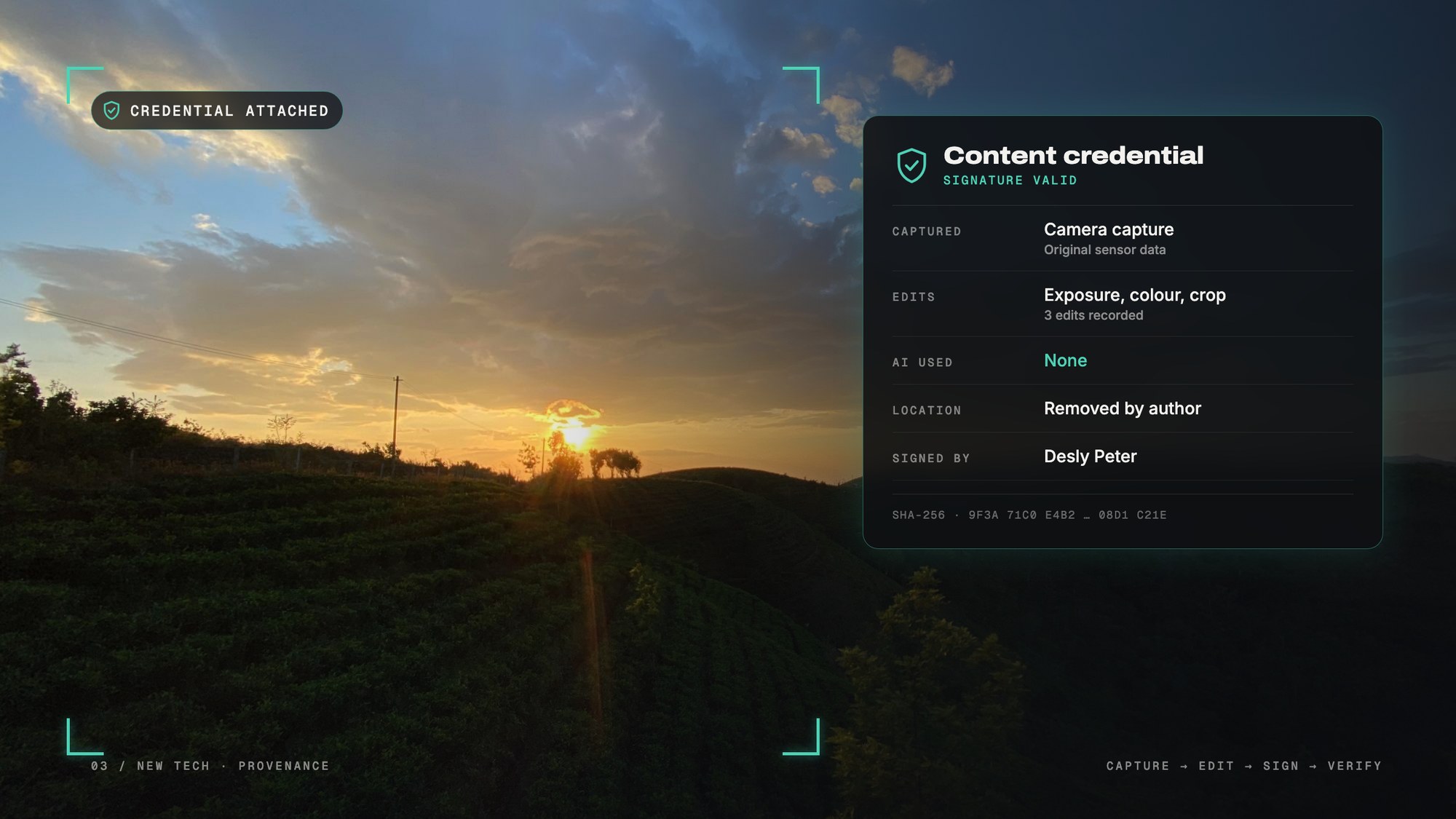
Think of it as a nutrition label for a photo, with a tamper-proof seal.
When a supported camera takes a picture, it attaches a small record: this image was captured by a camera, at this time, and here is a cryptographic signature to prove it. When you edit the photo in a supported app, the app adds its own entry: exposure changed, cropped, this part was generated with AI. Each step is signed. If anyone changes the image without updating the record, the signature breaks, and anyone checking can see it.
It doesn't say whether a photo is "true". A real photo can still be misleading. But it tells you where the image came from and what happened to it along the way. That's a lot more than we have now.
This isn't just a white paper anymore. Leica released the first camera with Content Credentials built in, back in 2023. Sony, Nikon and Canon have all started adding support to some of their professional models, mostly aimed at news photographers. Recent phones from Google and Samsung have started adding credentials too, at least to some photos and to images edited with their AI tools.
On the software side, Adobe's apps can attach credentials when you export, and Adobe's own image generator marks its output as AI-made. OpenAI adds credentials to images made by its generators. Google also uses its own invisible watermark, SynthID, for AI images.
And you can check an image yourself. There's a free tool at contentcredentials.org/verify. Drop an image in, and if it has credentials, it shows you the history.
Here's the honest problem. Content Credentials live in the file's metadata. Take a screenshot, and they're gone. Upload to many social media sites, and they get stripped when the image is compressed. Send it through a chat app, often the same.
So right now, a photo without credentials proves nothing. It might be fake, or it might be a perfectly real photo that lost its label on the way. The system only becomes really powerful when the big platforms keep the credentials and show them to you. Some have started: LinkedIn shows a small label on images that carry them, and others show "AI info" tags. It's progress, but slow.
Invisible watermarks, hidden in the pixels themselves, help with this, because they can survive a screenshot. Combining the two, a signed record plus a watermark that points back to it, is where things seem to be heading.
There's a tension here that I feel personally. When I put photos on this website, I deliberately remove the location data hidden in the files. Nobody needs to know exactly where I was standing, or where I live.
A credential that proves a photo is real could, if you're not careful, also reveal who took it and where. The standard lets you choose what to include. You can sign a photo as yours without publishing your GPS location. For a journalist in a dangerous place, that choice matters a lot. For the rest of us, it's worth checking the settings before switching it on.
Honestly, my cameras don't support this yet, and neither do the photos on this site. But I think in a few years it will be normal, the way the little padlock in your browser became normal for websites. You won't think about it. You'll just notice when it's missing.
For news photos, evidence and anything important, I think we'll slowly learn to ask: where did this come from? Does it have credentials? And for everything else, maybe a healthy habit: before you share the shocking picture, take five seconds and wonder whether anyone actually took it.
My take: we can't stop fake photos. But we can make real ones easier to trust.
— Desly
Erinnerst du dich an das Bild des Papstes in einer riesigen weißen Daunenjacke? Es ging um die Welt. Die Leute teilten es, lachten darüber, und viele glaubten es. Es war mit einem KI-Bildgenerator erstellt. Niemand hat dieses Foto gemacht, weil es kein Foto gab.
Das ist ein paar Jahre her, und die Werkzeuge sind seitdem nur besser geworden. Heute tippst du einen Satz und bekommst ein Bild, das aussieht, als käme es aus einer echten Kamera. Hände stimmen inzwischen. Schrift stimmt. Licht und Schatten sind überzeugend.
Als jemand, der fotografiert, beunruhigt mich das auf eine bestimmte Weise. Nicht, dass Menschen falsche Bilder machen, das ging schon immer. Sondern dass Menschen aufhören werden, echten Bildern zu glauben.
Eine Zeit lang lautete der Rat: Achte auf sechs Finger, seltsame Ohrringe, verschwommene Schrift im Hintergrund. Dieser Rat ist schon veraltet. Jedes Mal, wenn jemand ein Erkennungsmerkmal findet, behebt es das nächste Modell.
KI-Erkennungstools haben dasselbe Problem. Sie raten, liegen falsch und werden immer einen Schritt hinterher sein. Also haben die klügeren Leute in diesem Bereich die Frage umgedreht. Statt „Ist das gefälscht?“ fragen sie: „Kann das beweisen, dass es echt ist?“
Man kann nicht jede Fälschung erwischen. Aber man kann echten Fotos eine Möglichkeit geben, sich selbst zu beweisen.
Die Idee heißt Content Provenance, also Herkunftsnachweis, und der wichtigste Standard dafür kommt von einer Gruppe namens C2PA, der Coalition for Content Provenance and Authenticity. Sie wurde 2021 von Firmen wie Adobe, Microsoft, Intel, Arm, der BBC und Truepic gegründet. Der freundliche Name für das, was sie gebaut haben, lautet Content Credentials.
Stell es dir wie eine Nährwerttabelle für ein Foto vor, mit einem fälschungssicheren Siegel.
Wenn eine unterstützte Kamera ein Bild macht, hängt sie einen kleinen Eintrag an: Dieses Bild wurde von einer Kamera zu dieser Zeit aufgenommen, und hier ist eine kryptografische Signatur als Beweis. Wenn du das Foto in einer unterstützten App bearbeitest, fügt die App ihren eigenen Eintrag hinzu: Belichtung geändert, zugeschnitten, dieser Teil mit KI erzeugt. Jeder Schritt wird signiert. Ändert jemand das Bild, ohne den Eintrag zu aktualisieren, bricht die Signatur, und jeder, der prüft, sieht es.
Es sagt nicht, ob ein Foto „wahr“ ist. Auch ein echtes Foto kann irreführend sein. Aber es sagt dir, woher das Bild stammt und was unterwegs mit ihm passiert ist. Das ist viel mehr, als wir heute haben.
Das ist längst kein Whitepaper mehr. Leica hat 2023 die erste Kamera mit eingebauten Content Credentials herausgebracht. Sony, Nikon und Canon haben begonnen, einige ihrer Profimodelle damit auszustatten, vor allem für Pressefotografen. Neuere Handys von Google und Samsung fügen Nachweise inzwischen ebenfalls hinzu, zumindest bei manchen Fotos und bei Bildern, die mit ihren KI-Tools bearbeitet wurden.
Auf der Softwareseite können Adobes Apps beim Export Nachweise anhängen, und Adobes eigener Bildgenerator kennzeichnet seine Ergebnisse als KI-erzeugt. OpenAI fügt den Bildern seiner Generatoren Nachweise hinzu. Google nutzt außerdem ein eigenes unsichtbares Wasserzeichen, SynthID, für KI-Bilder.
Und du kannst ein Bild selbst prüfen. Unter contentcredentials.org/verify gibt es ein kostenloses Tool. Bild hineinziehen, und wenn es Nachweise hat, zeigt es dir die Geschichte.
Hier das ehrliche Problem. Content Credentials stecken in den Metadaten der Datei. Mach einen Screenshot, und sie sind weg. Lade es bei vielen sozialen Netzwerken hoch, und sie werden beim Komprimieren entfernt. Schick es über eine Chat-App, oft genauso.
Ein Foto ohne Nachweis beweist also im Moment gar nichts. Es kann gefälscht sein oder ein völlig echtes Foto, das sein Etikett unterwegs verloren hat. Richtig stark wird das System erst, wenn die großen Plattformen die Nachweise behalten und dir anzeigen. Manche haben angefangen: LinkedIn zeigt bei Bildern mit Nachweis ein kleines Label, andere zeigen „KI-Info“-Hinweise. Es ist Fortschritt, aber langsam.
Unsichtbare Wasserzeichen, die in den Pixeln selbst versteckt sind, helfen dabei, weil sie einen Screenshot überstehen können. Beides zu kombinieren, einen signierten Eintrag und ein Wasserzeichen, das darauf verweist, scheint die Richtung zu sein.
Hier gibt es einen Konflikt, den ich persönlich spüre. Wenn ich Fotos auf diese Website stelle, entferne ich bewusst die versteckten Standortdaten in den Dateien. Niemand muss wissen, wo genau ich stand oder wo ich wohne.
Ein Nachweis, der beweist, dass ein Foto echt ist, könnte, wenn man nicht aufpasst, auch verraten, wer es gemacht hat und wo. Der Standard lässt dich wählen, was enthalten ist. Du kannst ein Foto als deins signieren, ohne deinen GPS-Standort zu veröffentlichen. Für eine Journalistin an einem gefährlichen Ort ist diese Wahl sehr wichtig. Für alle anderen lohnt es sich, die Einstellungen zu prüfen, bevor man es einschaltet.
Ehrlich gesagt unterstützen meine Kameras das noch nicht, und die Fotos auf dieser Seite auch nicht. Aber ich glaube, in ein paar Jahren wird es normal sein, so wie das kleine Schloss im Browser für Websites normal geworden ist. Du denkst nicht darüber nach. Du merkst nur, wenn es fehlt.
Bei Pressefotos, Beweisen und allem Wichtigen werden wir, glaube ich, langsam lernen zu fragen: Woher kommt das? Hat es einen Nachweis? Und für alles andere vielleicht eine gesunde Gewohnheit: Bevor du das schockierende Bild teilst, nimm dir fünf Sekunden und frag dich, ob es überhaupt jemand fotografiert hat.
Mein Fazit: Wir können falsche Fotos nicht aufhalten. Aber wir können echten Fotos das Vertrauen leichter machen.
— Desly
വലിയൊരു വെള്ള പഫർ ജാക്കറ്റിൽ മാർപ്പാപ്പയുടെ ചിത്രം ഓർമ്മയുണ്ടോ? അത് എല്ലായിടത്തും പോയി. ആളുകൾ അത് പങ്കുവെച്ചു, ചിരിച്ചു, അവരിൽ പലരും വിശ്വസിച്ചു. അത് ഒരു AI ഇമേജ് ജനറേറ്റർ ഉപയോഗിച്ച് ഉണ്ടാക്കിയതായിരുന്നു. ആരും ആ ഫോട്ടോ എടുത്തില്ല, കാരണം ഫോട്ടോ ഉണ്ടായിരുന്നില്ല.
അത് കുറച്ച് വർഷം മുമ്പായിരുന്നു, അതിനുശേഷം ടൂളുകൾ കൂടുതൽ മെച്ചപ്പെട്ടു. ഇന്ന് ഒരു വാചകം ടൈപ്പ് ചെയ്താൽ, ഒരു യഥാർത്ഥ ക്യാമറയിൽ നിന്ന് വന്നതുപോലെ തോന്നുന്ന ഒരു ചിത്രം കിട്ടും. കൈകൾ ഇപ്പോൾ ശരിയാണ്. അക്ഷരങ്ങൾ ശരിയാണ്. വെളിച്ചവും നിഴലുകളും ബോധ്യപ്പെടുത്തുന്നതാണ്.
ഫോട്ടോ എടുക്കുന്ന ഒരാളെന്ന നിലയിൽ, ഇത് എന്നെ ഒരു പ്രത്യേക രീതിയിൽ ആശങ്കപ്പെടുത്തുന്നു. ആളുകൾ വ്യാജ ചിത്രങ്ങൾ ഉണ്ടാക്കുമെന്നതല്ല, അത് എന്നും സാധ്യമായിരുന്നു. ആളുകൾ യഥാർത്ഥ ചിത്രങ്ങളെ വിശ്വസിക്കാതാകുമെന്നതാണ്.
കുറച്ചുകാലം, ഉപദേശം ഇതായിരുന്നു: ആറ് വിരലുകൾ, വിചിത്രമായ കമ്മലുകൾ, പശ്ചാത്തലത്തിൽ ഉരുകിയ അക്ഷരങ്ങൾ എന്നിവ നോക്കുക. ആ ഉപദേശം ഇതിനകം കാലഹരണപ്പെട്ടു. ഓരോ തവണ ആരെങ്കിലും ഒരു അടയാളം കണ്ടെത്തുമ്പോഴും, അടുത്ത മോഡൽ അത് ശരിയാക്കുന്നു.
AI ഡിറ്റക്ഷൻ ടൂളുകൾക്കും ഇതേ പ്രശ്നമാണ്. അവ ഊഹിക്കുന്നു, തെറ്റുന്നു, എന്നും ഒരു പടി പിന്നിലായിരിക്കും. അതുകൊണ്ട് ഈ മേഖലയിലെ മിടുക്കർ ചോദ്യം തിരിച്ചിട്ടു. "ഇത് വ്യാജമാണോ?" എന്ന് ചോദിക്കുന്നതിന് പകരം, "ഇതിന് യഥാർത്ഥമാണെന്ന് തെളിയിക്കാൻ കഴിയുമോ?" എന്ന് ചോദിക്കുക.
എല്ലാ വ്യാജങ്ങളെയും പിടിക്കാൻ കഴിയില്ല. പക്ഷേ യഥാർത്ഥ ഫോട്ടോകൾക്ക് സ്വയം തെളിയിക്കാനുള്ള ഒരു വഴി നൽകാം.
ഈ ആശയത്തെ കണ്ടന്റ് പ്രൊവെനൻസ് (ഉറവിടം) എന്ന് വിളിക്കുന്നു, അതിനുള്ള ഏറ്റവും പ്രധാനപ്പെട്ട സ്റ്റാൻഡേർഡ് C2PA എന്ന ഗ്രൂപ്പിൽ നിന്നാണ്, Coalition for Content Provenance and Authenticity. Adobe, Microsoft, Intel, Arm, BBC, Truepic എന്നിവ ഉൾപ്പെടെയുള്ള കമ്പനികൾ 2021-ൽ ഇത് തുടങ്ങി. അവർ നിർമ്മിച്ചതിന്റെ സൗഹൃദ നാമം Content Credentials എന്നാണ്.
ഒരു ഫോട്ടോയ്ക്കുള്ള ഒരു പോഷകാഹാര ലേബൽ പോലെ ചിന്തിക്കുക, കൃത്രിമം കാണിക്കാൻ കഴിയാത്ത ഒരു മുദ്രയോടെ.
പിന്തുണയുള്ള ഒരു ക്യാമറ ഫോട്ടോ എടുക്കുമ്പോൾ, അത് ഒരു ചെറിയ രേഖ ചേർക്കുന്നു: ഈ ചിത്രം ഒരു ക്യാമറ ഈ സമയത്ത് എടുത്തതാണ്, അത് തെളിയിക്കാൻ ഒരു ക്രിപ്റ്റോഗ്രാഫിക് സിഗ്നേച്ചറും. പിന്തുണയുള്ള ഒരു ആപ്പിൽ ഫോട്ടോ എഡിറ്റ് ചെയ്യുമ്പോൾ, ആപ്പ് സ്വന്തം എൻട്രി ചേർക്കുന്നു: എക്സ്പോഷർ മാറ്റി, ക്രോപ്പ് ചെയ്തു, ഈ ഭാഗം AI ഉപയോഗിച്ച് ഉണ്ടാക്കി. ഓരോ ഘട്ടവും സൈൻ ചെയ്യപ്പെടുന്നു. രേഖ അപ്ഡേറ്റ് ചെയ്യാതെ ആരെങ്കിലും ചിത്രം മാറ്റിയാൽ, സിഗ്നേച്ചർ തകരും, പരിശോധിക്കുന്ന ആർക്കും അത് കാണാം.
ഒരു ഫോട്ടോ "സത്യമാണോ" എന്ന് അത് പറയുന്നില്ല. ഒരു യഥാർത്ഥ ഫോട്ടോയും തെറ്റിദ്ധരിപ്പിക്കുന്നതാകാം. പക്ഷേ ചിത്രം എവിടെ നിന്ന് വന്നുവെന്നും വഴിയിൽ അതിന് എന്ത് സംഭവിച്ചുവെന്നും അത് പറയുന്നു. ഇപ്പോൾ നമുക്കുള്ളതിനേക്കാൾ വളരെ കൂടുതലാണ് അത്.
ഇത് ഇനി ഒരു വൈറ്റ് പേപ്പർ മാത്രമല്ല. 2023-ൽ Content Credentials ബിൽറ്റ്-ഇൻ ആയ ആദ്യ ക്യാമറ Leica പുറത്തിറക്കി. Sony, Nikon, Canon എന്നിവ അവയുടെ ചില പ്രൊഫഷണൽ മോഡലുകളിൽ പിന്തുണ ചേർക്കാൻ തുടങ്ങിയിട്ടുണ്ട്, കൂടുതലും വാർത്താ ഫോട്ടോഗ്രാഫർമാരെ ലക്ഷ്യമിട്ട്. Google-ന്റെയും Samsung-ന്റെയും പുതിയ ഫോണുകൾ ചില ഫോട്ടോകളിലും അവയുടെ AI ടൂളുകൾ കൊണ്ട് എഡിറ്റ് ചെയ്ത ചിത്രങ്ങളിലും ക്രെഡൻഷ്യലുകൾ ചേർക്കാൻ തുടങ്ങിയിട്ടുണ്ട്.
സോഫ്റ്റ്വെയർ ഭാഗത്ത്, Adobe-ന്റെ ആപ്പുകൾക്ക് എക്സ്പോർട്ട് ചെയ്യുമ്പോൾ ക്രെഡൻഷ്യലുകൾ ചേർക്കാം, Adobe-ന്റെ സ്വന്തം ഇമേജ് ജനറേറ്റർ അതിന്റെ ഔട്ട്പുട്ട് AI നിർമ്മിതമെന്ന് അടയാളപ്പെടുത്തുന്നു. OpenAI അതിന്റെ ജനറേറ്ററുകൾ ഉണ്ടാക്കുന്ന ചിത്രങ്ങളിൽ ക്രെഡൻഷ്യലുകൾ ചേർക്കുന്നു. AI ചിത്രങ്ങൾക്കായി Google സ്വന്തം അദൃശ്യ വാട്ടർമാർക്കായ SynthID-ഉം ഉപയോഗിക്കുന്നു.
നിങ്ങൾക്ക് സ്വയം ഒരു ചിത്രം പരിശോധിക്കാം. contentcredentials.org/verify-ൽ ഒരു സൗജന്യ ടൂളുണ്ട്. ഒരു ചിത്രം ഇടുക, അതിന് ക്രെഡൻഷ്യലുകളുണ്ടെങ്കിൽ, അത് ചരിത്രം കാണിക്കും.
സത്യസന്ധമായ പ്രശ്നം ഇതാണ്. Content Credentials ഫയലിന്റെ മെറ്റാഡാറ്റയിലാണ്. ഒരു സ്ക്രീൻഷോട്ട് എടുത്താൽ, അവ പോയി. പല സോഷ്യൽ മീഡിയ സൈറ്റുകളിലും അപ്ലോഡ് ചെയ്താൽ, ചിത്രം കംപ്രസ് ചെയ്യുമ്പോൾ അവ നീക്കം ചെയ്യപ്പെടും. ഒരു ചാറ്റ് ആപ്പിലൂടെ അയച്ചാൽ, പലപ്പോഴും അങ്ങനെ തന്നെ.
അതുകൊണ്ട് ഇപ്പോൾ, ക്രെഡൻഷ്യലുകളില്ലാത്ത ഒരു ഫോട്ടോ ഒന്നും തെളിയിക്കുന്നില്ല. അത് വ്യാജമാകാം, അല്ലെങ്കിൽ വഴിയിൽ ലേബൽ നഷ്ടപ്പെട്ട പൂർണ്ണമായും യഥാർത്ഥമായ ഫോട്ടോയാകാം. വലിയ പ്ലാറ്റ്ഫോമുകൾ ക്രെഡൻഷ്യലുകൾ നിലനിർത്തുകയും നിങ്ങളെ കാണിക്കുകയും ചെയ്യുമ്പോൾ മാത്രമേ ഈ സംവിധാനം ശരിക്കും ശക്തമാകൂ. ചിലത് തുടങ്ങിയിട്ടുണ്ട്: അവ ഉള്ള ചിത്രങ്ങളിൽ LinkedIn ഒരു ചെറിയ ലേബൽ കാണിക്കുന്നു, മറ്റുള്ളവ "AI info" ടാഗുകൾ കാണിക്കുന്നു. പുരോഗതിയാണ്, പക്ഷേ പതുക്കെ.
പിക്സലുകളിൽ തന്നെ ഒളിപ്പിച്ച അദൃശ്യ വാട്ടർമാർക്കുകൾ ഇതിന് സഹായിക്കുന്നു, കാരണം അവയ്ക്ക് സ്ക്രീൻഷോട്ടിനെ അതിജീവിക്കാൻ കഴിയും. രണ്ടും ചേർക്കുന്നത്, ഒരു സൈൻ ചെയ്ത രേഖയും അതിലേക്ക് ചൂണ്ടുന്ന ഒരു വാട്ടർമാർക്കും, ആണ് കാര്യങ്ങൾ പോകുന്ന ദിശയെന്ന് തോന്നുന്നു.
ഇവിടെ ഞാൻ വ്യക്തിപരമായി അനുഭവിക്കുന്ന ഒരു സംഘർഷമുണ്ട്. ഈ വെബ്സൈറ്റിൽ ഫോട്ടോകൾ ഇടുമ്പോൾ, ഫയലുകളിൽ ഒളിഞ്ഞിരിക്കുന്ന ലൊക്കേഷൻ ഡാറ്റ ഞാൻ മനഃപൂർവം നീക്കം ചെയ്യുന്നു. ഞാൻ കൃത്യമായി എവിടെ നിന്നു, അല്ലെങ്കിൽ എവിടെ താമസിക്കുന്നു എന്ന് ആരും അറിയേണ്ടതില്ല.
ഒരു ഫോട്ടോ യഥാർത്ഥമാണെന്ന് തെളിയിക്കുന്ന ഒരു ക്രെഡൻഷ്യൽ, ശ്രദ്ധിച്ചില്ലെങ്കിൽ, അത് ആര് എടുത്തു, എവിടെ എന്നും വെളിപ്പെടുത്തിയേക്കാം. എന്ത് ഉൾപ്പെടുത്തണമെന്ന് തിരഞ്ഞെടുക്കാൻ സ്റ്റാൻഡേർഡ് അനുവദിക്കുന്നു. നിങ്ങളുടെ GPS ലൊക്കേഷൻ പ്രസിദ്ധീകരിക്കാതെ ഒരു ഫോട്ടോ നിങ്ങളുടേതായി സൈൻ ചെയ്യാം. അപകടകരമായ ഒരിടത്തുള്ള ഒരു പത്രപ്രവർത്തകന്, ആ തിരഞ്ഞെടുപ്പ് വളരെ പ്രധാനമാണ്. ബാക്കിയുള്ളവർക്ക്, ഓണാക്കുന്നതിന് മുമ്പ് സെറ്റിംഗ്സ് പരിശോധിക്കുന്നത് നല്ലതാണ്.
സത്യം പറഞ്ഞാൽ, എന്റെ ക്യാമറകൾ ഇതുവരെ ഇതിനെ പിന്തുണയ്ക്കുന്നില്ല, ഈ സൈറ്റിലെ ഫോട്ടോകളും. പക്ഷേ കുറച്ച് വർഷങ്ങൾക്കുള്ളിൽ ഇത് സാധാരണമാകുമെന്ന് ഞാൻ കരുതുന്നു, നിങ്ങളുടെ ബ്രൗസറിലെ ചെറിയ പൂട്ട് വെബ്സൈറ്റുകൾക്ക് സാധാരണമായതുപോലെ. നിങ്ങൾ അതിനെക്കുറിച്ച് ചിന്തിക്കില്ല. ഇല്ലാത്തപ്പോൾ മാത്രം ശ്രദ്ധിക്കും.
വാർത്താ ഫോട്ടോകൾക്കും തെളിവുകൾക്കും പ്രധാനപ്പെട്ട എന്തിനും, നമ്മൾ പതുക്കെ ചോദിക്കാൻ പഠിക്കുമെന്ന് ഞാൻ കരുതുന്നു: ഇത് എവിടെ നിന്ന് വന്നു? ഇതിന് ക്രെഡൻഷ്യലുകളുണ്ടോ? ബാക്കി എല്ലാറ്റിനും, ഒരുപക്ഷേ ഒരു നല്ല ശീലം: ഞെട്ടിക്കുന്ന ചിത്രം പങ്കുവെക്കുന്നതിന് മുമ്പ്, അഞ്ച് സെക്കൻഡ് എടുത്ത് ആരെങ്കിലും ശരിക്കും അത് എടുത്തോ എന്ന് ആലോചിക്കുക.
എന്റെ അഭിപ്രായം: വ്യാജ ഫോട്ടോകൾ നമുക്ക് തടയാൻ കഴിയില്ല. പക്ഷേ യഥാർത്ഥ ഫോട്ടോകളെ വിശ്വസിക്കാൻ എളുപ്പമാക്കാം.
— ഡെസ്ലി