Yamaha RX-V683 — an Atmos receiver with room to grow
Dolby Atmos, sensible calibration and a generous range of connections. A capable foundation for a home cinema, with some older HDMI limits to keep in mind. My rating: 8/10.
Dolby Atmos, sensible calibration and a generous range of connections. A capable foundation for a home cinema, with some older HDMI limits to keep in mind. My rating: 8/10.
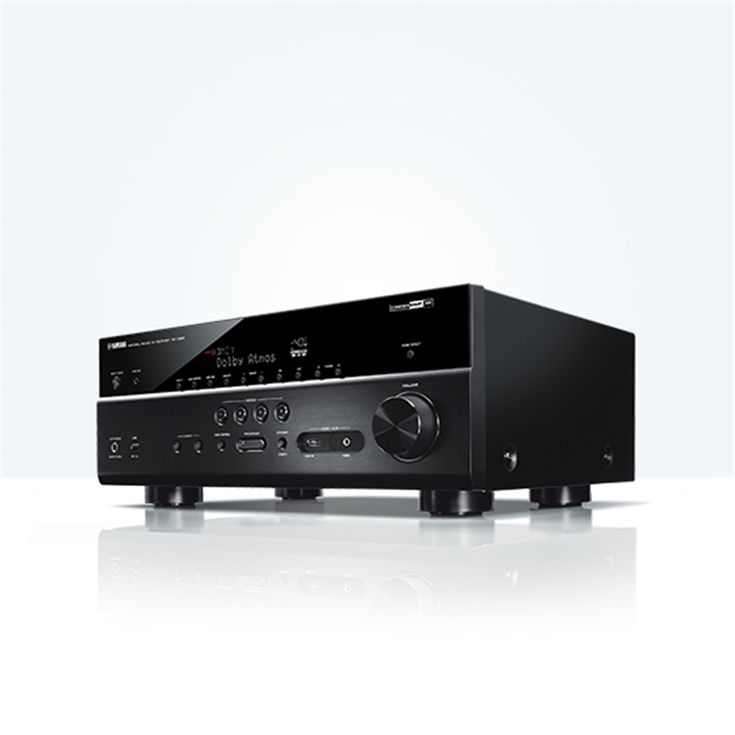
The Yamaha RX-V683 gets 8/10 from me. What appeals to me is the idea of a proper home-cinema hub: one component that brings your sources, speakers and room setup together, while leaving you choices about how the system develops. Dolby Atmos is the headline attraction, but the broader flexibility matters just as much. This is a receiver built for people who want to put together a system around their own room.
The RX-V683 has seven amplified channels and supports Dolby Atmos and DTS:X. For an Atmos layout, the useful configuration to understand is 5.1.2: five conventional speakers, a subwoofer and two height channels. It can also serve a conventional 7.1 layout. Those are alternative uses of its amplification; it cannot power a full 7.1.2 arrangement at the same time.
That distinction makes its strengths easier to appreciate. The attraction is the opportunity to build an immersive system with actual speakers placed around the room and height effects above the listening position. The results depend on the speakers, their layout, the content and the room. Atmos decoding is the starting point, and taking care with the physical setup is what gives it a chance to work well.
Yamaha — Speaker configurations
Yamaha’s YPAO R.S.C. automatic calibration is one of the features I value in this kind of receiver. A surround system involves more than connecting the right wires. Levels, distance settings and the room’s effect on the sound all need attention. Having a guided calibration process gives the owner a practical starting point.
I would still treat calibration as a starting point rather than a substitute for sensible placement. Get the speakers into suitable positions, use the microphone as directed and check the result. The positive is having a receiver that offers tools for the room you actually have, rather than expecting every living space to behave like an ideal listening room.
MusicCast, network playback, AirPlay and Bluetooth give the RX-V683 a broader role than simply switching film sources. A phono input also makes it relevant to a compatible turntable setup. That range is part of its appeal: a home-cinema receiver can be the centre of music listening as well as movie nights.
There is value in having different ways to use the same speaker system. Wired inputs, network sources and everyday wireless playback cover different situations. I would check the current availability of any particular online music service before relying on it, since regional access and third-party services can change. The physical connections remain an important part of the receiver’s versatility.
Six HDMI inputs and one HDMI output give you space for several sources and a main display. There are also analogue and digital audio inputs, plus two mono subwoofer outputs. A receiver like this makes sense when you want one place to manage a collection of equipment instead of repeatedly moving cables between devices.
Powered Zone 2 and bi-amping are useful configuration options, but they share the available amplifier channels. I would plan the main-room layout before assigning those channels elsewhere. The number of speaker terminals on the back does not mean every possible combination can play at once. Knowing that makes the flexibility genuinely useful rather than confusing.
The video specification belongs to the 4K/60 generation. Yamaha lists HDR10, Dolby Vision and HLG compatibility, which covers an important range of film and television sources. It is not a 4K/120 video-switching receiver, so a modern high-refresh-rate console or PC setup needs a different connection plan.
It is also a substantial component: Yamaha lists a width of 435 mm, a height of 171 mm, a depth of 378 mm and a weight of 10 kg. Allow suitable shelf space and ventilation rather than treating it like a small streaming box. A receiver is the centre of a wired system, and the equipment space and cable planning are part of that choice.
The RX-V683 brings together the things that make an AV receiver worth considering: Atmos and DTS:X decoding, useful calibration, several kinds of input and the ability to choose your own speakers. Its appeal is that the system can be built around your priorities rather than being fixed inside one all-in-one product.
My rating is 8/10. It is a capable, flexible foundation for a sensibly planned home cinema. I would judge it on those strengths while being realistic about its seven-channel amplification and older video capabilities. Match the receiver to the room, sources and speaker layout you want, and its purpose is easy to understand.
Feature information is checked against Yamaha’s documentation. This review discusses the receiver’s capabilities; it does not present room-specific listening tests or measurements.
8/10. A versatile home-cinema receiver with Dolby Atmos, DTS:X and useful setup tools. Particularly appealing for a planned 5.1.2 system, provided its channel count and 4K/60 video capabilities fit your needs.
— Desly