What if aliens built the pyramids?
Millions of stone blocks, perfect angles, and no cranes. Ancient astronauts make a great TV show. The real story is better.
Millions of stone blocks, perfect angles, and no cranes. Ancient astronauts make a great TV show. The real story is better.
Millionen Steinblöcke, perfekte Winkel und keine Kräne. Prä-Astronautik ergibt eine tolle TV-Show. Die wahre Geschichte ist besser.
ദശലക്ഷക്കണക്കിന് കൽക്കട്ടകൾ, കൃത്യമായ കോണുകൾ, ക്രെയിനുകളില്ല. പുരാതന ബഹിരാകാശ സഞ്ചാരികൾ ഒരു മികച്ച ടിവി ഷോ ഉണ്ടാക്കും. യഥാർത്ഥ കഥ അതിലും നല്ലതാണ്.
When I visited the little church of St. Bartholomä at Königssee, under the Alps, I remember standing there wondering how people got all that stone to a lake shore you can really only reach by boat. Hundreds of years ago. No trucks, no cranes, no power tools.
Now multiply that feeling by a few thousand, and you get the Great Pyramid of Giza.
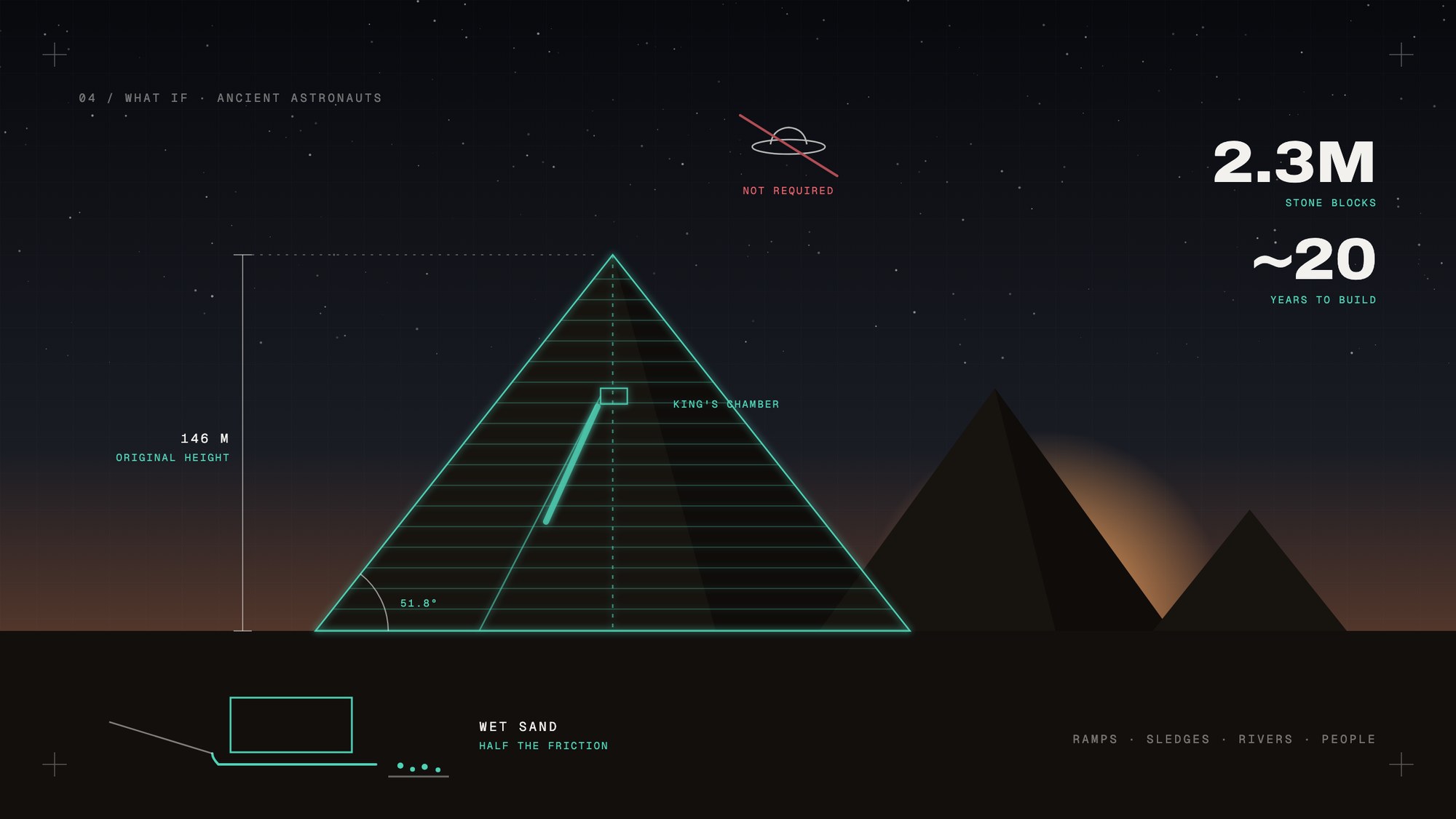
It was built around 4,500 years ago for the pharaoh Khufu. It's made of roughly 2.3 million stone blocks, some weighing many tonnes. It was originally about 146 metres tall, and for nearly four thousand years it was the tallest building humans had ever made. It's aligned to the compass points with astonishing accuracy.
So it's not surprising that some people look at it and think: humans couldn't have done that.
The "ancient astronauts" theory became famous in 1968 with a book by Erich von Däniken called Chariots of the Gods?. He argued that many ancient wonders, from the pyramids to Stonehenge to the Nazca lines in Peru, were built with help from visitors from space, who early humans then remembered as gods.
The book sold millions of copies. Decades later, a TV series called Ancient Aliens turned the idea into a long-running show, complete with dramatic music, and gave the internet a famous meme: "I'm not saying it was aliens... but it was aliens."
The question isn't whether humans could build the pyramids. It's why we find it so hard to believe they did.
Here's what I find fascinating. We don't just have the pyramids. We have a surprising amount of evidence about the people who built them.
The workers' town. Near the pyramids, archaeologists found the remains of a town where the builders lived: bakeries, breweries, sleeping quarters, and enough animal bones to show the workers were well fed with meat. Not slaves in chains, as old movies showed, but organised crews of labourers, many of them likely farmers working in rotation.
The workers' tombs. Right next to the pyramids are the graves of the builders themselves, buried with honour near their king. Some skeletons show healed injuries and signs of medical care.
Their graffiti. Inside the pyramids, in places nobody was supposed to see, work gangs painted their team names. Names like "Friends of Khufu". It's ancient office banter.
A logbook. In 2013, archaeologists found the oldest known inscribed papyri, at a harbour on the Red Sea coast. Among them was the diary of an official called Merer, who describes his team transporting limestone blocks by boat along the Nile to Giza, for the Great Pyramid. It's literally a work diary from the construction project.
The Egyptians moved huge blocks on wooden sledges. An ancient tomb painting shows a giant statue being dragged on a sledge while a man pours water onto the sand in front of it. In 2014, physicists tested this and found that wetting the sand to the right amount roughly halves the friction. It's a simple, clever trick, and it works.
And they had the Nile. A study in 2024 found evidence of an ancient, now-dried branch of the river that once flowed close to the pyramid sites. Boats could bring stone almost to the building site.
Ramps, levers, sledges, boats, an enormous, well-organised workforce, and about twenty years. No spaceships required.
This is my favourite part. The Egyptians didn't get pyramids right the first time.
The earliest one, the Step Pyramid of Djoser, is basically a stack of flat platforms. A later attempt at Meidum seems to have partially collapsed. Then came the Bent Pyramid, which changes angle halfway up, almost certainly because the builders realised the original slope was too steep and unstable. Only after that did they build the Red Pyramid, and then the Great Pyramid.
That's not what you'd expect from aliens with advanced technology. That's what you'd expect from humans learning by trial and error, over generations. It's engineering. It's beautiful.
There's an uncomfortable side to this idea. It's worth noticing which ancient wonders get credited to aliens. It's usually the pyramids of Egypt, the cities of the Americas, the monuments of Africa and Asia. Rarely anything built in Europe.
Many Egyptians find the alien theory insulting, and I understand why. It quietly takes away one of humanity's greatest achievements from the people who actually did the work.
Coming from Kerala, a place with its own ancient temples, palaces and traditions of craftsmanship, I'd rather celebrate what people built with their own hands and brains. That, to me, is far more impressive than little green men with a crane.
Verdict: built by humans. Thousands of skilled, well-fed, organised humans, who left their names on the walls. No aliens needed.
— Desly
Als ich die kleine Kirche St. Bartholomä am Königssee unter den Alpen besucht habe, stand ich dort und fragte mich, wie Menschen all die Steine an ein Seeufer gebracht haben, das man eigentlich nur mit dem Boot erreicht. Vor Hunderten von Jahren. Ohne Lastwagen, ohne Kräne, ohne Elektrowerkzeuge.
Multipliziere dieses Gefühl mit ein paar Tausend, und du hast die Große Pyramide von Gizeh.
Sie wurde vor etwa 4.500 Jahren für den Pharao Cheops gebaut. Sie besteht aus rund 2,3 Millionen Steinblöcken, manche viele Tonnen schwer. Ursprünglich war sie etwa 146 Meter hoch und fast viertausend Jahre lang das höchste Bauwerk der Menschheit. Sie ist mit erstaunlicher Genauigkeit nach den Himmelsrichtungen ausgerichtet.
Kein Wunder also, dass manche sie ansehen und denken: Das können Menschen nicht geschafft haben.
Die Theorie der „Prä-Astronautik“ wurde 1968 mit dem Buch Erinnerungen an die Zukunft von Erich von Däniken berühmt. Er argumentierte, dass viele antike Wunder, von den Pyramiden über Stonehenge bis zu den Nazca-Linien in Peru, mit Hilfe von Besuchern aus dem All gebaut wurden, an die sich frühe Menschen später als Götter erinnerten.
Das Buch verkaufte sich millionenfach. Jahrzehnte später machte die TV-Serie Ancient Aliens die Idee zu einer langlebigen Show mit dramatischer Musik und schenkte dem Internet ein berühmtes Meme: „I'm not saying it was aliens... but it was aliens.“
Die Frage ist nicht, ob Menschen die Pyramiden bauen konnten. Sondern warum es uns so schwerfällt zu glauben, dass sie es getan haben.
Das finde ich faszinierend. Wir haben nicht nur die Pyramiden. Wir haben überraschend viele Belege über die Menschen, die sie gebaut haben.
Die Arbeiterstadt. In der Nähe der Pyramiden fanden Archäologen die Überreste einer Stadt, in der die Bauleute lebten: Bäckereien, Brauereien, Schlafquartiere und genug Tierknochen, um zu zeigen, dass die Arbeiter gut mit Fleisch versorgt wurden. Keine Sklaven in Ketten, wie in alten Filmen, sondern organisierte Arbeitstrupps, viele davon wahrscheinlich Bauern, die im Wechsel arbeiteten.
Die Gräber der Arbeiter. Direkt neben den Pyramiden liegen die Gräber der Bauleute selbst, ehrenvoll nahe ihrem König bestattet. Manche Skelette zeigen verheilte Verletzungen und Spuren medizinischer Versorgung.
Ihre Graffiti. In den Pyramiden, an Stellen, die niemand sehen sollte, haben Arbeitstrupps ihre Teamnamen hinterlassen. Namen wie „Freunde des Cheops“. Antiker Büro-Humor.
Ein Logbuch. 2013 fanden Archäologen in einem Hafen an der Küste des Roten Meeres die ältesten bekannten beschrifteten Papyri. Darunter war das Tagebuch eines Beamten namens Merer, der beschreibt, wie sein Trupp Kalksteinblöcke per Boot über den Nil nach Gizeh brachte, für die Große Pyramide. Es ist buchstäblich ein Arbeitstagebuch von der Baustelle.
Die Ägypter bewegten riesige Blöcke auf Holzschlitten. Eine antike Grabmalerei zeigt, wie eine gewaltige Statue auf einem Schlitten gezogen wird, während ein Mann Wasser vor ihm auf den Sand gießt. 2014 testeten Physiker das und fanden heraus, dass richtig angefeuchteter Sand die Reibung etwa halbiert. Ein einfacher, cleverer Trick, und er funktioniert.
Und sie hatten den Nil. Eine Studie von 2024 fand Hinweise auf einen alten, heute ausgetrockneten Flussarm, der nahe an den Pyramidenstätten vorbeifloss. Boote konnten Steine fast bis zur Baustelle bringen.
Rampen, Hebel, Schlitten, Boote, eine riesige, gut organisierte Arbeitskraft und etwa zwanzig Jahre. Keine Raumschiffe nötig.
Das ist mein Lieblingsteil. Die Ägypter haben Pyramiden nicht beim ersten Versuch hinbekommen.
Die früheste, die Stufenpyramide des Djoser, ist im Grunde ein Stapel flacher Plattformen. Ein späterer Versuch in Meidum scheint teilweise eingestürzt zu sein. Dann kam die Knickpyramide, die auf halber Höhe den Winkel ändert, fast sicher, weil die Baumeister merkten, dass die ursprüngliche Neigung zu steil und instabil war. Erst danach bauten sie die Rote Pyramide und dann die Große Pyramide.
Das erwartet man nicht von Außerirdischen mit fortschrittlicher Technik. Das erwartet man von Menschen, die über Generationen durch Versuch und Irrtum lernen. Das ist Ingenieurskunst. Und sie ist wunderschön.
Die Idee hat eine unangenehme Seite. Es lohnt sich zu bemerken, welche antiken Wunder Außerirdischen zugeschrieben werden. Meist sind es die Pyramiden Ägyptens, die Städte Amerikas, die Monumente Afrikas und Asiens. Selten etwas, das in Europa gebaut wurde.
Viele Ägypter finden die Alien-Theorie beleidigend, und ich verstehe, warum. Sie nimmt den Menschen, die die Arbeit tatsächlich gemacht haben, still und leise eine der größten Leistungen der Menschheit weg.
Als jemand aus Kerala, einer Region mit eigenen alten Tempeln, Palästen und Handwerkstraditionen, feiere ich lieber, was Menschen mit ihren eigenen Händen und Köpfen gebaut haben. Das finde ich weit beeindruckender als kleine grüne Männchen mit einem Kran.
Urteil: von Menschen gebaut. Von Tausenden geschickten, gut versorgten, organisierten Menschen, die ihre Namen an den Wänden hinterlassen haben. Keine Außerirdischen nötig.
— Desly
ആൽപ്സിന് താഴെ കൊനിഗ്സീയിലെ സെന്റ് ബർത്തലോമേ എന്ന ചെറിയ പള്ളി സന്ദർശിച്ചപ്പോൾ, ബോട്ടിൽ മാത്രം ശരിക്കും എത്താൻ കഴിയുന്ന ഒരു തടാകതീരത്തേക്ക് ആളുകൾ ആ കല്ലുകളെല്ലാം എങ്ങനെ എത്തിച്ചുവെന്ന് ആലോചിച്ച് അവിടെ നിന്നത് ഞാൻ ഓർക്കുന്നു. നൂറുകണക്കിന് വർഷം മുമ്പ്. ട്രക്കുകളില്ല, ക്രെയിനുകളില്ല, പവർ ടൂളുകളില്ല.
ഇനി ആ തോന്നലിനെ ഏതാനും ആയിരം കൊണ്ട് ഗുണിക്കൂ, നിങ്ങൾക്ക് ഗിസയിലെ മഹാപിരമിഡ് കിട്ടും.
ഏകദേശം 4,500 വർഷം മുമ്പ് ഫറവോ ഖുഫുവിനുവേണ്ടിയാണ് അത് നിർമ്മിച്ചത്. ഏകദേശം 23 ലക്ഷം കൽക്കട്ടകൾ കൊണ്ടാണ് അത് ഉണ്ടാക്കിയിരിക്കുന്നത്, ചിലതിന് പല ടൺ ഭാരമുണ്ട്. ആദ്യം അതിന് ഏകദേശം 146 മീറ്റർ ഉയരമുണ്ടായിരുന്നു, ഏതാണ്ട് നാലായിരം വർഷം മനുഷ്യൻ നിർമ്മിച്ചതിൽ ഏറ്റവും ഉയരമുള്ള കെട്ടിടമായിരുന്നു അത്. അതിശയകരമായ കൃത്യതയോടെ ദിക്കുകളുമായി അത് ക്രമീകരിച്ചിരിക്കുന്നു.
അതുകൊണ്ട് ചിലർ അത് നോക്കി, മനുഷ്യർക്ക് അത് ചെയ്യാൻ കഴിയില്ലായിരുന്നു എന്ന് ചിന്തിക്കുന്നതിൽ അത്ഭുതമില്ല.
1968-ൽ എറിക് വോൺ ഡാനിക്കന്റെ Chariots of the Gods? എന്ന പുസ്തകത്തോടെയാണ് "പുരാതന ബഹിരാകാശ സഞ്ചാരികൾ" സിദ്ധാന്തം പ്രശസ്തമായത്. പിരമിഡുകൾ മുതൽ സ്റ്റോൺഹെഞ്ചും പെറുവിലെ നാസ്ക രേഖകളും വരെയുള്ള പല പുരാതന അത്ഭുതങ്ങളും ബഹിരാകാശത്ത് നിന്നുള്ള സന്ദർശകരുടെ സഹായത്തോടെയാണ് നിർമ്മിച്ചതെന്നും, ആദിമ മനുഷ്യർ അവരെ ദൈവങ്ങളായി ഓർത്തുവെന്നും അദ്ദേഹം വാദിച്ചു.
ആ പുസ്തകം ദശലക്ഷക്കണക്കിന് കോപ്പികൾ വിറ്റു. പതിറ്റാണ്ടുകൾക്കുശേഷം, Ancient Aliens എന്ന ടിവി പരമ്പര ഈ ആശയത്തെ നാടകീയ സംഗീതത്തോടെ ഒരു നീണ്ട ഷോ ആക്കി മാറ്റി, ഇന്റർനെറ്റിന് ഒരു പ്രശസ്ത മീമും നൽകി: "I'm not saying it was aliens... but it was aliens."
മനുഷ്യർക്ക് പിരമിഡുകൾ പണിയാൻ കഴിയുമായിരുന്നോ എന്നതല്ല ചോദ്യം. അവർ പണിതു എന്ന് വിശ്വസിക്കാൻ നമുക്ക് എന്തുകൊണ്ട് ഇത്ര പ്രയാസം എന്നതാണ്.
എനിക്ക് ആകർഷകമായി തോന്നുന്നത് ഇതാണ്. നമുക്ക് പിരമിഡുകൾ മാത്രമല്ല ഉള്ളത്. അവ നിർമ്മിച്ച ആളുകളെക്കുറിച്ച് അത്ഭുതകരമായ അളവിൽ തെളിവുകളുണ്ട്.
തൊഴിലാളികളുടെ പട്ടണം. പിരമിഡുകൾക്കടുത്ത്, നിർമ്മാതാക്കൾ താമസിച്ചിരുന്ന ഒരു പട്ടണത്തിന്റെ അവശിഷ്ടങ്ങൾ പുരാവസ്തു ഗവേഷകർ കണ്ടെത്തി: ബേക്കറികൾ, ബിയർ നിർമ്മാണശാലകൾ, ഉറങ്ങാനുള്ള ഇടങ്ങൾ, തൊഴിലാളികൾക്ക് ഇറച്ചി ഉൾപ്പെടെ നല്ല ഭക്ഷണം ലഭിച്ചിരുന്നുവെന്ന് കാണിക്കാൻ വേണ്ടത്ര മൃഗങ്ങളുടെ എല്ലുകളും. പഴയ സിനിമകൾ കാണിച്ചതുപോലെ ചങ്ങലയിട്ട അടിമകളല്ല, മറിച്ച് സംഘടിതരായ തൊഴിലാളി സംഘങ്ങൾ, അവരിൽ പലരും ഊഴമനുസരിച്ച് ജോലി ചെയ്യുന്ന കർഷകരാകാം.
തൊഴിലാളികളുടെ ശവകുടീരങ്ങൾ. പിരമിഡുകളുടെ തൊട്ടടുത്ത് നിർമ്മാതാക്കളുടെ തന്നെ ശവകുടീരങ്ങളുണ്ട്, തങ്ങളുടെ രാജാവിനടുത്ത് ബഹുമാനത്തോടെ അടക്കം ചെയ്യപ്പെട്ടവർ. ചില അസ്ഥികൂടങ്ങളിൽ ഭേദമായ പരിക്കുകളും വൈദ്യപരിചരണത്തിന്റെ അടയാളങ്ങളും കാണാം.
അവരുടെ ചുവരെഴുത്തുകൾ. പിരമിഡുകൾക്കുള്ളിൽ, ആരും കാണേണ്ടതില്ലാത്ത ഇടങ്ങളിൽ, തൊഴിൽ സംഘങ്ങൾ തങ്ങളുടെ ടീം പേരുകൾ വരച്ചുവെച്ചു. "ഖുഫുവിന്റെ സുഹൃത്തുക്കൾ" പോലുള്ള പേരുകൾ. പുരാതന ഓഫീസ് തമാശകൾ.
ഒരു ലോഗ്ബുക്ക്. 2013-ൽ, ചെങ്കടൽ തീരത്തെ ഒരു തുറമുഖത്ത്, എഴുത്തുള്ള ഏറ്റവും പഴക്കമുള്ള പാപ്പിറസുകൾ പുരാവസ്തു ഗവേഷകർ കണ്ടെത്തി. അവയിൽ മെറർ എന്ന ഉദ്യോഗസ്ഥന്റെ ഡയറിയുണ്ടായിരുന്നു, മഹാപിരമിഡിനായി നൈൽ നദിയിലൂടെ ബോട്ടിൽ ചുണ്ണാമ്പുകല്ലുകൾ ഗിസയിലേക്ക് കൊണ്ടുപോകുന്ന തന്റെ സംഘത്തെക്കുറിച്ച് അദ്ദേഹം വിവരിക്കുന്നു. അക്ഷരാർത്ഥത്തിൽ ആ നിർമ്മാണ പദ്ധതിയിലെ ഒരു വർക്ക് ഡയറി.
ഈജിപ്തുകാർ വലിയ കട്ടകൾ മരംകൊണ്ടുള്ള സ്ലെഡ്ജുകളിൽ നീക്കി. ഒരു പുരാതന ശവകുടീര ചിത്രത്തിൽ, ഒരു ഭീമൻ പ്രതിമ സ്ലെഡ്ജിൽ വലിച്ചുകൊണ്ടുപോകുമ്പോൾ ഒരാൾ അതിന് മുന്നിലുള്ള മണലിൽ വെള്ളം ഒഴിക്കുന്നത് കാണാം. 2014-ൽ ഭൗതികശാസ്ത്രജ്ഞർ ഇത് പരീക്ഷിച്ചു, മണൽ ശരിയായ അളവിൽ നനച്ചാൽ ഘർഷണം ഏകദേശം പകുതിയായി കുറയുമെന്ന് കണ്ടെത്തി. ലളിതവും മിടുക്കുമുള്ള ഒരു തന്ത്രം, അത് പ്രവർത്തിക്കുന്നു.
അവർക്ക് നൈൽ ഉണ്ടായിരുന്നു. പിരമിഡ് സ്ഥലങ്ങൾക്കടുത്തുകൂടി ഒഴുകിയിരുന്ന, ഇപ്പോൾ വറ്റിപ്പോയ നദിയുടെ ഒരു പുരാതന ശാഖയുടെ തെളിവുകൾ 2024-ലെ ഒരു പഠനം കണ്ടെത്തി. ബോട്ടുകൾക്ക് കല്ലുകൾ ഏതാണ്ട് നിർമ്മാണസ്ഥലം വരെ കൊണ്ടുവരാമായിരുന്നു.
ചരിവുകൾ, ലിവറുകൾ, സ്ലെഡ്ജുകൾ, ബോട്ടുകൾ, ഭീമാകാരമായ നന്നായി സംഘടിപ്പിച്ച ഒരു തൊഴിൽശക്തി, ഏകദേശം ഇരുപത് വർഷവും. ബഹിരാകാശ വാഹനങ്ങൾ ആവശ്യമില്ല.
ഇതാണ് എന്റെ പ്രിയപ്പെട്ട ഭാഗം. ഈജിപ്തുകാർക്ക് ആദ്യ തവണ തന്നെ പിരമിഡുകൾ ശരിയായില്ല.
ഏറ്റവും ആദ്യത്തേതായ ജോസറിന്റെ പടിപ്പിരമിഡ് അടിസ്ഥാനപരമായി പരന്ന തട്ടുകളുടെ ഒരു അട്ടിയാണ്. മെയ്ദൂമിലെ പിന്നീടുള്ള ഒരു ശ്രമം ഭാഗികമായി തകർന്നുവീണതായി തോന്നുന്നു. പിന്നെ വന്നത് ബെന്റ് പിരമിഡ്, പകുതി ഉയരത്തിൽ വെച്ച് കോൺ മാറുന്ന ഒന്ന്, യഥാർത്ഥ ചരിവ് വളരെ കുത്തനെയുള്ളതും അസ്ഥിരവുമാണെന്ന് നിർമ്മാതാക്കൾ തിരിച്ചറിഞ്ഞതുകൊണ്ടാകാനാണ് സാധ്യത. അതിനുശേഷം മാത്രമാണ് അവർ റെഡ് പിരമിഡും, പിന്നെ മഹാപിരമിഡും നിർമ്മിച്ചത്.
നൂതന സാങ്കേതികവിദ്യയുള്ള അന്യഗ്രഹജീവികളിൽ നിന്ന് നിങ്ങൾ പ്രതീക്ഷിക്കുന്നതല്ല അത്. തലമുറകളിലൂടെ, പരീക്ഷണത്തിലൂടെയും തെറ്റുകളിലൂടെയും പഠിക്കുന്ന മനുഷ്യരിൽ നിന്ന് നിങ്ങൾ പ്രതീക്ഷിക്കുന്നതാണ്. അതാണ് എഞ്ചിനീയറിംഗ്. അത് മനോഹരമാണ്.
ഈ ആശയത്തിന് അസുഖകരമായ ഒരു വശമുണ്ട്. ഏതൊക്കെ പുരാതന അത്ഭുതങ്ങളാണ് അന്യഗ്രഹജീവികളുടെ പേരിൽ ചാർത്തപ്പെടുന്നതെന്ന് ശ്രദ്ധിക്കേണ്ടതാണ്. സാധാരണയായി ഈജിപ്തിലെ പിരമിഡുകൾ, അമേരിക്കകളിലെ നഗരങ്ങൾ, ആഫ്രിക്കയിലെയും ഏഷ്യയിലെയും സ്മാരകങ്ങൾ. യൂറോപ്പിൽ നിർമ്മിച്ച എന്തെങ്കിലും അപൂർവമായി മാത്രം.
പല ഈജിപ്തുകാരും അന്യഗ്രഹ സിദ്ധാന്തം അപമാനകരമായി കാണുന്നു, എന്തുകൊണ്ടെന്ന് എനിക്ക് മനസ്സിലാകും. യഥാർത്ഥത്തിൽ ജോലി ചെയ്ത ആളുകളിൽ നിന്ന് മനുഷ്യരാശിയുടെ ഏറ്റവും വലിയ നേട്ടങ്ങളിൽ ഒന്ന് അത് നിശ്ശബ്ദമായി എടുത്തുമാറ്റുന്നു.
സ്വന്തമായി പുരാതന ക്ഷേത്രങ്ങളും കൊട്ടാരങ്ങളും കരകൗശല പാരമ്പര്യങ്ങളുമുള്ള കേരളത്തിൽ നിന്ന് വരുന്ന എനിക്ക്, ആളുകൾ സ്വന്തം കൈകളും ബുദ്ധിയും കൊണ്ട് പണിതതിനെ ആഘോഷിക്കാനാണ് ഇഷ്ടം. ഒരു ക്രെയിനുമായി വരുന്ന കൊച്ചു പച്ച മനുഷ്യരേക്കാൾ എനിക്ക് എത്രയോ കൂടുതൽ ആകർഷകമാണ് അത്.
വിധി: മനുഷ്യർ പണിതത്. ചുവരുകളിൽ തങ്ങളുടെ പേരുകൾ എഴുതിവെച്ച, ആയിരക്കണക്കിന് വിദഗ്ധരായ, നന്നായി ഭക്ഷണം കഴിച്ച, സംഘടിതരായ മനുഷ്യർ. അന്യഗ്രഹജീവികൾ ആവശ്യമില്ല.
— ഡെസ്ലി