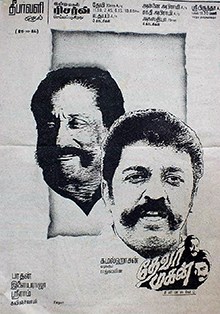
Spoiler-free review.
Thevar Magan hinges on a generational divide, where the son's aspirations clash with the father's expectations. The script gives this friction a clear shape without overexplaining motives. Bharathan’s direction ensures the emotional core remains sharp, even as the film moves between personal drama and broader social commentary.
Kamal Haasan and Sivaji Ganesan bring a weight to their roles that makes the father-son tension feel immediate and urgent. Their chemistry is key; the performances avoid melodrama by grounding the conflict in believable choices and reactions.
The writing keeps the dialogue natural, allowing the actors room to explore the complexity of their relationship without relying on heightened emotions. Haasan’s character is driven by independence, while Ganesan’s embodies tradition. Their opposing goals create a compelling push-pull dynamic.
Supporting players like Revathi and Nassar add texture to the story without overshadowing the central relationship. The film's action sequences serve the narrative rather than diverting from it, keeping the focus on what’s at stake for the protagonists.
The pacing is deliberate, giving each scene time to build tension before moving to the next conflict or revelation. Despite its dramatic weight, Thevar Magan avoids sentimentality by focusing on the characters' actions rather than their internal monologues.
The script’s efficiency is impressive—its seven-day creation shows a clear vision that translates well to the screen. Haasan and Ganesan make the father-son divide feel personal, ensuring the film's themes resonate beyond its specific story.
1992 · Tamil. Film details · Film details · Poster source · Artwork © its respective rights holders.
9/10
My verdictThevar Magan explores the tension between personal dreams and familial obligation, with Sivaji Ganesan and Kamal Haasan anchoring a drama that balances action with emotional stakes. Bharathan’s direction keeps the focus on the central conflict.
— Desly