The Wrestler — A body worn down by time and regret
The Wrestler balances physical decay with emotional longing, but its focus on decline risks overshadowing the quieter moments of connection.
The Wrestler balances physical decay with emotional longing, but its focus on decline risks overshadowing the quieter moments of connection.
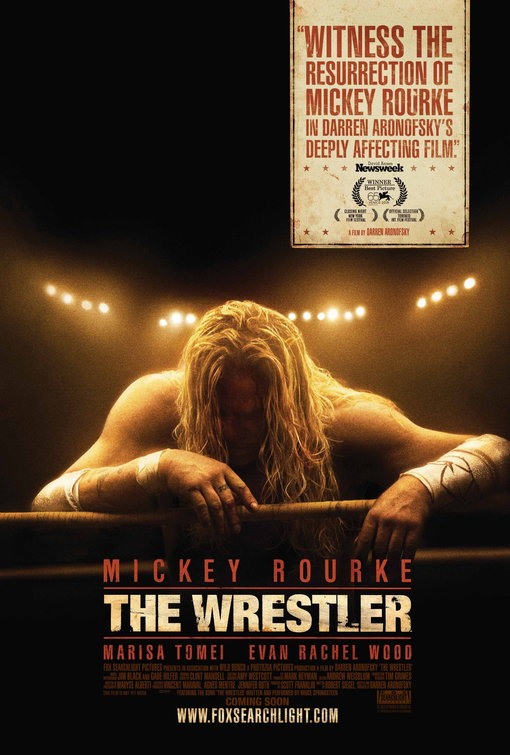
Spoiler-free review.
Rourke’s performance captures the physical toll of a life spent in pain and artifice, without ever feeling exploitative or sentimental. The film leans into the protagonist's isolation, making his attempts at reconciliation feel both desperate and earned. Aronofsky frames the wrestler’s decline with a raw, unflinching visual style that reinforces the character’s inner turmoil.
The film moves slowly, matching the way the main character’s body and mind fall apart. There are long parts with little talking, but the quiet feels intentional. Tomei and Wood add real emotion to their roles without overdoing it.
Rourke’s physicality is central to the film’s impact, though it occasionally leans into clichéd notions of redemption. The romantic subplot adds a layer of vulnerability that contrasts with the wrestler’s hardened exterior. The Wrestler’s greatest strength lies in its refusal to sanitize its subject matter or offer easy resolutions.
The tone can feel heavy at times, leaving little space for subtlety. Still, the film stays gripping because it shows a man trying to get his life back on track. It’s emotionally powerful, even if the story sometimes focuses more on big moments than quiet thinking.
2008 · English. Film details · Film details · Poster source · Artwork © its respective rights holders.
The Wrestler balances physical decay with emotional longing, but its focus on decline risks overshadowing the quieter moments of connection.
— Desly