The Age of Innocence — A love that cannot be spoken aloud
The film's emotional core lies in what remains unsaid. The performances anchor the tension between duty and desire, even when words fail.
The film's emotional core lies in what remains unsaid. The performances anchor the tension between duty and desire, even when words fail.
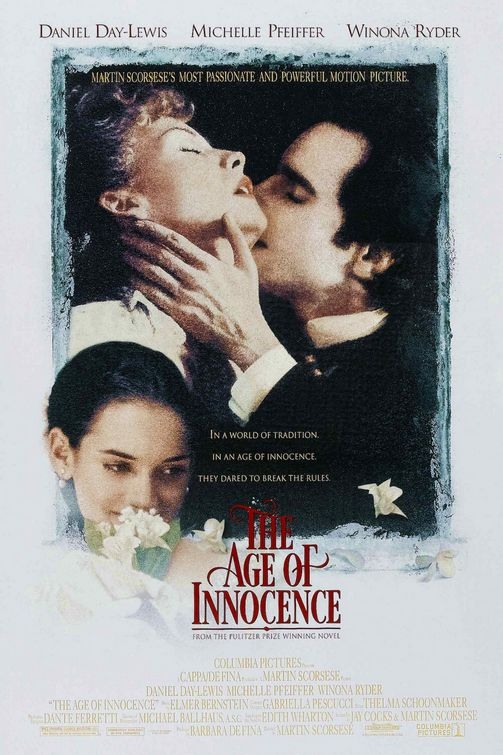
Spoiler-free review.
Newland Archer is trapped between his marriage and a forbidden attraction, but the film never lets us know which path he truly wants. The film explores how social expectations can silence the most urgent emotions, leaving only gestures to convey what cannot be said. Daniel Day-Lewis embodies the internal conflict without needing explicit confession, making his restraint the story's quietest force.
Scorsese focuses on quiet moments — pauses, looks — that hold a lot of feeling. The film moves slowly, like Archer trying to decide between love and duty. Every scene with Countess Olenska feels like a test, showing how close he is to breaking the rules of his life.
Michelle Pfeiffer conveys vulnerability without melodrama, letting her character's defiance emerge through small, controlled choices. Winona Ryder plays May as both loyal and stifled, showing how love can be suffocating when bound by duty. The dialogue is precise, often indirect, leaving room for what is not said to carry the emotional weight.
The film might accidentally make the era's limits seem more appealing than they are. Sometimes, the quiet approach feels like it's holding back emotion instead of letting it flow. But the acting and how the story is told still make the hidden feelings feel real and important.
1993 · English. Film details · Film details · Poster source · Artwork © its respective rights holders.
The film's emotional core lies in what remains unsaid. The performances anchor the tension between duty and desire, even when words fail.
— Desly