Rear Window — A man watches, unsure of his own role
The tension between voyeurism and moral responsibility is made urgent by the film's tight focus on a single apartment and its inhabitants.
The tension between voyeurism and moral responsibility is made urgent by the film's tight focus on a single apartment and its inhabitants.
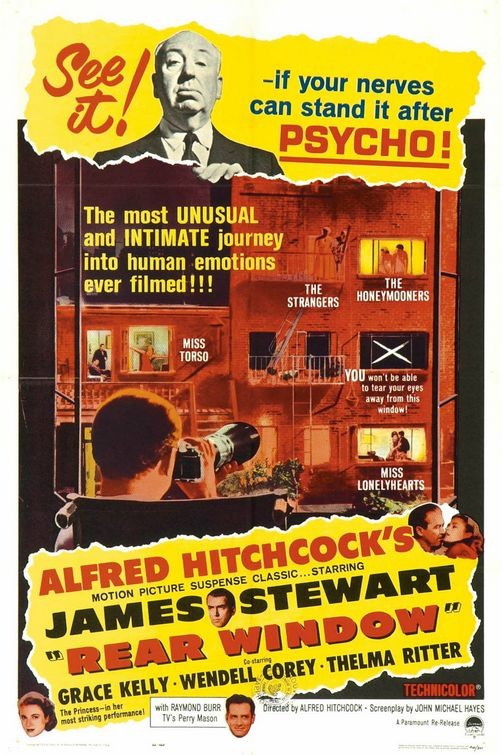
Spoiler-free review.
James Stewart’s character is trapped in a situation where observation blurs into complicity, and the line between witness and participant becomes thin. Grace Kelly’s presence adds an emotional complexity to his isolation, making his choices feel more personal than just investigative. The film builds its mystery not through plot twists but through the weight of what is seen and what remains unseen.
Hitchcock keeps the camera close, highlighting Stewart's claustrophobia without showing what he sees. The dialogue is quick, with Thelma Ritter offering a sharp contrast to Stewart's uncertainty. The film focuses on moral questions rather than the crime itself, avoiding melodrama.
James Stewart conveys restlessness and doubt without needing to shout or act dramatically. Grace Kelly’s performance is restrained but filled with subtle tension, especially in her interactions with Stewart. Thelma Ritter’s role gives the film a voice of reason amid the growing paranoia.
The film's structure is tight, letting the mystery unfold naturally instead of relying on fake suspense. Some parts feel rushed, but that adds to the tension. It stays effective by keeping its cleverness in line with its emotional heart.
1954 · English. Film details · Poster source · Artwork © its respective rights holders.
The tension between voyeurism and moral responsibility is made urgent by the film's tight focus on a single apartment and its inhabitants.
— Desly