Devasuram — Two men, one legacy
Devasuram pits two proud heirs against each other in a rivalry that tests their values and identities. I. V. Sasi stages the conflict with sharp focus on the actors' contrasting energies.
Devasuram pits two proud heirs against each other in a rivalry that tests their values and identities. I. V. Sasi stages the conflict with sharp focus on the actors' contrasting energies.
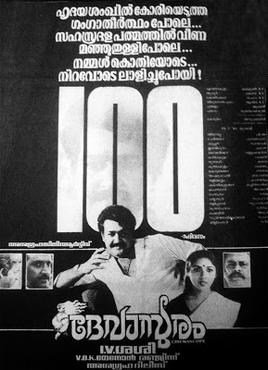
Spoiler-free review.
The film's tension arises from the collision of two strong-willed characters, each claiming the same heritage as their own. Their opposing natures shape every interaction. Mohanlal and Napoleon bring distinct rhythms to their roles, making their clashes feel inevitable yet emotionally charged.
The script frames their rivalry not just as competition but as a test of moral integrity within a rigid social structure. This contrast is heightened by the way the actors embody their characters' pride, ambition, and vulnerability without overshadowing one another.
Mohanlal's performance leans into calculated restraint, while Napoleon's energy is more openly volatile, creating a natural push-pull dynamic. Their chemistry is rooted in mutual respect, which makes the conflict between them all the more tragic and personal.
The film explores how legacy can be both a burden and a weapon, shaping the choices of those who inherit it. Sasi balances action with introspection, ensuring neither character becomes a caricature of their traits.
The supporting cast adds depth to the world around these two men, grounding their struggles in a believable social framework. The rhythm of the film moves between confrontation and reflection, giving the drama space to breathe without losing momentum.
Devasuram's power lies in its refusal to simplify either man into villain or hero, keeping their humanity at the core. Mohanlal and Napoleon make the rivalry feel like a battle for something greater than personal gain—something worth risking everything over.
1993 · Malayalam. Film details · Film details · Poster source · Artwork © its respective rights holders.
Devasuram pits two proud heirs against each other in a rivalry that tests their values and identities. I. V. Sasi stages the conflict with sharp focus on the actors' contrasting energies.
— Desly