Spoiler-free review.
The film examines the lives of two schoolgirls whose choices ripple through their communities. Their decisions challenge expectations without offering easy resolutions. Padmarajan structures the narrative around contrasting perspectives that highlight the emotional stakes of the central characters’ actions.
Mohanlal’s role as a figure of authority adds another layer to the girls' struggles, complicating their journey toward self-determination. Karthika and Urvashi bring distinct energies to their roles, each representing different approaches to love and freedom within the constraints of their environment.
Their performances reveal the internal conflicts of young women caught between personal desires and social obligations. The film avoids moralizing, instead letting the characters’ choices speak for themselves in moments of quiet tension.
Shari’s presence introduces a third dynamic, offering a different lens through which to view the evolving relationships. The writing allows room for ambiguity, leaving the audience to sit with the weight of the decisions made by the characters.
Padmarajan’s direction ensures that the emotional core remains central even as external pressures mount around the protagonists. The film balances its themes without losing sight of the personal stakes involved in each character's journey.
It presents a nuanced view of female agency, avoiding clichés while still acknowledging the challenges faced by its characters. The performances and direction combine to create a story that lingers in the mind long after the credits roll.
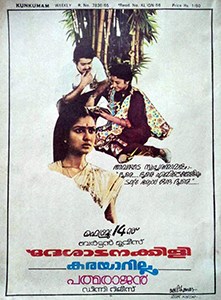
1986 · Malayalam. Film details · Film details · Poster source · Artwork © its respective rights holders.
8/10
My verdictDesatanakkili Karayarilla explores the emotional terrain of young women navigating love, independence and societal judgment. Padmarajan’s direction focuses on the tension within their relationships and personal growth.
— Desly