The Offence — A detective's guilt wears thin over time
The film’s tight focus on moral disintegration is compelling, but its emotional depth is undercut by a repetitive rhythm that softens the impact of its central tragedy.
The film’s tight focus on moral disintegration is compelling, but its emotional depth is undercut by a repetitive rhythm that softens the impact of its central tragedy.
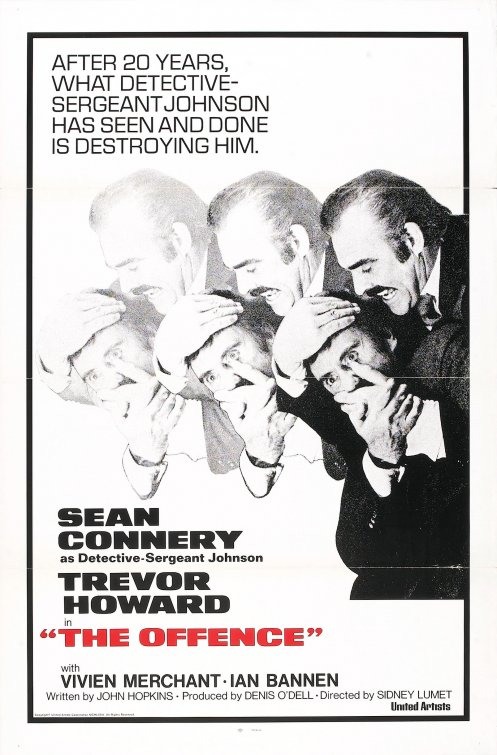
Spoiler-free review.
The detective’s crime is not just an act, but a burden he must carry through repeated confrontations with his own conscience. Each flashback reveals more about Johnson than the victim, making the audience question whether justice or vengeance is truly at stake. The structure creates tension by forcing the viewer to live alongside Johnson's unraveling thoughts.
Lumet’s direction keeps the scenes tight, but the tone sometimes feels repetitive, which softens the urgency of the crisis. The flashbacks are well-timed, yet they repeat emotional moments without adding much new. The pacing is slow, and it can feel like the film lingers too long on Johnson’s internal struggle instead of moving the story forward.
Sean Connery delivers a restrained performance that avoids melodrama but struggles to fully convey the depth of his character’s turmoil. Trevor Howard and Vivien Merchant provide strong support, grounding the film in moments of emotional clarity. The dialogue is sparse but effective, often revealing more through silence than explicit confession.
The repetition of Johnson's crime feels necessary for its thematic weight, yet it risks making his guilt feel less like a burden and more like a routine. There’s a certain elegance to the film’s moral ambiguity, even if its emotional core is occasionally diluted by its own structure. Despite its flaws, The Offence remains a powerful, if uneven, exploration of how far a man will go to justify his actions.
1973 · English. Film details · Poster source · Artwork © its respective rights holders.
The film’s tight focus on moral disintegration is compelling, but its emotional depth is undercut by a repetitive rhythm that softens the impact of its central tragedy.
— Desly