The Killing of a Sacred Deer — A surgeon's moral recklessness
The film balances myth and modernity but struggles with its own emotional stakes. The central conflict is clear, yet the resolution feels underdeveloped.
The film balances myth and modernity but struggles with its own emotional stakes. The central conflict is clear, yet the resolution feels underdeveloped.
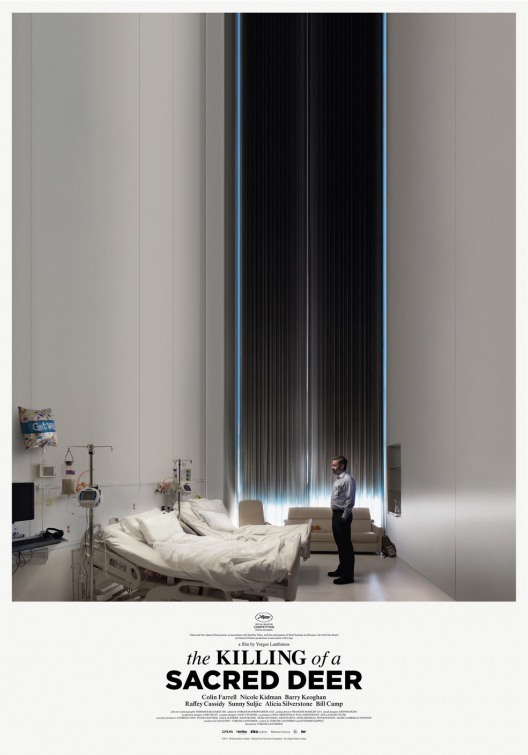
Spoiler-free review.
Colin Farrell carries much of the film’s tension as a man whose choices spiral into chaos. His performance is grounded but leaves room for ambiguity. The script leans heavily on dialogue that reveals backstory without fully justifying character decisions. This creates distance between audience and protagonist.
The direction keeps scenes tight, often using uneasy silences instead of overt horror. The tone shifts from dark comedy to tragedy without warning. The pacing is slow but inconsistent. Some parts drag while others move too fast, breaking the story’s emotional flow.
Nicole Kidman and Barry Keoghan have a strained relationship that isn’t fully explored. Their scenes don’t have enough depth to make their roles in the crisis clear. The dialogue feels forced, relying on exposition instead of natural conversation. This makes the moral dilemmas feel more like plot tricks than real personal struggles.
The film’s mythological background is interesting but not used much. It adds some texture but doesn’t shape the story or character motives clearly. Despite its flaws, it’s a brave attempt at exploring moral uncertainty and psychological tension, even if the themes don’t always feel urgent.
2017 · English. Film details · Poster source · Artwork © its respective rights holders.
The film balances myth and modernity but struggles with its own emotional stakes. The central conflict is clear, yet the resolution feels underdeveloped.
— Desly