The Hitcher — A predator in the backseat
The Hitcher leans into its own tension, but never fully justifies its violence. Rutger Hauer’s menace is effective but not entirely convincing as a sustained threat.
The Hitcher leans into its own tension, but never fully justifies its violence. Rutger Hauer’s menace is effective but not entirely convincing as a sustained threat.
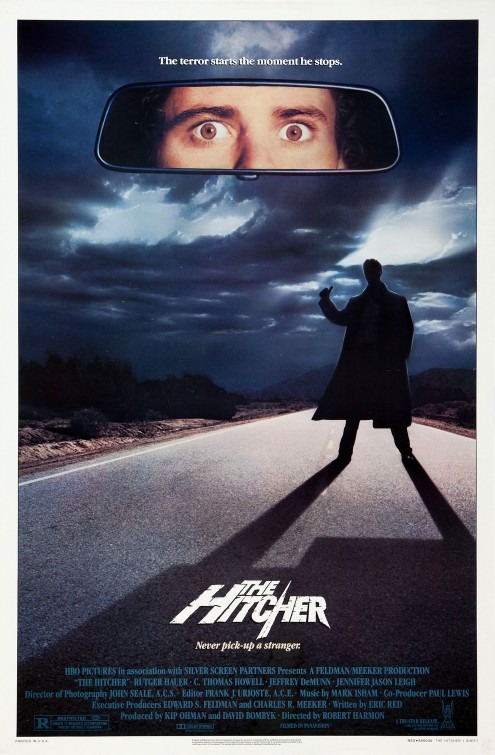
Spoiler-free review.
The film follows a stranded driver and a hitchhiker whose motives are unclear from the beginning. There's a clear sense of danger, but it's hard to tell if that danger is real or imagined. The characters don't have much depth, which makes their conflict feel more like a setup than a real story.
The direction keeps the tension high with tight framing and limited settings, but it doesn't let up for long. The dialogue is tense, but it lacks the emotional depth needed to make the threat feel personal. The film moves quickly, but it never slows down enough to let the audience catch their breath or think about what's happening.
Rutger Hauer brings a calm menace that is convincing in moments, though his character lacks a clear motivation beyond violence. C. Thomas Howell plays his role with nervous energy, but his fear never fully justifies the escalating danger around him. Jennifer Jason Leigh’s presence adds some emotional weight, but her scenes are limited to brief exchanges without much development.
The film's atmosphere is its strongest point, but it overshadows the characters. The threat feels more like a gimmick than a real danger. It does a good job of building suspense, but the lack of character depth weakens the impact of the ending. Despite its flaws, The Hitcher is still an effective example of how to create tension, even if it feels a bit formulaic at times.
1986 · English. Film details · Poster source · Artwork © its respective rights holders.
The Hitcher leans into its own tension, but never fully justifies its violence. Rutger Hauer’s menace is effective but not entirely convincing as a sustained threat.
— Desly