The Brutalist — A slow-burn confrontation with time
The Brutalist balances emotional weight and architectural symbolism, but its deliberate pace risks alienating some viewers.
The Brutalist balances emotional weight and architectural symbolism, but its deliberate pace risks alienating some viewers.
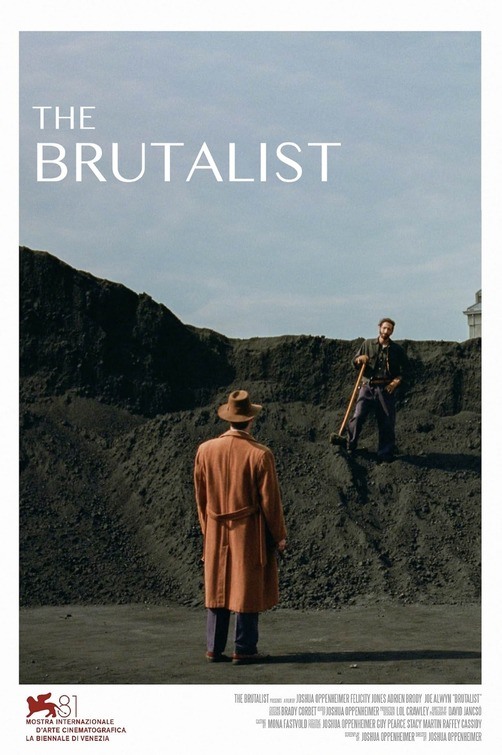
Spoiler-free review.
The central conflict is a man's struggle to reconcile his past with an uncertain future, all while physically isolated in a remote setting. His internal turmoil is conveyed through long silences and sparse dialogue that emphasize the emotional distance between him and others. The film leans on its environment as both character and obstacle, without ever fully explaining its symbolic role.
The film uses stillness to build tension, but it also stretches quiet moments longer than they feel natural. The slow pace makes you wait for answers that might not come, which can make you think but also feel like the film is being indulgent when the emotional stakes aren't clear.
The lead actor conveys vulnerability through subtle expressions and restrained gestures, avoiding melodrama. His performance anchors the film's abstract themes in personal struggle, making the philosophical elements more accessible. Supporting characters remain underdeveloped, their roles defined by their relationship to the protagonist rather than their own motivations.
The film handles its main character's despair with quiet dignity, not trying to make it dramatic for effect. The slow rhythm might test your patience, but it also rewards people who can sit with the discomfort of not knowing. In the end, it works as a thoughtful look at isolation, even if how much it affects you depends on how willing you are to go along with its slow pace.
2024 · English. Film details · Poster source · Artwork © its respective rights holders.
The Brutalist balances emotional weight and architectural symbolism, but its deliberate pace risks alienating some viewers.
— Desly