Spoiler-free review.
Stranger Than Paradise makes doing very little together an interesting problem. Its characters share space without necessarily finding much to say. Jim Jarmusch is good at letting that awkwardness remain ordinary. The film does not need every silence to conceal a revelation. Sometimes people are simply bored, defensive or unsure how to make company feel comfortable.
The unhurried approach lets small changes in a relationship register. An invitation, an objection or a brief attempt at kindness can matter without becoming a big dramatic event. I liked that attention to modest gestures of acceptance. The humour is often in the difference between how casual somebody wants to appear and how much an exchange matters.
John Lurie, Eszter Balint and Richard Edson suit the dry tone. Their performances do not push the viewer towards an easy judgement about who is being reasonable. The dialogue has a useful plainness. An unremarkable remark can become funny because the response is delayed or less welcoming than the speaker expects.
The distance is also a limitation. At times I wanted the film to offer more than another variation on people having little to do. Still, the restraint gives its better moments a particular charm. It is a small, distinctive comedy about how travelling somewhere else does not automatically make being with other people any easier.
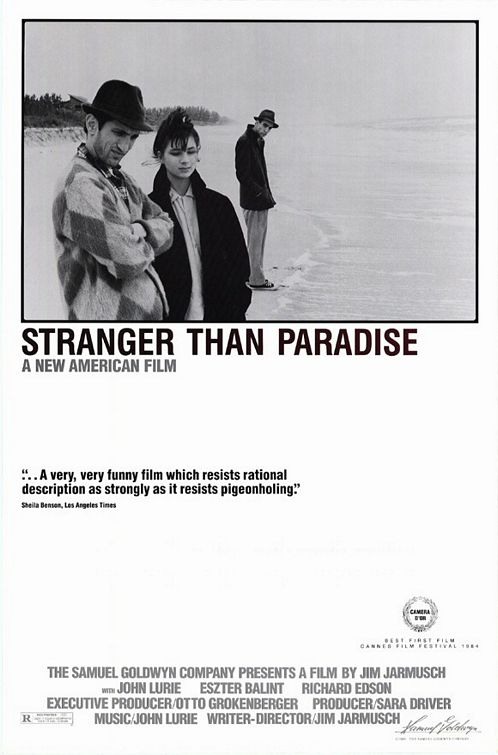
1984 · English. Film details · Poster source · Artwork © its respective rights holders.
7/10
My verdictStranger Than Paradise finds dry humour in people who seem unsure what to do with one another. The small interactions are often lovely, although the deliberate distance can make the film feel slight.
— Desly