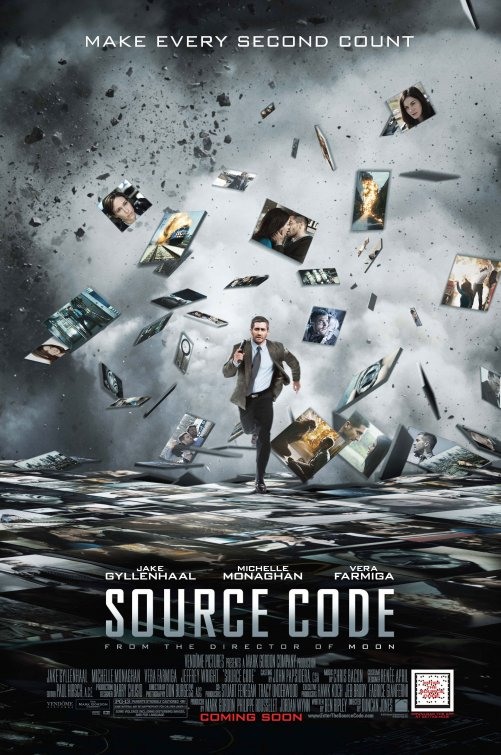
Spoiler-free review.
Jake Gyllenhaal gives Source Code a useful mixture of urgency and confusion. He can make the need for an answer feel immediate without making every response identical. That is important in a story built around returning to a situation. The performance provides continuity while the meaning of the available information keeps changing.
Duncan Jones keeps the film tight and mostly clear. There's usually a clear goal to follow, even when the bigger picture stays unclear. I liked that practical approach. It lets the viewer think about what someone might do with limited time instead of needing to fully accept the science-fiction premise first.
The conversations work best when they reveal the difference between treating a situation as an assignment and noticing the people inside it. Gyllenhaal brings enough concern to make that distinction matter. The film is more engaging when it stays with those encounters than when it pauses to insist on the importance of its underlying rules.
Some explanations feel a bit hand-wavy, and the emotional focus can be a bit direct. I was more convinced by the pressure of the immediate problem than by every attempt to make the premise make sense. Even with those reservations, it's an efficient thriller. The central performance keeps the repetitions from feeling like a mechanical exercise.
2011 · English. Film details · Film details · Poster source · Artwork © its respective rights holders.
7/10
My verdictSource Code keeps its science-fiction premise moving through a strong central performance. Jake Gyllenhaal makes repeated uncertainty engaging, although the explanations are less persuasive than the immediate human stakes.
— Desly