Spoiler-free review.
The film’s strength lies in its ability to make political conflict feel intimate. A father is forced into a role he never wanted, revealing the cost of public divides on private lives. Sathyan Anthikad balances humor with emotional stakes, ensuring the satire does not overshadow the human drama at the heart of the story.
Thilakan portrays the retired railway employee with quiet dignity, making his reluctance and eventual involvement believable and compelling. Sreenivasan adds sharpness to the narrative as one son, bringing both wit and vulnerability to his character’s political fervor.
The script gives each actor space to highlight the absurdity of political posturing while keeping the family tensions grounded in real emotions. Jayaram and others play roles that amplify the film’s critique without reducing the characters to caricatures.
The pacing allows for moments of levity even as the central conflict grows more intense and personal. The film never loses sight of the father’s perspective, anchoring the satire in a relatable emotional core.
Despite its humor, Sandesham remains focused on the damage caused by ideological divides within families. The actors’ performances ensure that the political commentary feels earned rather than forced or overly didactic.
Anthikad’s direction keeps the satire sharp while allowing room for the characters’ humanity to shine through. Sandesham remains a powerful example of how political satire can explore personal and social tensions with both wit and depth.
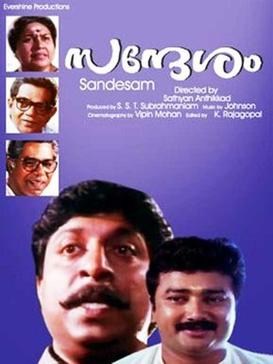
1991 · Malayalam. Film details · Film details · Poster source · Artwork © its respective rights holders.
9/10
My verdictSandesham uses satire to explore how political feuds strain personal relationships. Sathyan Anthikad’s film features Thilakan, Sreenivasan, and others in a story about a man caught between his sons’ ideological battles.
— Desly