Portals, CLIs or Git: what developers really use
A shiny portal is nice. But is it what your developers actually open every day?
A shiny portal is nice. But is it what your developers actually open every day?
When platform teams show off their work, they usually show a portal. Nice cards, service pages, a big "Create" button. It demos beautifully.
But when I watch developers actually work, they rarely live in a portal. They live in their editor, their terminal, their pull requests and their chat tool. So the question every platform team should ask is: where should the platform meet developers?
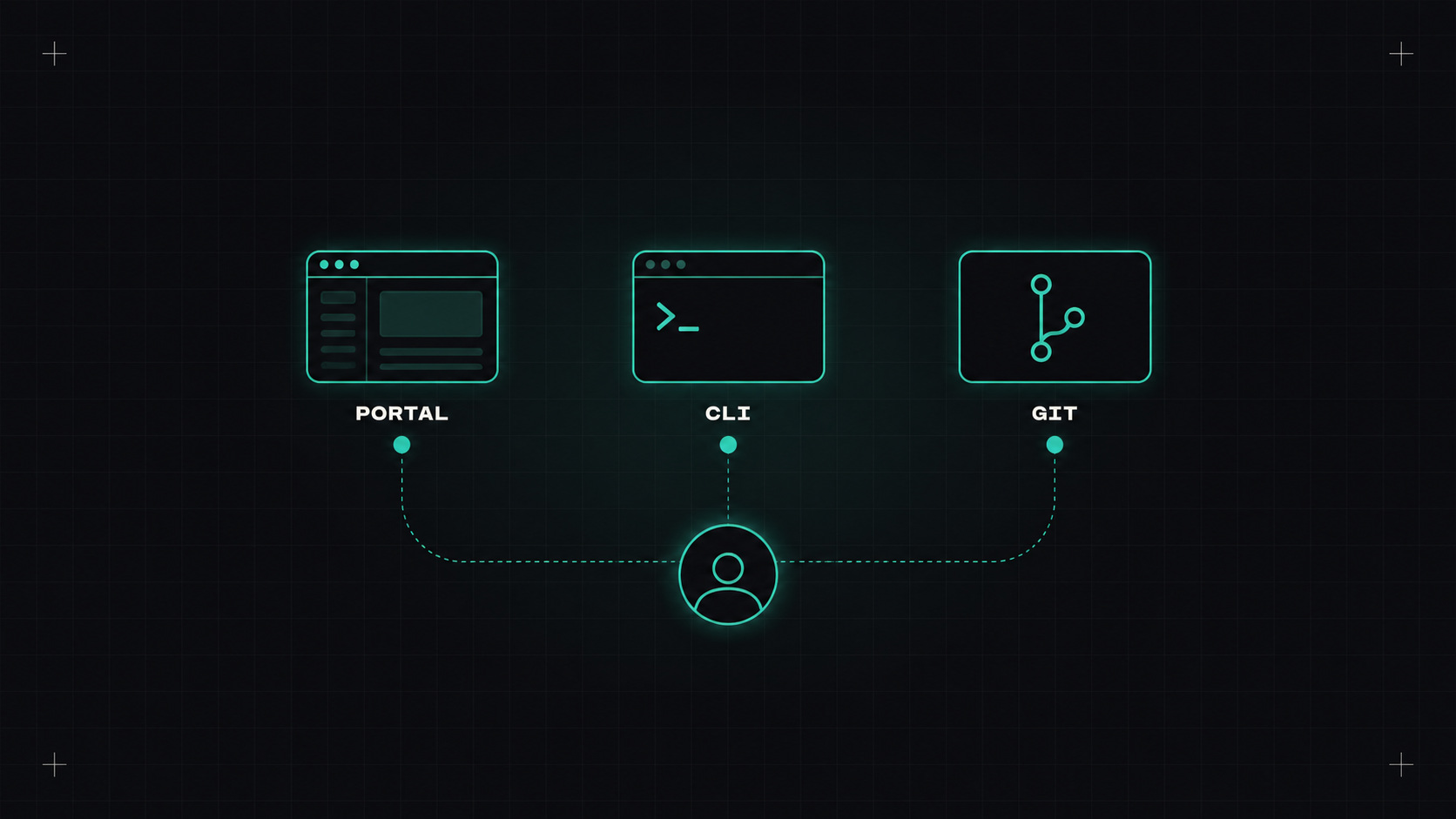
A web portal (Backstage, Port and others). Great for discovery: finding services, owners, docs, and for occasional tasks like creating a new service. Less great for things you do twenty times a day.
A CLI. Developers who live in the terminal love a good command-line tool. platform create service, platform logs, platform env up. Fast, scriptable, easy to use in CI. The downside: someone has to build and maintain it, and it needs to be installed and updated everywhere.
Git as the interface (GitOps). Developers change a YAML file in a repository, open a pull request, and automation does the rest. Every change is reviewed, versioned and auditable. The downside: YAML fatigue, and less discoverable for newcomers.
None of these is "the right one". They're good at different moments.
The best platform interface is the one developers are already looking at when they need it.
When you ask developers what they want from a platform, the answers are rarely "a nicer portal". More often they're things like:
Notice that these are about outcomes, not interfaces. The platform team's job is to make those outcomes easy, wherever the developer happens to be.
Some practical patterns that work well:
The most underrated part of any platform is documentation. A platform nobody understands is a platform nobody uses.
Good platform docs:
If you only have time for one improvement this quarter, improving docs often beats adding a new feature.
Whatever interface you choose, measure whether it helps. Useful before and after comparisons:
If the numbers don't move after launching a portal, the portal isn't the problem you needed to solve.
Start where your developers already are. For most teams, that's Git and pull requests, with good automation behind them. Add a CLI if your developers are terminal-heavy. Add a portal when discovery becomes a real problem, usually once you have dozens of services and teams.
My take: build the platform around developers' habits, not around the demo. The demo lasts ten minutes, the habits last years.
— Desly