Spoiler-free review.
Pakshay explores the spaces between words, where tension grows from what is not said as much as what is spoken. The film dwells in the pauses that define relationships. The director, Mohan, frames the central conflict as a slow-burn confrontation, allowing the performances to carry the weight of the narrative without overt action.
Mohanlal’s presence anchors the film with a measured authority, making his character’s internal struggles feel deeply personal and restrained. His performance suggests a man holding back, not out of fear but out of a need to maintain control over a situation he cannot fully resolve.
Shobhana matches him with a quiet intensity that reveals layers of emotion beneath her composed exterior. Her character’s restraint is as telling as any dialogue. The interplay between the two leads feels authentic, their chemistry built on a foundation of mutual respect and unspoken conflict.
Their performances do not shout their emotions but let them simmer beneath the surface, creating a tension that lingers long after scenes end. The film’s structure allows for moments of stillness, where silence becomes as significant as any spoken exchange.
This approach can be slow-moving, but it aligns with the emotional stakes of the characters’ relationship. The writing gives room for subtle shifts in power and understanding between the leads, making their dynamic compelling without melodrama.
Pakshay thrives on its refusal to simplify its characters or their conflicts into easily digestible arcs. Mohanlal and Shobhana bring a gravity to their roles that makes their emotional distance and connection feel entirely believable.
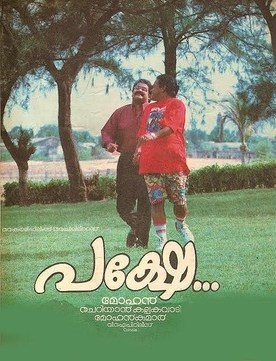
1994 · Malayalam. Film details · Film details · Poster source · Artwork © its respective rights holders.
7/10
My verdictMohanlal and Shobhana navigate a tense, emotionally charged dynamic in Pakshay, a drama exploring relationships strained by unspoken truths. The film leans into its characters’ quiet intensity and emotional friction.
— Desly