Spoiler-free review.
The film examines how upbringing shapes identity, focusing on four children torn from their origins and reared apart. Their eventual reunion becomes a test of forgiveness and self-discovery, emphasizing the weight of past choices and the search for truth.
The tone is contemplative, balancing moments of quiet despair with hopeful resolve. Atmosphere shifts subtly as characters confront their histories, creating an emotional rhythm that underscores the complexity of reconciliation.
Sivaji Ganesan and Gemini Ganesan anchor the drama with nuanced performances, bringing depth to their roles as individuals grappling with fractured pasts. Their interactions reveal unspoken tensions, grounding the film’s central conflict in believable human emotion.
A. Bhimsingh’s direction emphasizes character-driven storytelling, allowing the script’s emotional core to unfold naturally. The writing explores moral ambiguity without overexplaining, letting performances carry the weight of the narrative’s themes.
The pacing is measured, giving space for emotional beats to resonate. While some scenes linger longer than needed, the deliberate rhythm supports the film’s focus on personal transformation and familial reconciliation.
Paava Mannippu is a compelling watch for fans of dramatic narratives centered on identity and redemption. Its thoughtful exploration of forgiveness and belonging makes it a rewarding experience for those drawn to character-driven stories.
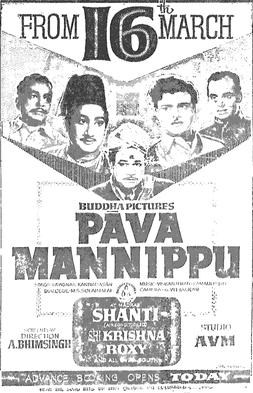
1961 · Tamil. Film details · Film details · Poster source · Artwork © its respective rights holders.
7/10
My verdictPaava Mannippu explores the emotional journey of four children separated from their parents, raised by different religious foster families. The film centers on themes of belonging and redemption through its ensemble cast.
— Desly