Never Rarely Sometimes Always — A teenager's quiet resolve against a system that refuses to listen
The film moves at a careful pace while keeping the emotional stakes high, but its quiet style might make some of the main conflict feel less urgent.
The film moves at a careful pace while keeping the emotional stakes high, but its quiet style might make some of the main conflict feel less urgent.
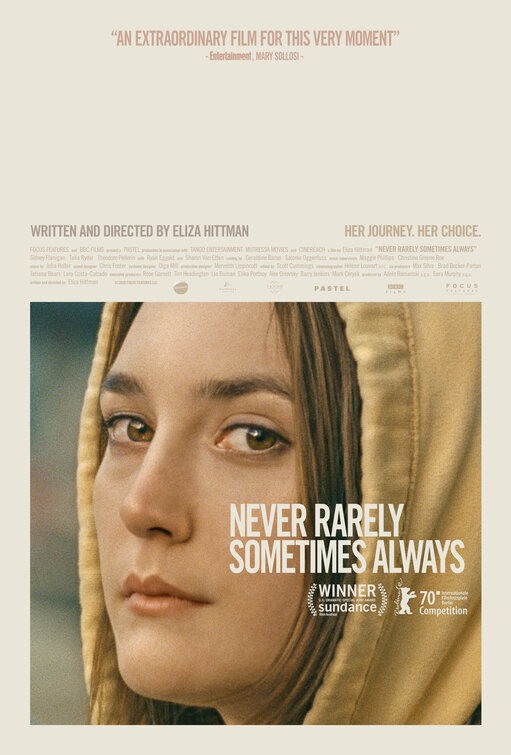
Spoiler-free review.
A young woman travels alone across state lines to obtain an abortion, facing barriers at every step without a clear ally or advocate. The journey is marked by silence and hesitation rather than dramatic confrontation, which emphasizes the isolation of the protagonist’s decision. Eliza Hittman avoids melodrama, focusing instead on the emotional weight of unspoken choices.
The camera focuses on small actions—long looks, pauses that feel heavy with thought—to show what the characters are feeling without them saying much. Sidney Flanigan gives a performance that's quiet but full of feeling, avoiding big dramatic moments in favor of real, raw emotion. Talia Ryder plays her younger sister in a way that adds quiet tension between them without needing to explain everything.
The dialogue feels natural but often sparse, reflecting the characters’ reluctance to confront difficult emotions head-on. The film’s pacing is deliberate, sometimes slow, which may test patience but reinforces the emotional gravity of its subject. Sharon Van Etten’s presence as a counselor adds a layer of professional distance that contrasts with the protagonist’s vulnerability.
Sometimes the film's quiet style doesn't match how urgent the story feels, leaving some parts underdeveloped. Its choice to avoid making things too dramatic is both its best quality and maybe its weakest point for people who want more emotional fireworks. Still, the main conflict stays strong because of the quiet strength of the main character facing a system that doesn't care.
2020 · English. Film details · Poster source · Artwork © its respective rights holders.
The film moves at a careful pace while keeping the emotional stakes high, but its quiet style might make some of the main conflict feel less urgent.
— Desly