Mass — A collision of grief and guilt
The film’s intensity comes from its refusal to offer easy answers, even as the emotional stakes are high. The actors make the tension feel raw and immediate.
The film’s intensity comes from its refusal to offer easy answers, even as the emotional stakes are high. The actors make the tension feel raw and immediate.
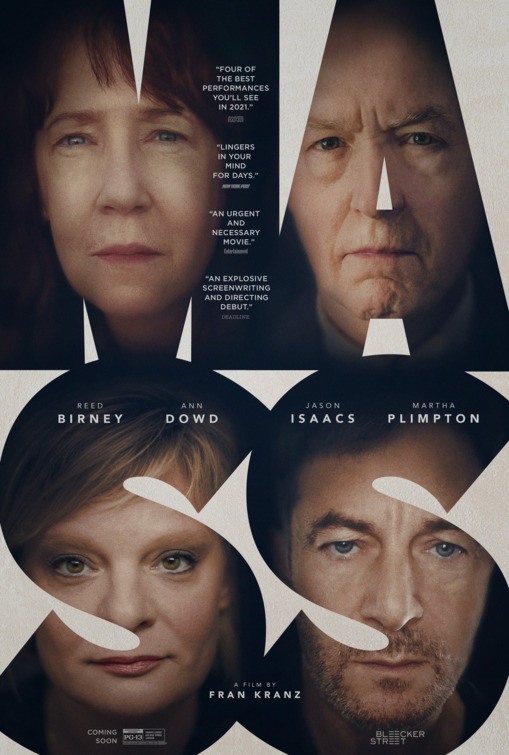
Spoiler-free review.
Two grieving parents meet in a room, each carrying the weight of their son's death but unable to fully understand the other’s pain. The film avoids melodrama by keeping dialogue tight and focused on what is said rather than how it is delivered. Fran Kranz builds tension through the quiet spaces between lines, where the unspoken feels heavier than the spoken word.
The film moves slowly, letting the audience sit with the discomfort instead of pushing toward a quick resolution. There are moments where the dialogue feels repetitive, but that repetition makes the shared sorrow feel more trapped. The small room becomes a stage for the emotional clash, with no way to escape the other person's presence.
Reed Birney and Martha Plimpton carry the film with restrained performances that avoid histrionics. Ann Dowd and Jason Isaacs bring a simmering unease to their roles, making their characters feel both vulnerable and dangerous. The conversations are layered with subtext, but never so obscure that they become inaccessible or frustrating.
At times, the film relies too much on its tension, which can make the audience feel drained instead of giving them a release. Still, the performances keep the film grounded, making its moral uncertainty feel important and urgent. Mass works by making the audience uncomfortable, showing how grief can be both lonely and connected to others.
2021 · English. Film details · Poster source · Artwork © its respective rights holders.
The film’s intensity comes from its refusal to offer easy answers, even as the emotional stakes are high. The actors make the tension feel raw and immediate.
— Desly