House of Games — A con game with a moral twist
The film balances suspense and character depth but leans too heavily on its own cleverness at times. Mantegna's performance grounds the story in real emotional stakes.
The film balances suspense and character depth but leans too heavily on its own cleverness at times. Mantegna's performance grounds the story in real emotional stakes.
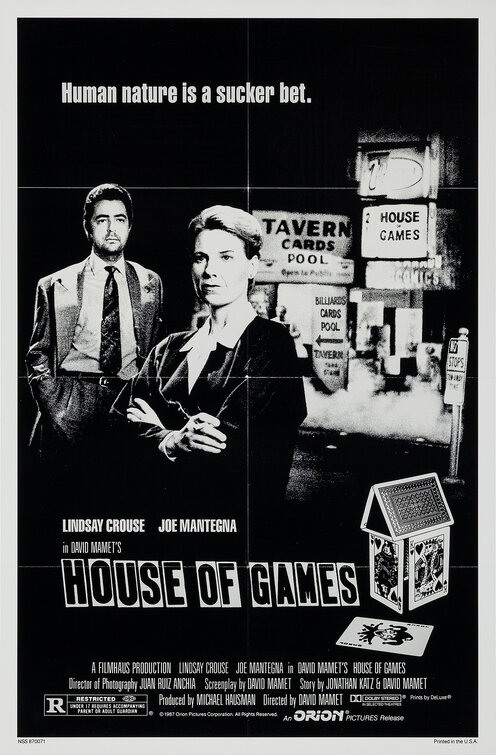
Spoiler-free review.
House of Games follows a man who gets drawn into a high-stakes con, only to find himself trapped by his own choices. The central conflict is not just about money but about trust and betrayal, which gives the film more than just a plot-driven appeal. Mantegna's character is both victim and participant, making his moral dilemmas feel urgent rather than academic.
The dialogue is snappy, with tense back-and-forth that shows the characters' conflicts. Some parts feel a bit rushed, especially when switching viewpoints or dropping secrets. But the film keeps a good pace that holds your attention all the way through.
Lindsay Crouse and Ricky Jay bring a level of unpredictability to their roles, making their motives harder to read. Their performances suggest hidden layers beneath the surface, which adds complexity to the relationships on screen. The script gives them room to improvise, but some lines feel rehearsed rather than spontaneous.
The film raises some clear moral questions, but the ending doesn't quite match the setup. There's a gap between what the film aims for and how some scenes play out. Still, the emotional heart of House of Games is strong enough to make it a solid entry in Mamet's early work.
1987 · English. Film details · Poster source · Artwork © its respective rights holders.
The film balances suspense and character depth but leans too heavily on its own cleverness at times. Mantegna's performance grounds the story in real emotional stakes.
— Desly