Golden paths: standards that don't slow anyone down
How to make the right way the easy way, with escape hatches for the edge cases.
How to make the right way the easy way, with escape hatches for the edge cases.
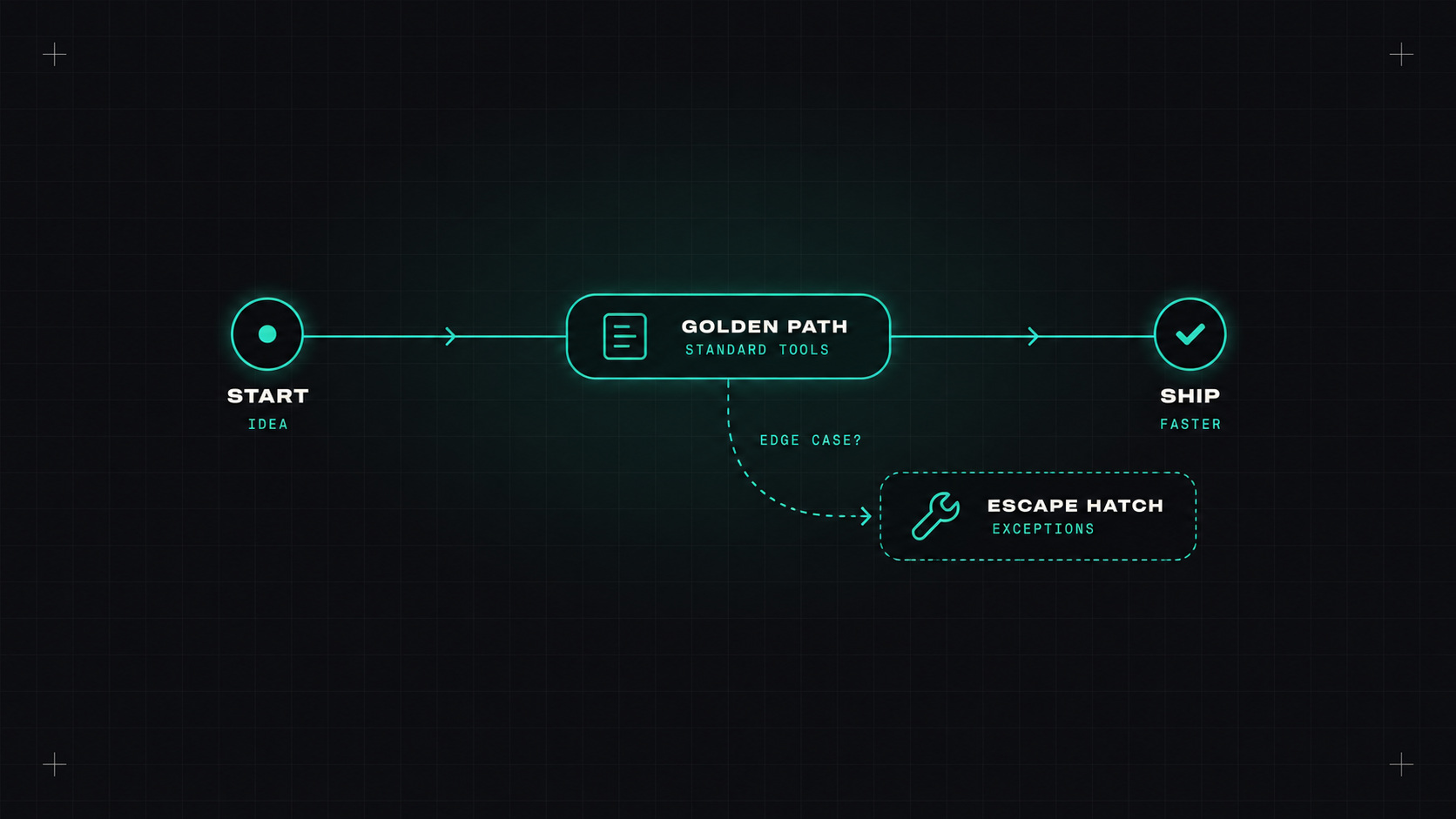
Every company wants standards. Same pipeline structure, same security checks, same logging format, same way to deploy. And every developer has been on the receiving end of standards that felt like paperwork: a forty-page wiki, a checklist, a review board that meets on Thursdays.
The idea is that standards should feel like a shortcut, not a barrier.
I find it useful to think about three ways to guide people:
Good platforms use a lot of paved roads, a few guardrails, and as few gates as possible.
If people need to be forced onto your golden path, it isn't golden. It's just a path.
From a developer's perspective, a good golden path looks like this:
The developer didn't read a wiki page about logging standards. The template simply does logging the right way. They didn't configure security scanning. The pipeline includes it. The standard is baked in.
The best candidates are things every service needs, that are easy to get wrong:
Don't try to standardise everything. Leave the actual product code alone. Developers should choose their own libraries and architecture inside the service.
Teams will always have unusual needs — different languages, GPU workloads, or odd databases. If your golden path is the only option, those teams will either be stuck or quietly find workarounds you don't know about.
So build escape hatches on purpose:
The hidden issue with templates is that once a service is created, it's a copy. If you improve the template later, older services don't automatically get those improvements.
A few ways to handle that:
Very much. They're how a small platform team can raise the quality of dozens of services without reviewing every one. Developers get speed, the organisation gets consistency, and nobody has to read the forty-page wiki.
My take: make the right way the easiest way, keep a door open for the exceptions, and listen when people use it.
— Desly