Experimenter — A dramatized experiment in obedience
The film balances ethical inquiry with personal stakes but leans too heavily on its subject matter, limiting emotional resonance.
The film balances ethical inquiry with personal stakes but leans too heavily on its subject matter, limiting emotional resonance.
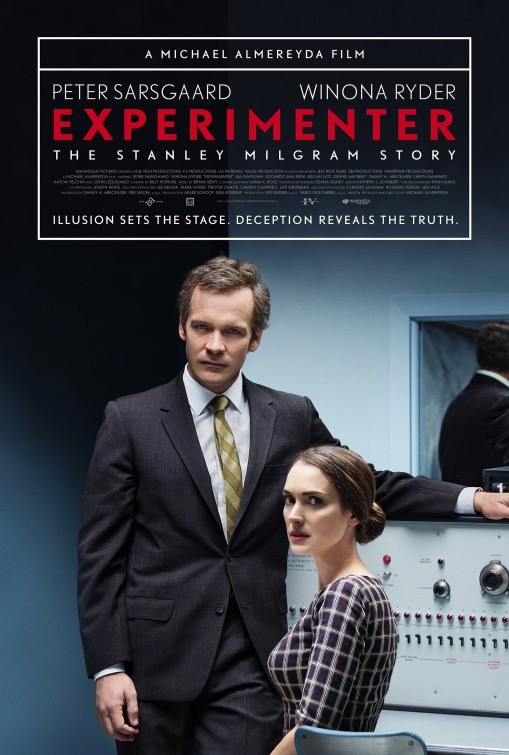
Spoiler-free review.
Experimenter is about moral compromise, focusing on Stanley Milgram’s famous experiment and what came after. The main conflict is between scientific ambition and human conscience, shown through layered conversations and slow reveals. Peter Sarsgaard plays Milgram with intellectual energy, but he doesn’t show enough of the inner conflict Milgram must have felt.
Winona Ryder’s character adds some depth, but her role feels underdeveloped compared to Milgram’s. The dialogue often feels more like information dumps than real character development, making relationships feel more like exchanges than real connections. The pacing is slow but uneven—some parts drag, while others rush through complex moral questions.
Jim Gaffigan and Edoardo Ballerini bring some emotional weight, especially in scenes showing the psychological cost of the experiment. The film’s structure can be confusing, jumping between Milgram’s past and present without clear signposts. Still, it raises important questions about authority and morality that stick with you after the credits roll.
Because it’s based on real events, the film feels more like a documentary than a dramatized story. It misses a chance to explore Milgram’s personal life beyond his obsession with obedience. It’s informative, but its emotional punch is weakened by its academic tone, which makes a deeply human topic feel distant.
2015 · English. Film details · Poster source · Artwork © its respective rights holders.
The film balances ethical inquiry with personal stakes but leans too heavily on its subject matter, limiting emotional resonance.
— Desly