Don't Look Now — A performance that lingers in the silence
The film’s tension lies not in its plot but in how characters navigate their own confusion. The direction leans on suggestion rather than explanation, with one notable exception.
The film’s tension lies not in its plot but in how characters navigate their own confusion. The direction leans on suggestion rather than explanation, with one notable exception.
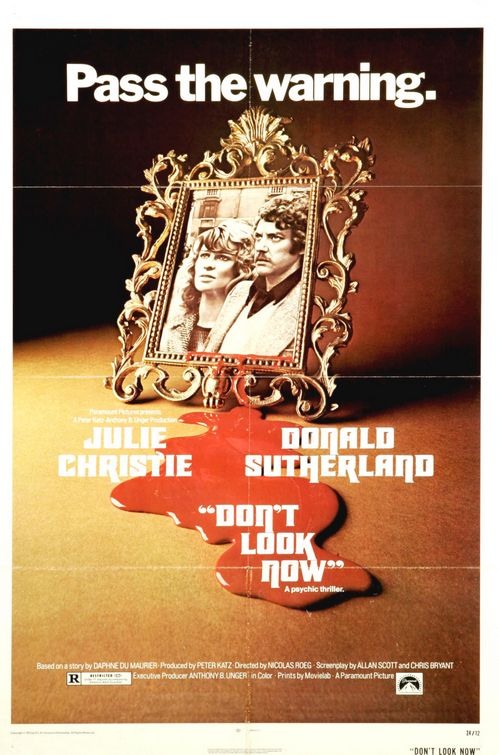
Spoiler-free review.
The central dramatic situation is a couple grappling with grief and an unclear threat, their emotions layered beneath polite restraint. The actors convey inner turmoil without overt gestures, relying on pauses and glances to suggest deeper conflicts. This restraint allows the audience to project their own fears onto the characters’ ambiguous actions.
The film moves slowly, spending time in quiet, uneasy moments instead of pushing toward a quick ending. There are long parts with little dialogue but lots of unspoken tension, letting the audience fill in the gaps. The director avoids typical horror tricks, building fear through small details in the environment and the emotional distance between characters.
The lead performance is understated yet deeply affecting, capturing a man’s struggle to hold onto reality. The supporting cast adds complexity without overshadowing the central couple’s dynamic, their interactions hinting at hidden tensions. Dialogue is sparse but precise, with each line carrying multiple meanings depending on context.
One thing that feels off is how much the film relies on suggestion, sometimes leaving emotions underdeveloped. Still, the acting and mood stick with you after the movie ends. The mix of mystery and real feelings makes it a quiet, powerful but slightly unfinished experience.
1973 · English. Film details · Poster source · Artwork © its respective rights holders.
The film’s tension lies not in its plot but in how characters navigate their own confusion. The direction leans on suggestion rather than explanation, with one notable exception.
— Desly