Compliance — A chilling performance anchors a moral dilemma
The film exposes the dangers of blind obedience but falters in its emotional impact. The real-life inspiration adds weight, yet the tone remains clinical.
The film exposes the dangers of blind obedience but falters in its emotional impact. The real-life inspiration adds weight, yet the tone remains clinical.
Spoiler-free review.
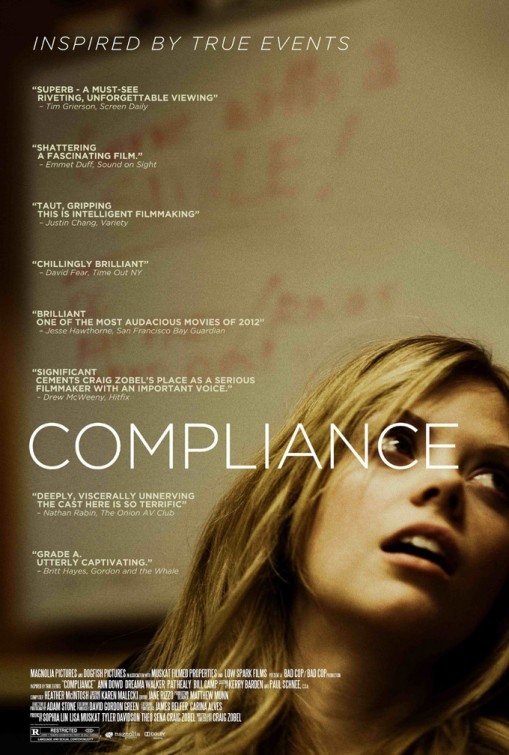
Ann Dowd's portrayal of the restaurant manager is unsettlingly convincing, capturing a slow unraveling of judgment. Her character’s compliance with an authority figure feels disturbingly plausible, rooted in real-world dynamics. The film leans into the horror of ordinary people following orders without questioning their morality.
The film moves at a steady pace that builds tension but doesn't reach strong emotional highs or lows. Scenes are carefully put together, focusing on dialogue and little action to show the pressure of the situation. There's not much room for characters to grow beyond what's needed for the main story.
Dreama Walker’s performance as the employee adds vulnerability, though her role remains constrained by the plot’s design. Bill Camp’s voice as the fake officer is chillingly authoritative but never fully explored as a character. The dialogue feels naturalistic, yet it often serves the film's purpose rather than revealing complex inner lives.
The film relies a lot on its real-life story, which makes the horror feel real but limits how much it can invent. Sometimes, the focus on how things work gets in the way of connecting with the people involved, making it hard to feel emotionally involved. Still, the uncomfortable truth of the situation stays with you, acting as a warning about how people follow authority without thinking.
2012 · English. Film details · Film details · Poster source · Artwork © its respective rights holders.
The film exposes the dangers of blind obedience but falters in its emotional impact. The real-life inspiration adds weight, yet the tone remains clinical.
— Desly