Aftersun — A child and a man on holiday
The film captures the weight of memory through quiet moments, not grand revelations. Paul Mescal’s restraint allows the emotional distance to feel earned rather than imposed.
The film captures the weight of memory through quiet moments, not grand revelations. Paul Mescal’s restraint allows the emotional distance to feel earned rather than imposed.
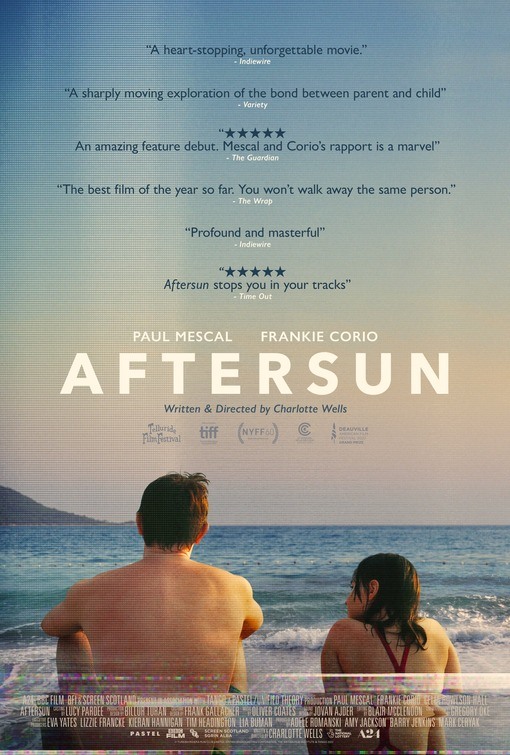
Spoiler-free review.
A child and a man on holiday share a summer that lingers in fragments. The tension lies in what is unspoken between them, not in any overt conflict. The film relies on small holiday details — poolside conversations, hotel corridors — to build an emotional landscape that feels intimate yet distant.
Charlotte Wells avoids melodrama by trusting the audience to sit with the silence. The gaps between Sophie’s observations are where the meaning lives. The direction is careful and deliberate, often lingering on stillness rather than movement. It reflects Sophie’s perspective without oversimplifying it.
Paul Mescal conveys a complex emotional state through minimal gestures — a pause, a glance — that avoid sentimentality but suggest deeper turmoil. Francesca Corio’s performance as Sophie is restrained yet expressive, capturing the curiosity and vulnerability of a child navigating adult emotions.
The film’s greatest strength lies in its refusal to over-explain. It invites interpretation without demanding it, allowing the audience to sit with uncertainty. Even with its emotional precision, the film risks feeling too sparse for some viewers. But its quiet power makes the restraint feel like an act of honesty rather than omission.
2022 · English. Film details · Poster source · Artwork © its respective rights holders.
The film captures the weight of memory through quiet moments, not grand revelations. Paul Mescal’s restraint allows the emotional distance to feel earned rather than imposed.
— Desly