The Whale — A father's guilt and isolation
The Whale balances emotional complexity with its protagonist’s physicality, but the narrative occasionally leans too heavily on its own weight.
The Whale balances emotional complexity with its protagonist’s physicality, but the narrative occasionally leans too heavily on its own weight.
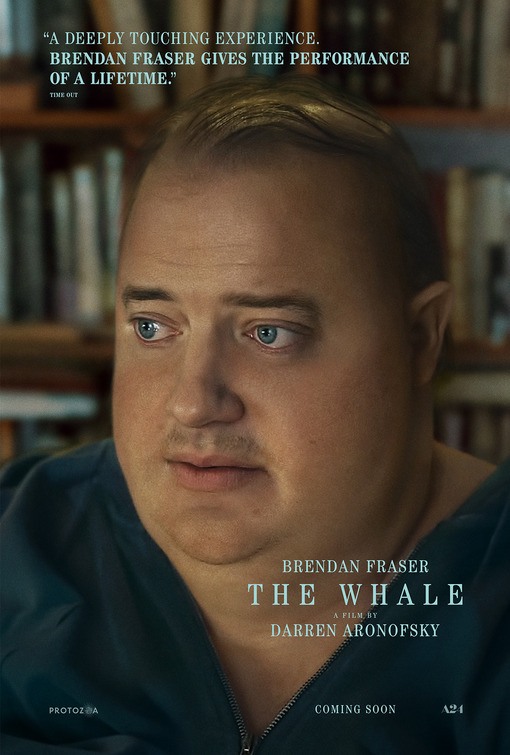
Spoiler-free review.
The central tension lies in a man’s struggle to reconnect with his daughter while battling personal demons and self-destruction. His isolation is both literal and emotional, shaping every interaction with a sense of inevitability. The film never shies away from the raw, uncomfortable moments that define its protagonist’s existence.
The film takes its time, often holding on silence or stillness to show what's going on inside the character. It can feel slow or self-indulgent, focusing more on mood than moving the story forward. Still, the direction keeps a steady tone that matches the character's inner life.
Brendan Fraser delivers a physically and emotionally demanding performance, conveying vulnerability without melodrama. His portrayal captures the fragility of a man clinging to hope in a world that has long since turned away. Sadie Sink brings a quiet strength to her role, balancing anger with yearning in their strained relationship.
The dialogue sometimes feels forced, like it's written for drama rather than real conversation. Some scenes push the emotional stakes too far, making them feel fake or unnecessary. The film's message about redemption and forgiveness is heartfelt, but it can get lost in how heavy it feels.
2022 · English. Film details · Poster source · Artwork © its respective rights holders.
The Whale balances emotional complexity with its protagonist’s physicality, but the narrative occasionally leans too heavily on its own weight.
— Desly