The Third Man — A friendship tested by betrayal
The film builds tension through dialogue and posture, not plot revelations. Orson Welles dominates without overpowering the fragile trust at its core.
The film builds tension through dialogue and posture, not plot revelations. Orson Welles dominates without overpowering the fragile trust at its core.
Spoiler-free review.
Holly Martins' grief is immediate, but his suspicion grows slowly as he uncovers Harry Lime's secrets. The emotional stakes rest on whether Holly can believe what he hears without knowing who to trust. Joseph Cotten carries the weight of doubt with a calm that hides his desperation.
Orson Welles plays Lime as a man who manipulates without getting caught. His voice and posture suggest charm, but also a cold distance from morality. Alida Valli's presence adds another layer of doubt to Holly's search for the truth.
The pacing leans on dialogue that feels natural rather than constructed for suspense. Scenes stretch slightly, letting silence and hesitation do most of the work. The direction trusts the audience to read between lines without overexplaining motives.
The film keeps things vague, never settling into clear hostility or certainty. This uncertainty is its strongest point, even if some emotional threads feel underdeveloped. It makes you feel the weight of not knowing, without ever giving it a clear shape.
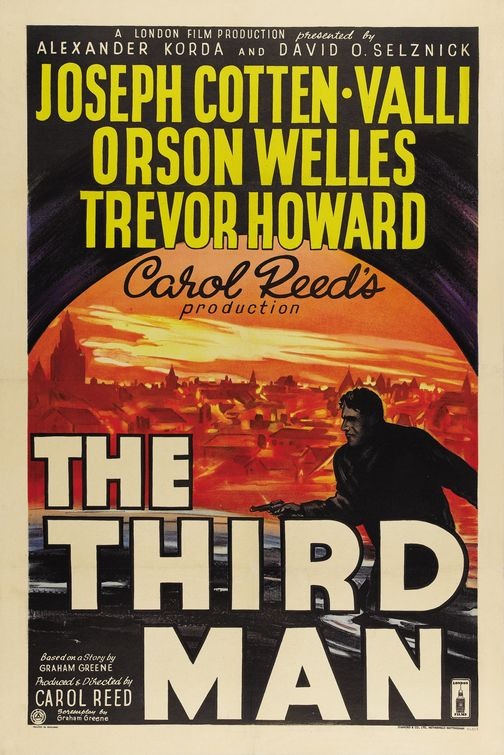
1949 · English. Film details · Poster source · Artwork © its respective rights holders.
The film builds tension through dialogue and posture, not plot revelations. Orson Welles dominates without overpowering the fragile trust at its core.
— Desly