The Stanford Prison Experiment — A controlled descent into moral ambiguity
The film leans on its real-life subject for tension but struggles to balance ethical critique with human complexity. The central conflict remains emotionally distant.
The film leans on its real-life subject for tension but struggles to balance ethical critique with human complexity. The central conflict remains emotionally distant.
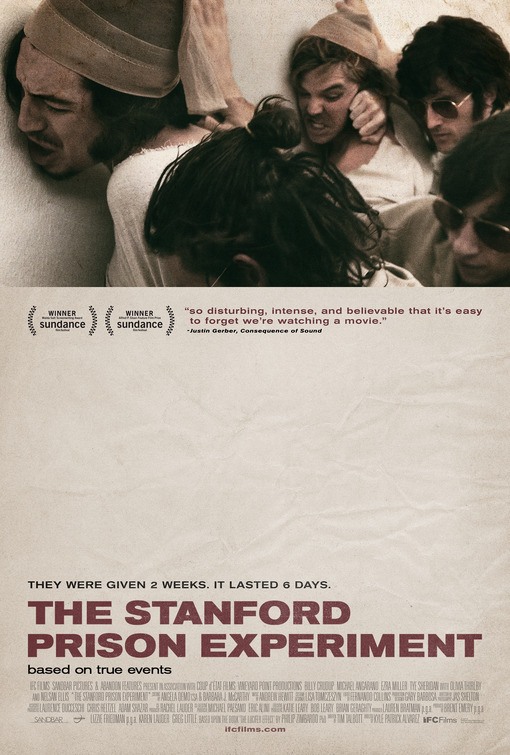
Spoiler-free review.
The experiment feels more like a stage setup than a real psychological study, making it hard to connect emotionally. The actors do their jobs well, but their performances don't bring enough raw feeling to make the characters' choices feel urgent or personal. The script relies on exposition instead of natural dialogue, which makes the moral dilemmas feel more like school lessons than real emotions.
The direction focuses on the cold, sterile environments rather than the characters' inner struggles, which limits the psychological depth of the situation. The pacing is slow and often feels like going through a list rather than exploring how people sink into madness. The film holds back from showing the full consequences of the characters' actions, which keeps the audience from really feeling their suffering.
Without strong personal stakes, the ethical questions feel more like a puzzle than a real human drama. There's an attempt to make the audience think, but it doesn't really get into the emotional aftermath of what happens. Weak character development makes the moral questions feel less powerful.
Even with its flaws, the film does bring up important ideas about power and corruption. It's an interesting but emotionally shallow look at a disturbing real event. The mix of critique and entertainment doesn't quite work, leaving the viewer with more questions than real emotional impact.
2015 · English. Film details · Poster source · Artwork © its respective rights holders.
The film leans on its real-life subject for tension but struggles to balance ethical critique with human complexity. The central conflict remains emotionally distant.
— Desly