The Squid and the Whale — A family unraveling in real time
The film balances humor and heartbreak but leans too often on the boys' perspective, limiting emotional reach. The parents’ flaws are clear, but their depth feels uneven.
The film balances humor and heartbreak but leans too often on the boys' perspective, limiting emotional reach. The parents’ flaws are clear, but their depth feels uneven.
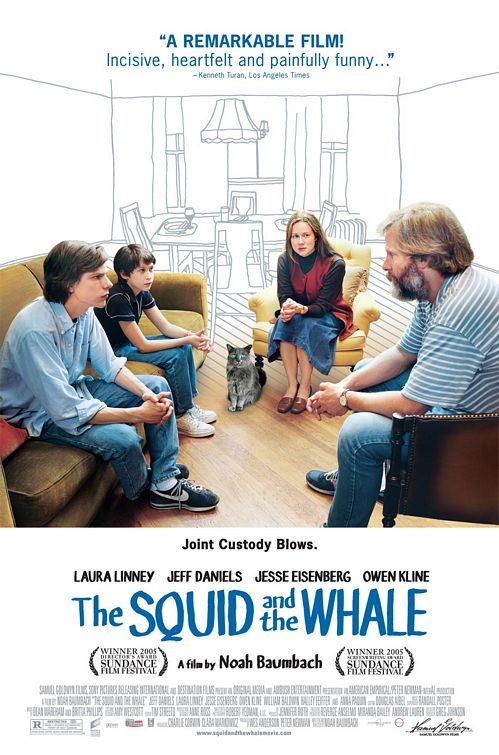
Spoiler-free review.
The central conflict is a divorce unfolding through the eyes of two sons, creating tension between innocence and adult complexity. Jeff Daniels and Laura Linney play estranged spouses with sharp dialogue but little room for redemption or nuance. Their arguments feel rehearsed rather than raw, distancing the audience from their pain.
Jesse Eisenberg and Owen Kline play the kids well, capturing their awkwardness and confusion as they watch their parents fall apart. The boys’ narration adds a personal touch but also means the story is filtered through their limited understanding. The tone shifts between funny and sad, which can make the emotional beats feel a bit off balance at times.
Baumbach's script relies on witty banter that occasionally overshadows deeper character development. The handheld shooting style emphasizes immediacy but can feel disorienting rather than immersive. The parents’ eventual separation feels inevitable yet underdeveloped in its emotional aftermath.
The film’s best parts are the quiet moments where the kids notice things or achieve small wins. The adults, though, feel more like exaggerated characters than real people, which makes it harder to connect with their struggles. Still, the film gets across a certain kind of family sadness, even if it doesn’t fully work out the emotional aftermath.
2005 · English. Film details · Film details · Poster source · Artwork © its respective rights holders.
The film balances humor and heartbreak but leans too often on the boys' perspective, limiting emotional reach. The parents’ flaws are clear, but their depth feels uneven.
— Desly