The Pawnbroker — Rod Steiger's silence speaks volumes
The film captures the emotional weight of trauma without melodrama. Its pacing is deliberate but occasionally slow, testing patience.
The film captures the emotional weight of trauma without melodrama. Its pacing is deliberate but occasionally slow, testing patience.
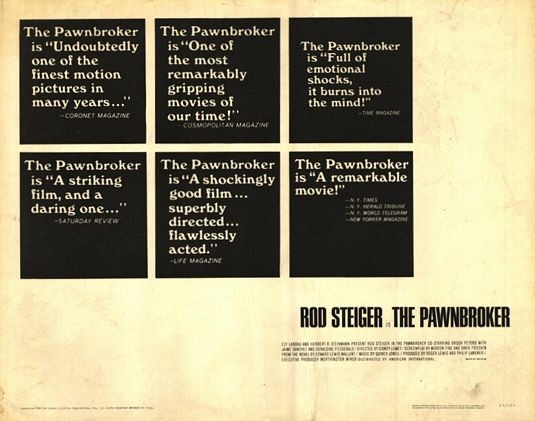
Spoiler-free review.
Steiger’s portrayal of a traumatized pawnbroker anchors the film in quiet despair and moral ambiguity. His character's internal conflict is shown through pauses and glances rather than direct confession or exposition. The screenplay avoids easy resolutions, focusing instead on the emotional aftermath of violence.
Lumet’s direction uses stillness to show the protagonist’s isolation. The film feels heavy and somber, with few bright moments. Some scenes drag, and the dialogue can feel too long without a clear reason.
Geraldine Fitzgerald and Brock Peters provide emotional counterpoints but are secondary to Steiger’s performance. Their interactions reveal the protagonist's fractured psyche through subtle tension and unspoken history. Dialogue is sparse but weighted with subtext, demanding attention from the viewer.
The film’s focus on trauma can feel too narrow, limiting its bigger themes. But its emotional heart is strong and deeply human. Steiger’s performance lifts the material, making it a gripping, if slow, look at guilt and survival.
1964 · English. Film details · Poster source · Artwork © its respective rights holders.
The film captures the emotional weight of trauma without melodrama. Its pacing is deliberate but occasionally slow, testing patience.
— Desly