The Ox-Bow Incident — A town's fury turns to guilt
The film exposes the dangers of mob justice with a restrained tone. The performances anchor its moral weight without melodrama.
The film exposes the dangers of mob justice with a restrained tone. The performances anchor its moral weight without melodrama.
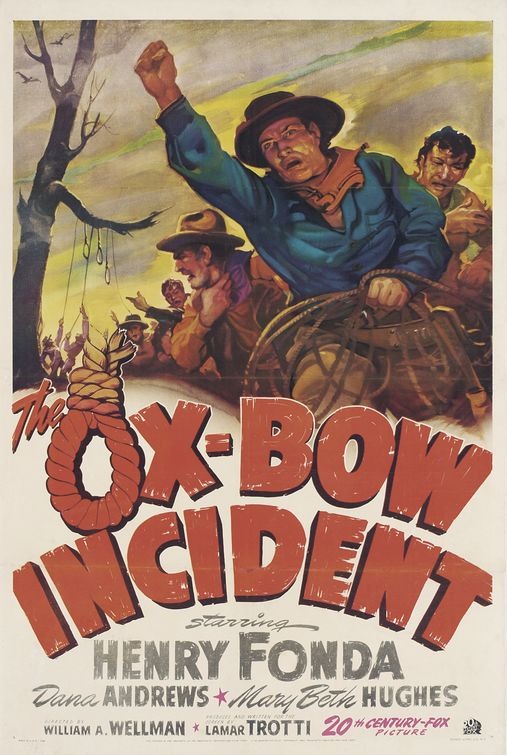
Spoiler-free review.
The town’s anger at a murdered rancher leads to swift, brutal action that later feels irreversible. A group of men, including two outsiders, form a posse convinced of their right to punish the accused. Their certainty is built on incomplete information and collective fear, not proof.
The direction keeps tension tight without flashy visuals or sudden reveals. It moves steadily toward a moral reckoning rather than a plot twist. There are few moments of relief from the pressure of what they've done.
Henry Fonda’s performance is quietly intense, showing the weight of his choices without histrionics. Dana Andrews conveys the unease of someone caught between duty and doubt. Mary Beth Hughes brings a quiet strength to her role, contrasting with the men's aggression.
The film’s moral clarity is its strongest feature, but it occasionally leans too heavily on its own message. At times, the direction feels too calculated in delivering its lesson rather than letting it unfold naturally. Still, the emotional stakes remain high enough to make the message feel earned rather than imposed.
1943 · English. Film details · Poster source · Artwork © its respective rights holders.
The film exposes the dangers of mob justice with a restrained tone. The performances anchor its moral weight without melodrama.
— Desly