The Card Counter — A man's obsession with control
The film balances tension and introspection but struggles to fully commit to its emotional core. The central conflict remains compelling, even if the resolution feels underdeveloped.
The film balances tension and introspection but struggles to fully commit to its emotional core. The central conflict remains compelling, even if the resolution feels underdeveloped.
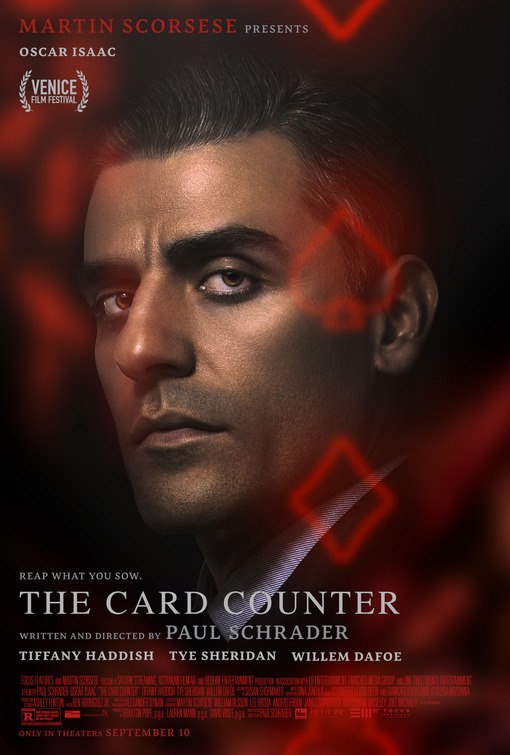
Spoiler-free review.
The central drama revolves around a former soldier trying to maintain control in a high-stakes environment where he cannot trust anyone. His need for structure and predictability becomes both his strength and his downfall, but the film rarely explores why this need is so deeply rooted.
Schrader's direction uses slow pacing and mood to create tension, which works well but can make the film feel sluggish at times. The dialogue is minimal, which leaves some emotional depth and character growth unexplored.
Oscar Isaac delivers a controlled performance, conveying the weight of his character’s past without overexplaining it. Tiffany Haddish and Tye Sheridan provide moments of contrast but are underused in their roles, limiting their impact on the story's emotional arc.
The film's focus on its main theme is both its best and worst quality. It never clearly decides if the character's obsession is a way to heal or a path to self-destruction. Still, The Card Counter thoughtfully examines trauma and the need for control, even if it doesn't always make its ideas feel fully emotionally satisfying.
2021 · English. Film details · Poster source · Artwork © its respective rights holders.
The film balances tension and introspection but struggles to fully commit to its emotional core. The central conflict remains compelling, even if the resolution feels underdeveloped.
— Desly