The Assistant — A quiet performance with heavy implications
The Assistant balances tension and restraint, but its focus on workplace power dynamics limits emotional depth despite strong performances.
The Assistant balances tension and restraint, but its focus on workplace power dynamics limits emotional depth despite strong performances.
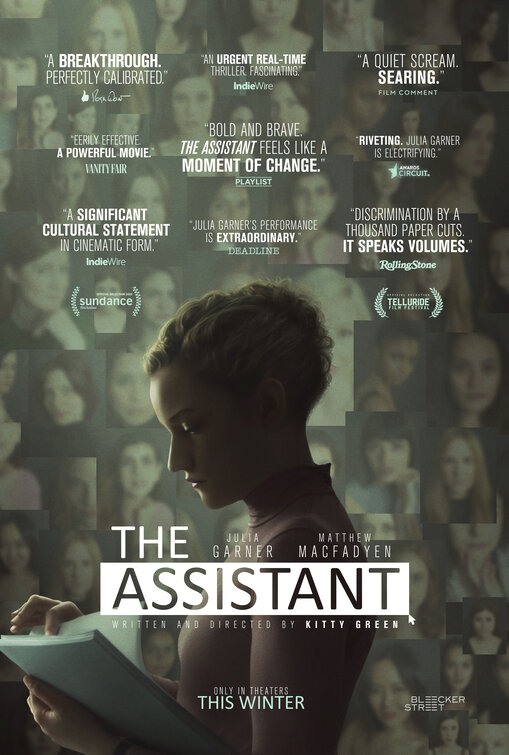
Spoiler-free review.
Julia Garner's portrayal of a junior assistant captures the unease of being trapped in a toxic work environment without ever breaking form. Her character's silence becomes a deliberate choice rather than a narrative weakness, emphasizing her entrapment within the system. Matthew Macfadyen plays the boss with calculated detachment, making his manipulations feel more insidious than overtly abusive.
The film moves slowly, letting the tension grow without big fights or dramatic scenes. It shows how boring and draining the main character's life is by stretching out moments without resolution. But this method might turn off people who want more action or clear conflict.
Garner's performance remains grounded even when the script pushes her toward passive acceptance. Her subtle shifts in posture and eye contact reveal internal conflict without explicit dialogue. The supporting cast provides little relief from the oppressive atmosphere, amplifying the protagonist’s isolation.
The film's quiet style is its best part, but it also holds it back. It avoids cheap drama but ends up feeling too restricted by its own rules. The Assistant gives a tight, uneasy look at power in the workplace, but it doesn't fully explore the main character's emotions.
2019 · English. Film details · Poster source · Artwork © its respective rights holders.
The Assistant balances tension and restraint, but its focus on workplace power dynamics limits emotional depth despite strong performances.
— Desly