Should DevOps engineers learn Go?
Kubernetes is written in Go, and so is almost every tool around it. Where to start.
Kubernetes is written in Go, and so is almost every tool around it. Where to start.
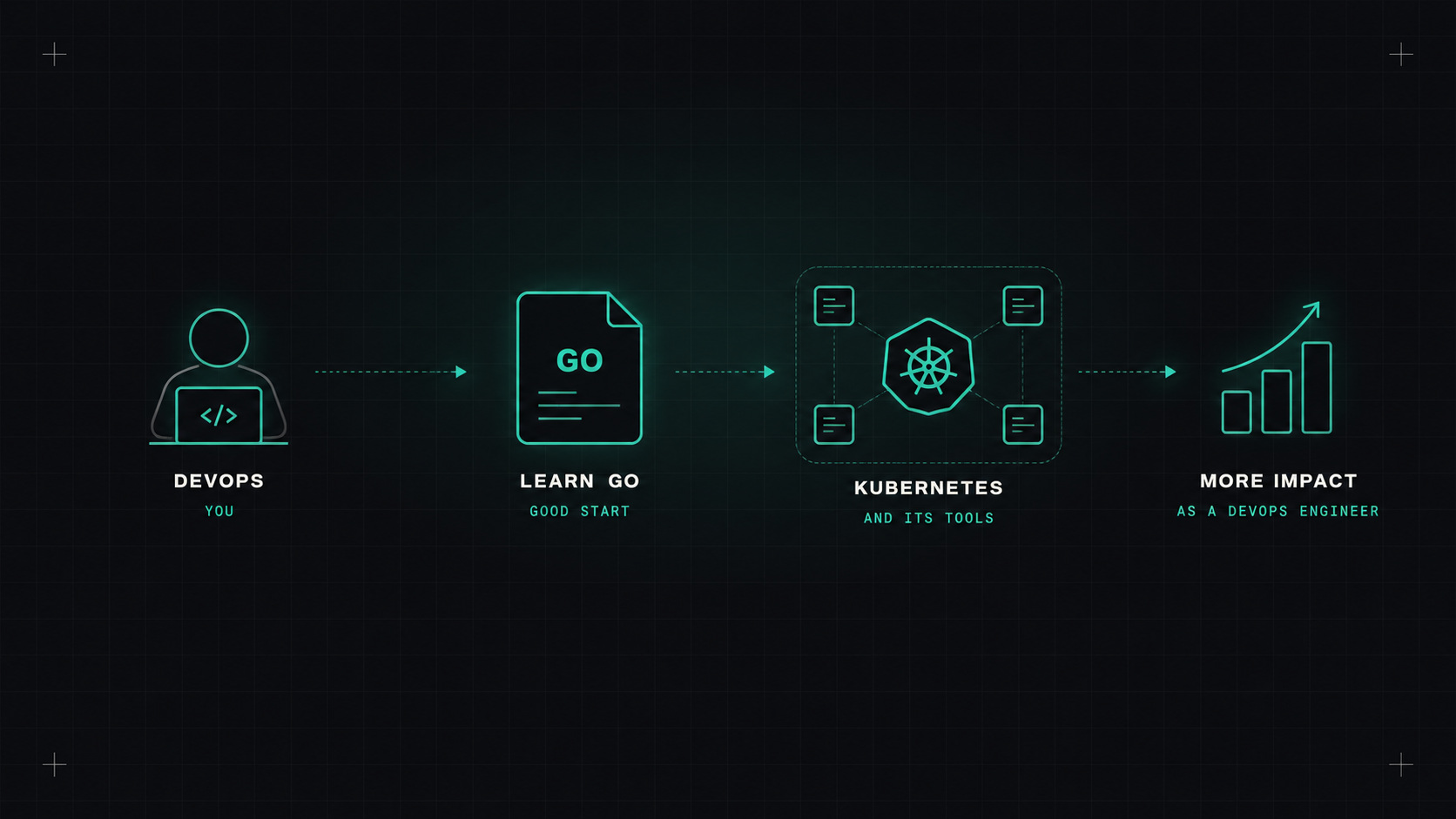
Look at the tools you use every day: Kubernetes, Docker, containerd, Terraform, OpenTofu, Helm, Prometheus, Grafana's backend, Argo CD, Flux, etcd, Vault, Trivy, k9s. Almost all of them are written in Go.
That’s not a coincidence. It’s a good reason for DevOps engineers to think about learning it.
Go was created at Google and released in 2009, designed for building reliable networked services and tools. A few properties made it the language of cloud-native infrastructure:
gofmt). You can read someone else's Go code without decoding their personal style.As a DevOps engineer, Go opens a few doors:
A tiny but real example: a CLI that checks when TLS certificates expire.
package main

import (
    "crypto/tls"
    "fmt"
    "os"
    "time"
)

func main() {
    if len(os.Args) < 2 {
        fmt.Fprintln(os.Stderr, "usage: certcheck <host> [host...]")
        os.Exit(1)
    }

    exitCode := 0
    for _, host := range os.Args[1:] {
        conn, err := tls.Dial("tcp", host+":443", &tls.Config{ServerName: host})
        if err != nil {
            fmt.Printf("%-30s ERROR %v\n", host, err)
            exitCode = 1
            continue
        }
        cert := conn.ConnectionState().PeerCertificates[0]
        conn.Close()

        days := int(time.Until(cert.NotAfter).Hours() / 24)
        status := "OK"
        if days < 14 {
            status = "EXPIRING"
            exitCode = 1
        }
        fmt.Printf("%-30s %-8s %d days left\n", host, status, days)
    }
    os.Exit(exitCode)
}
go build -o certcheck .
./certcheck example.com deslypeter.com
GOOS=linux GOARCH=arm64 go build -o certcheck-linux-arm64 .   # cross-compile
No dependencies beyond the standard library, one binary, works anywhere. For bigger CLIs, libraries like Cobra (used by kubectl, Helm and many others) add subcommands and flags.
Learning Go is like getting a key to the engine room of cloud-native infrastructure.
Operators are where Go really shines for platform work. An operator watches Kubernetes resources and makes reality match what they describe.
Kubebuilder (and the Operator SDK, which builds on it) generates most of the boilerplate:
kubebuilder init --domain acme.com --repo github.com/acme/app-operator
kubebuilder create api --group platform --version v1alpha1 --kind App
You then define your custom resource's fields in Go structs and write a Reconcile function: "given this App resource, make sure the right Deployment, Service and HTTPRoute exist". The framework handles watching, caching, retries and leader election.
It's not a weekend project to build a production-quality operator, but building a toy one is the best way to understand how Kubernetes itself works. Every built-in controller follows the same pattern.
They're complementary:
Many DevOps engineers use Python for scripts and Go for tools.
If you work with Kubernetes and want to go beyond using tools to understanding and extending them, yes. You don't need to become a Go expert. Being able to read Go code and write small tools already makes you noticeably more effective.
My take: you don't have to speak Go to work in cloud-native. But it's the language the whole neighbourhood speaks, and it helps to understand the conversation.
— Desly