Primer — The explanations do not get easier
Primer makes technical work and uncertainty feel closely related. Its refusal to simplify can be frustrating, but the guarded conversations and small scale make that difficulty unusually convincing.
Primer makes technical work and uncertainty feel closely related. Its refusal to simplify can be frustrating, but the guarded conversations and small scale make that difficulty unusually convincing.
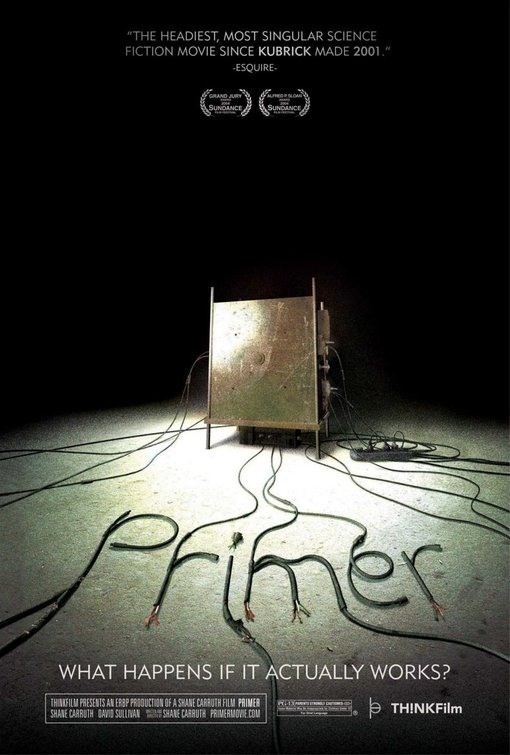
Spoiler-free review.
Primer expects the viewer to do some work, and I liked that it does not apologise for it. The conversations sound like people talking to colleagues rather than explaining their subject to an audience. You can follow the confidence, disagreement and suspicion even when the technical language is difficult. Those social signals provide a way into the film.
Shane Carruth keeps the story small, which matches its ideas. Work happens in normal places, and a discovery doesn't immediately bring the right words to explain it. That gap is interesting. The film makes the effort of figuring something out feel messy, including how ambition can outpace caution.
The dialogue changes in an effective way as trust becomes harder to take for granted. An explanation may be detailed without being helpful to the person receiving it. The dry performances suit that guardedness. There is little invitation to relax into a reassuring guide through the rules, which keeps the uncertainty close.
Some of the difficulty feels like it's meant to be a challenge, and I see why that might feel more tiring than satisfying. The film doesn't always give the viewer enough to hold onto in its complicated moments. Still, the way it's put together and the mood it creates feel connected. Its intelligence seems tied to the uneasy feeling of not knowing if someone else understands more than you do.
2004 · English. Film details · Poster source · Artwork © its respective rights holders.
Primer makes technical work and uncertainty feel closely related. Its refusal to simplify can be frustrating, but the guarded conversations and small scale make that difficulty unusually convincing.
— Desly