Klute — A woman's trust is tested by a detective's obsession
The tension between suspicion and truth drives Klute forward. Jane Fonda's performance grounds the film in emotional complexity despite its procedural setup.
The tension between suspicion and truth drives Klute forward. Jane Fonda's performance grounds the film in emotional complexity despite its procedural setup.
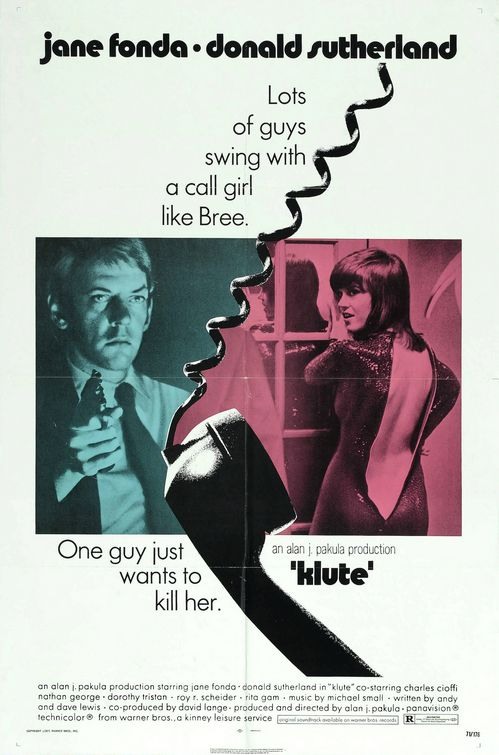
Spoiler-free review.
The central conflict hinges on whether the call girl is a victim or a manipulator, blurring moral lines without clear resolution. Donald Sutherland's detective is consumed by his pursuit, making his obsession as much a flaw as a motive. The film avoids resolving who is truly in control, keeping the audience in the same uncertainty as its characters.
Pakula's direction focuses on quiet moments and meaningful looks, building tension without flashy scenes. The film moves slowly, letting silence speak between lines. Every scene feels planned out, keeping things serious without going over the top.
Jane Fonda brings vulnerability to her role, making the character's ambiguity feel earned rather than contrived. Her performance suggests layers beneath the surface, inviting but never forcing interpretation. Roy Scheider adds an edge as the antagonist, his presence heightening the stakes without overplaying the threat.
The dialogue is simple but sharp, with what's not said often holding more weight than what's spoken. Sometimes the film's uncertainty feels more like a style choice than something the story needs. Still, the emotional heart is strong enough to make the questions worth thinking about.
1971 · English. Film details · Poster source · Artwork © its respective rights holders.
The tension between suspicion and truth drives Klute forward. Jane Fonda's performance grounds the film in emotional complexity despite its procedural setup.
— Desly