Gladiator — spectacle with someone to follow
Big battles and a direct emotional story, anchored by Russell Crowe. The spectacle works because the central performance stays grounded.
Big battles and a direct emotional story, anchored by Russell Crowe. The spectacle works because the central performance stays grounded.
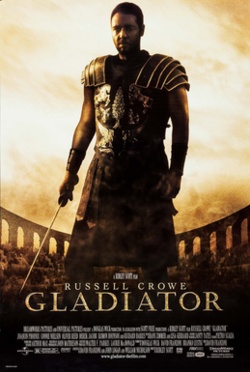
Spoiler-free review.
Gladiator does not need a complicated story to get you involved. It gives you someone to follow, something for him to lose, and a world where power is rarely fair. The scale is enormous, but the emotional pull is fairly direct.
Russell Crowe makes that simplicity work. He does not play every scene as an opportunity for a grand speech. There is restraint in the quieter moments, which makes the force of the public ones feel earned. Joaquin Phoenix brings a very different energy: needy, resentful, and uncomfortable even when he has authority.
Ridley Scott is good at making spectacle feel physical. The crowds, dust, and noise give the arena scenes a weight that goes beyond the choreography. Hans Zimmer and Lisa Gerrard’s music also supplies a tenderness the fighting alone would never provide.
The film can be broad. Some characters are drawn in thick lines, and the emotional cues are not subtle. A few action passages are cut so rapidly that I wanted a clearer view of what was happening. But its confidence in the basic story carries it through.
8/10. An absorbing epic with a strong lead performance and a sense of scale that still leaves room for grief.
Directed by Ridley Scott · 2000 · English. Film details · Poster source. Artwork © its respective rights holders.
Big battles and a direct emotional story, anchored by Russell Crowe. The spectacle works because the central performance stays grounded.
— Desly