Duel — A silent threat behind the wheel
The unseen menace creates tension through absence rather than presence. The film's focus on the driver’s fear elevates it beyond simple chase tropes.
The unseen menace creates tension through absence rather than presence. The film's focus on the driver’s fear elevates it beyond simple chase tropes.
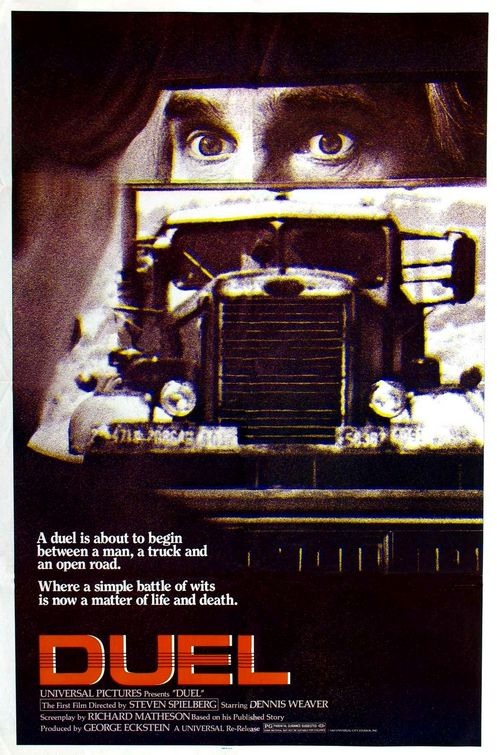
Spoiler-free review.
The central conflict is a man being stalked by an unknown driver, making the danger feel personal and inescapable. Dennis Weaver portrays a commuter whose vulnerability is heightened by the isolation of his situation. The script avoids explaining the trucker’s motives, which keeps the threat ambiguous but persistent.
Spielberg uses long stretches of quiet driving to show the passenger's helplessness. Not seeing the trucker adds to the pressure on the protagonist. The film keeps a steady rhythm that doesn't let up or get repetitive, even though it's short.
Dennis Weaver conveys fear without melodrama, grounding his performance in believable reactions. Jacqueline Scott and Carey Loftin provide brief but effective supporting roles that contrast with the main tension. Dialogue is minimal but purposeful, often reinforcing the protagonist’s isolation and confusion.
The film sometimes relies too much on its own idea, which can make the tension feel predictable. Its best part is how it uses space and sound to turn a simple car ride into a life-or-death situation. Duel still works because it lets the audience feel the fear without explaining everything.
1971 · English. Film details · Poster source · Artwork © its respective rights holders.
The unseen menace creates tension through absence rather than presence. The film's focus on the driver’s fear elevates it beyond simple chase tropes.
— Desly