Dog Day Afternoon — A tense standoff with moral weight
The film balances a criminal act with the emotional stakes of those involved. Al Pacino's performance elevates the tension beyond mere spectacle.
The film balances a criminal act with the emotional stakes of those involved. Al Pacino's performance elevates the tension beyond mere spectacle.
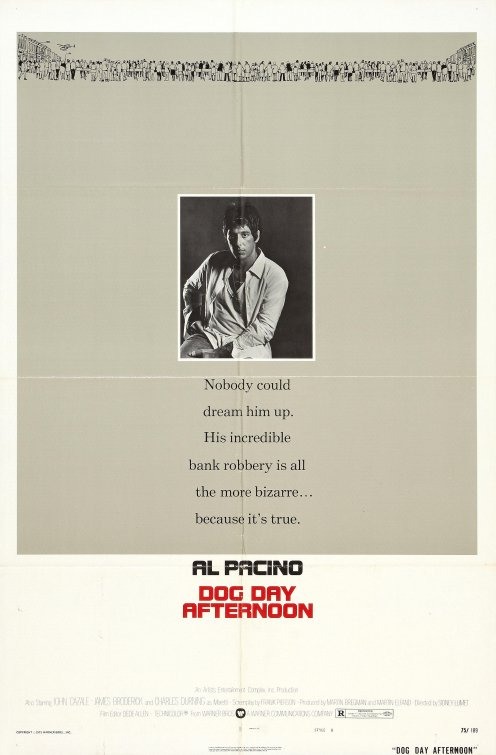
Spoiler-free review.
The robbery is not just about money but about personal desperation and familial pressure, shaping the characters' choices. John Wojtowicz's actions are driven by a need to provide for his ill mother, adding complexity to his role as a criminal. The script avoids making him a villain, instead focusing on the emotional and moral ambiguity of his situation.
Sidney Lumet’s direction keeps the tension high without rushing toward resolution or moralizing too quickly. The pacing is deliberate, letting the audience sit with the characters instead of pushing them away. Longer scenes feel natural, capturing the anxiety of a hostage situation without fake urgency.
Al Pacino conveys vulnerability beneath his bravado, making Wojtowicz relatable despite his crimes. John Cazale's performance as the conflicted police officer adds another layer to the moral complexity. Dialogue is sharp and realistic, often revealing hidden fears or desires without heavy-handed exposition.
There are moments where the film leans too heavily on its real-life origins, which can make the story feel less original. But the emotional core stays strong, keeping the focus on human struggle rather than just crime. The film’s strength is in not simplifying its characters or their choices, giving a nuanced look at morality.
1975 · English. Film details · Poster source · Artwork © its respective rights holders.
The film balances a criminal act with the emotional stakes of those involved. Al Pacino's performance elevates the tension beyond mere spectacle.
— Desly