Django Unchained — conversation under pressure
Big performances, sharp dialogue, and a Western that takes its time before it erupts. Entertaining, brutal, and occasionally overextended.
Big performances, sharp dialogue, and a Western that takes its time before it erupts. Entertaining, brutal, and occasionally overextended.
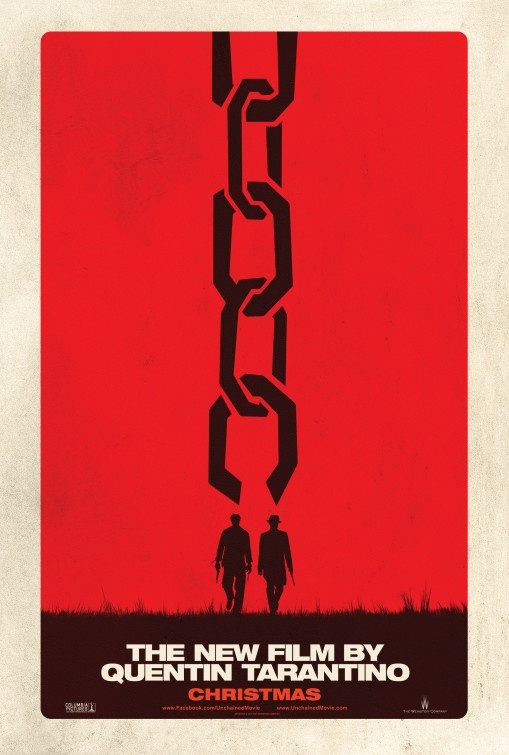
Spoiler-free review.
The conversations are what I enjoy most in Django Unchained. Quentin Tarantino lets someone speak politely for long enough that the politeness starts to feel threatening. A pause over a table can carry as much tension as a weapon.
Christoph Waltz is especially good at that rhythm. He makes elaborate speech sound effortless, with humour that can change the balance of a scene. Jamie Foxx gives Django a more economical presence, which is a useful counterweight to all the people who enjoy hearing themselves talk.
Leonardo DiCaprio and Samuel L. Jackson make their scenes deeply unpleasant in different ways. The film’s broad style does not soften the cruelty of the world it depicts. The shifts between humour, horror, and exaggerated violence can be jarring; some are very effective, and others left me wanting a little more restraint.
The music and the wide landscapes give it plenty of Western energy. My main issue is the length. A few stretches repeat a point or keep a scene running after its strongest moment, and the momentum becomes uneven.
8/10. The dialogue and performances are the strongest reasons to watch. There is a tighter film somewhere inside it, but the best scenes have enough confidence and tension to earn the time.
Directed by Quentin Tarantino · 2012 · English. Film details · Poster source. Artwork © its respective rights holders.
Big performances, sharp dialogue, and a Western that takes its time before it erupts. Entertaining, brutal, and occasionally overextended.
— Desly