Dead Ringers — Jeremy Irons as twins with a shared obsession
The film's tension comes from the brothers' unraveling, not just their secrets. The direction leans into unease but occasionally softens the stakes.
The film's tension comes from the brothers' unraveling, not just their secrets. The direction leans into unease but occasionally softens the stakes.
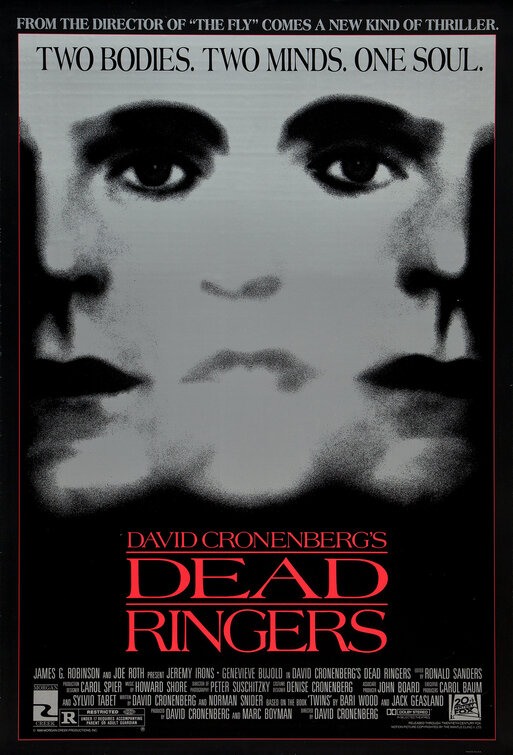
Spoiler-free review.
Jeremy Irons embodies both twins with such precision that their differences feel like variations on the same emotional axis. Their shared obsession with female anatomy becomes a metaphor for their inability to distinguish self from other. The script leans heavily on dialogue to reveal inner conflict, which risks feeling more intellectual than visceral.
Cronenberg's direction keeps a cold, clinical feel, which makes the psychological horror more intense but also makes some moments of raw emotion feel distant. Geneviève Bujold plays their patient with restraint, adding a layer of uncertainty to the power struggles in the film. The quieter scenes drag a bit, with long internal monologues that don't always feel necessary or satisfying.
Irons avoids making the twins feel like caricatures, giving their downfall a more tragic than grotesque edge. The film's best part is how it keeps the audience guessing, never letting them feel fully in control of the story. But some side plots don't get enough attention, leaving some emotional moments feeling incomplete or underdeveloped.
The use of mirrors and reflections is a visual motif that reinforces the theme of identity but rarely surprises. Despite this, the central performances remain compelling enough to sustain the film's unsettling tone. Its most effective moments are those where the brothers' detachment from reality feels almost poetic in its inevitability.
1988 · English. Film details · Poster source · Artwork © its respective rights holders.
The film's tension comes from the brothers' unraveling, not just their secrets. The direction leans into unease but occasionally softens the stakes.
— Desly