Coherence — an ordinary room turns uneasy
A dinner-party conversation becomes an effective source of unease. Resourceful and absorbing, though the rough edges sometimes show.
A dinner-party conversation becomes an effective source of unease. Resourceful and absorbing, though the rough edges sometimes show.
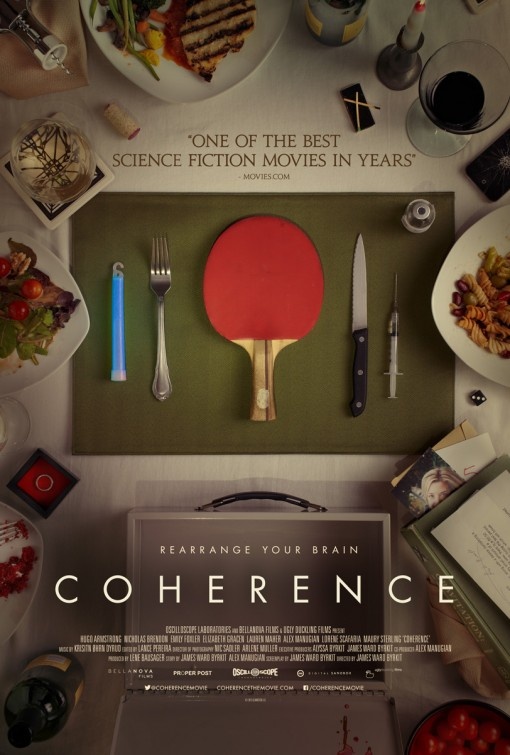
Spoiler-free review.
Coherence gets a lot out of a familiar discomfort: being at a dinner where people have more history with each other than they are saying aloud. Before anything unusual happens, the interruptions and small tensions give the evening a believable awkwardness.
James Ward Byrkit keeps the camera close to that social mess. People talk over each other, miss information, and disagree about what deserves attention. It can feel untidy, but that untidiness helps the uncertainty spread. You are trying to follow the conversation at the same time as the characters.
Emily Baldoni gives the film a useful point of focus. Her watchfulness lets you settle into one person’s experience without making everyone else feel like background. The ordinary rooms and darkness outside do much of the visual work; the film rarely needs anything elaborate to make a space feel wrong.
The roughness is not always a strength. Some of the overlapping dialogue becomes tiring, and there are moments when the group seems to be explaining a problem for the audience rather than speaking naturally. The characters are also unevenly developed, so I cared more about some reactions than others.
7/10. A clever, resourceful thriller whose strongest tool is an uncomfortable conversation. Best given your full attention before anyone explains the premise too thoroughly.
Directed by James Ward Byrkit · 2013 · English. Film details · Poster source. Artwork © its respective rights holders.
A dinner-party conversation becomes an effective source of unease. Resourceful and absorbing, though the rough edges sometimes show.
— Desly