Arrival — Making room for another language
Arrival finds real drama in the effort to understand somebody. Amy Adams gives the large science-fiction ideas an emotional centre, while the sound and measured direction make uncertainty feel tangible.
Arrival finds real drama in the effort to understand somebody. Amy Adams gives the large science-fiction ideas an emotional centre, while the sound and measured direction make uncertainty feel tangible.
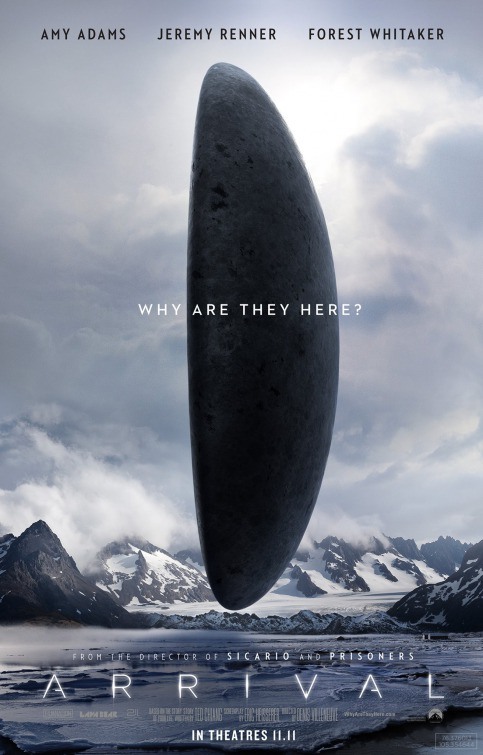
Spoiler-free review.
Amy Adams is the reason Arrival feels so human. Louise has to listen, revise an assumption and try again, and Adams makes that work absorbing. She does not play intelligence as having the quickest answer. There is room for hesitation. That seems exactly right for a story in which understanding takes effort.
Denis Villeneuve gives the encounter a scale that can be intimidating without making the people insignificant. The sound is particularly effective. It gives an unfamiliar presence weight before there is a comfortable explanation for it. The film allows that discomfort to last, which makes the patient work of communication feel necessary.
I liked how much tension comes from the demand for a simple answer. Language is messy, but the people waiting for a result are not always prepared to accept that. The conversations make translation feel consequential. A small decision about meaning can carry more pressure than a much louder confrontation elsewhere would.
The measured pace asks for attention, but the emotional side never feels like an afterthought added to an intellectual exercise. Adams keeps the personal stakes present even when the film is dealing with very large questions. I would leave the details there. This is one where the way the pieces connect deserves to be discovered in the film.
2016 · English. Film details · Poster source · Artwork © its respective rights holders.
Arrival finds real drama in the effort to understand somebody. Amy Adams gives the large science-fiction ideas an emotional centre, while the sound and measured direction make uncertainty feel tangible.
— Desly